Big Hajj overhaul: Pakistan unveils four-year digital policy
Pakistan has unveiled its first four-year Hajj Policy (2027–2030) aimed at ensuring transparent and digital governance, accountability, merit, and improved logistical facilities for pilgrims.
Intelligence analysis by Llama
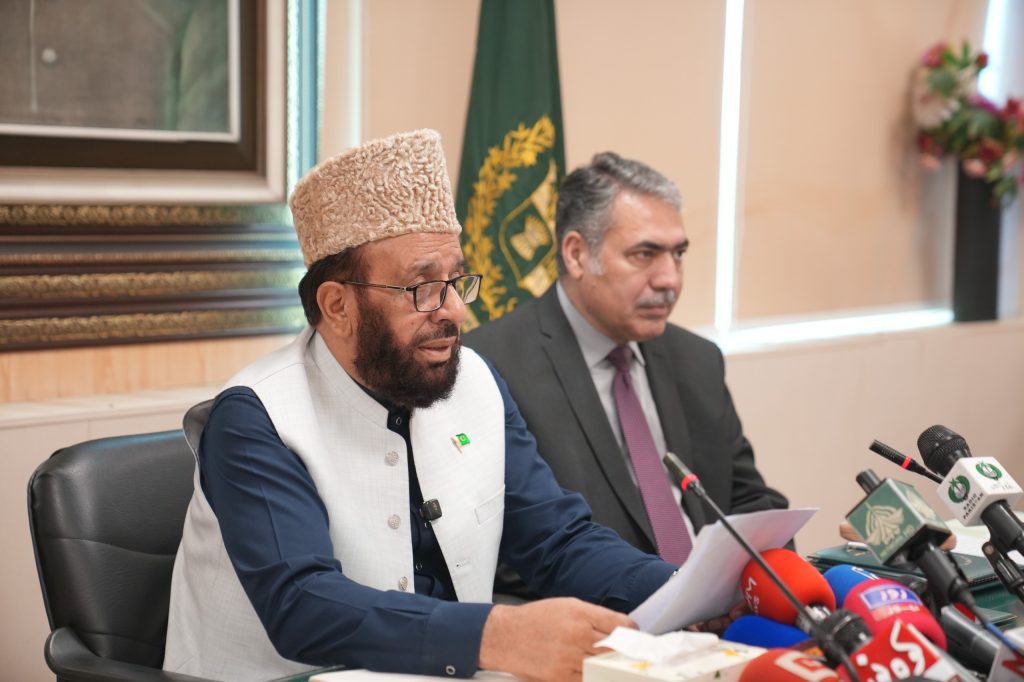
Pakistan has introduced a four-year Hajj registration and waiting list system, allowing pilgrims to choose their preferred Hajj year in advance. The new policy also includes a digital system for all stages of the Hajj process, from registration to grievance redressal and post-Hajj review.
Pakistan has made a new plan to make it easier for people to go on a special trip called Hajj. The plan includes using computers to make sure everything is fair and that people get good service. It also lets people choose when they want to go on the trip and gives them more options for how long they want to stay.
Analysis
A New Era for Hajj Arrangements in Pakistan
Pakistan has taken a significant step towards modernizing its Hajj arrangements with the unveiling of its first four-year Hajj Policy (2027–2030). The policy aims to ensure transparent and digital governance, accountability, merit, and improved logistical facilities for pilgrims. This is a major overhaul of the existing system, which has been plagued by corruption, inefficiency, and a lack of transparency.
Digital Governance and Accountability
The new policy introduces a digital system for all stages of the Hajj process, from registration to grievance redressal and post-Hajj review. This will ensure that the entire process is transparent, efficient, and accountable. The policy also includes a four-year Hajj registration and waiting list system, allowing pilgrims to choose their preferred Hajj year in advance. This will help to reduce the burden on the government and private Hajj schemes, and ensure that pilgrims have a better experience.
Improved Logistical Facilities
The new policy also includes measures to improve logistical facilities for pilgrims. This includes the introduction of multiple Hajj packages of varying durations under the Government Hajj Scheme, enabling pilgrims to choose according to their needs and convenience. The policy also includes measures to improve the quality of services provided by private Hajj companies, including the use of the Private Hajj Management Portal (PHMP) for bookings, payments, monitoring, and auditing.
Conclusion
The new Hajj Policy is a significant step towards modernizing Pakistan's Hajj arrangements. It aims to ensure transparency, digital governance, accountability, and the provision of the best possible facilities to pilgrims. The policy includes a range of measures to improve the Hajj experience, including the introduction of a digital system, a four-year Hajj registration and waiting list system, and improved logistical facilities. These measures will help to reduce the burden on the government and private Hajj schemes, and ensure that pilgrims have a better experience.
Key points
- Pakistan has unveiled its first four-year Hajj Policy (2027–2030)
- The policy aims to ensure transparent and digital governance, accountability, merit, and improved logistical facilities for pilgrims
- A digital system will be introduced for all stages of the Hajj process
- A four-year Hajj registration and waiting list system will be introduced
- Multiple Hajj packages of varying durations will be introduced under the Government Hajj Scheme
The new Hajj Policy has the potential to improve the Hajj experience for millions of pilgrims. If implemented effectively, it could reduce corruption, increase transparency, and provide better logistical facilities. This could lead to a significant increase in the number of pilgrims who choose to go through the government Hajj scheme, which would be a positive development for the country.
The new Hajj Policy may face challenges in its implementation, particularly in terms of ensuring transparency and accountability. If the digital system is not properly implemented, it could lead to further corruption and inefficiency. Additionally, the policy's reliance on private Hajj companies may lead to a lack of regulation and oversight, which could result in poor service and exploitation of pilgrims.