Biggest August fall in British house prices since 2018; Dimon warns UK against higher bank taxes – business live
Britain's housing market is locked in its weakest August since 2018, as sellers slash their prices in search of a buyer. New data from Rightmove this morning shows that the average price of a newly-listed home in Britain fell by 2% this month, to £364,999.
Intelligence analysis by Llama
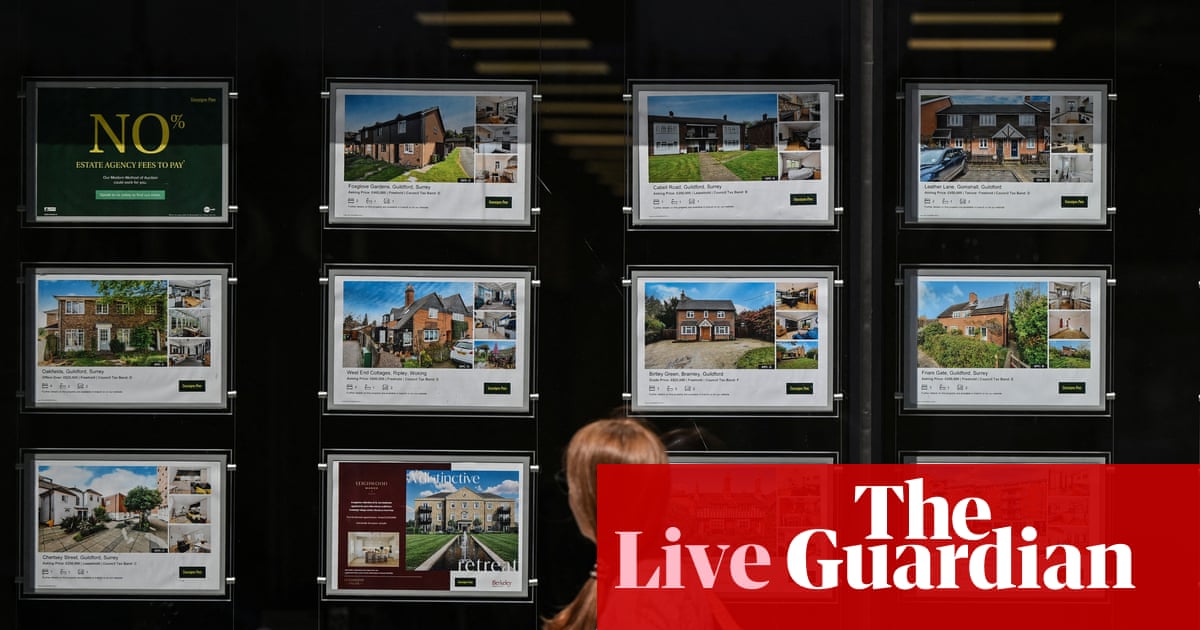
Britain's housing market is experiencing its weakest August since 2018, with sellers reducing prices in an attempt to attract buyers. Rightmove's data shows a 2% drop in average asking prices, with the North-South divide in the housing market widening over the last 12 months.
Imagine you're trying to sell a house, but nobody wants to buy it. So, you lower the price to make it more attractive. That's what's happening in the UK housing market right now. Sellers are reducing prices to try and find a buyer, but it's not working as well as they hoped.
Analysis
Biggest August fall in British house prices since 2018
Britain's housing market is experiencing its weakest August since 2018, with sellers reducing prices in an attempt to attract buyers. Rightmove's data shows a 2% drop in average asking prices, with the North-South divide in the housing market widening over the last 12 months. This decline is a sign that many sellers are recognising the reality of the market and pricing much more competitively from day one.
The largest house price drop is in London, with prices down by 3.1% annually. Wealthy areas have seen the biggest drop - the new asking price of a home in the Royal Borough of Kensington and Chelsea has dropped to £1,552,970. A month ago, the figure was £1,648,148, a difference of just over £95,000.
Investors drive hard bargain
There are signs that investors are driving a harder bargain when buying homes. Hamptons reports that 56% of house offers from investors were at least 10% below the initial asking price in July – rising to 63% among landlords paying in cash. David Fell, lead analyst at Hamptons, says: 'When the market slows, seasoned investors rarely stand on the sidelines for long. With homes taking longer to sell and chains proving fragile, landlords are using their liquidity and chain-free status to maximise their leverage when it comes to agreeing a price.'
Dimon warns UK against higher bank taxes
The boss of JP Morgan has renewed his pressure on the UK government not to raise taxes on banks. Jamie Dimon told chancellor John Healey that creating a more hostile tax environment for banks could cost jobs, the Financial Times reports. They say: 'The Wall Street executive told Healey in a call on Thursday that higher taxes often drive jobs elsewhere, citing a material decline in finance roles in New York that he attributed in part to the city's tax burden, according to people briefed on the conversation.'
Key points
- Britain's housing market is experiencing its weakest August since 2018.
- Sellers are reducing prices to try and attract buyers.
- The North-South divide in the housing market is widening.
- Investors are driving a harder bargain when buying homes.
- The boss of JP Morgan has warned the UK government against raising taxes on banks.
If the UK government can find a way to balance the housing market, it could lead to a surge in demand and a rise in house prices. Additionally, if investors can find ways to work with sellers, it could lead to a more stable market.
If the UK government raises taxes on banks, it could lead to a decline in the financial sector and a loss of jobs. Additionally, if the housing market continues to cool, it could lead to a decrease in demand and a further drop in house prices.