Bilger also wants to improve drone defense at German airports
Following a drone incident at Leipzig Airport, Federal Transport Minister Steffen Bilger is pushing for rapid improvements in drone detection and defense at German airports. The event has also sparked calls for Bundeswehr deployment domestically and a potential amendment …
Intelligence analysis by Gemini 2.5 Flash
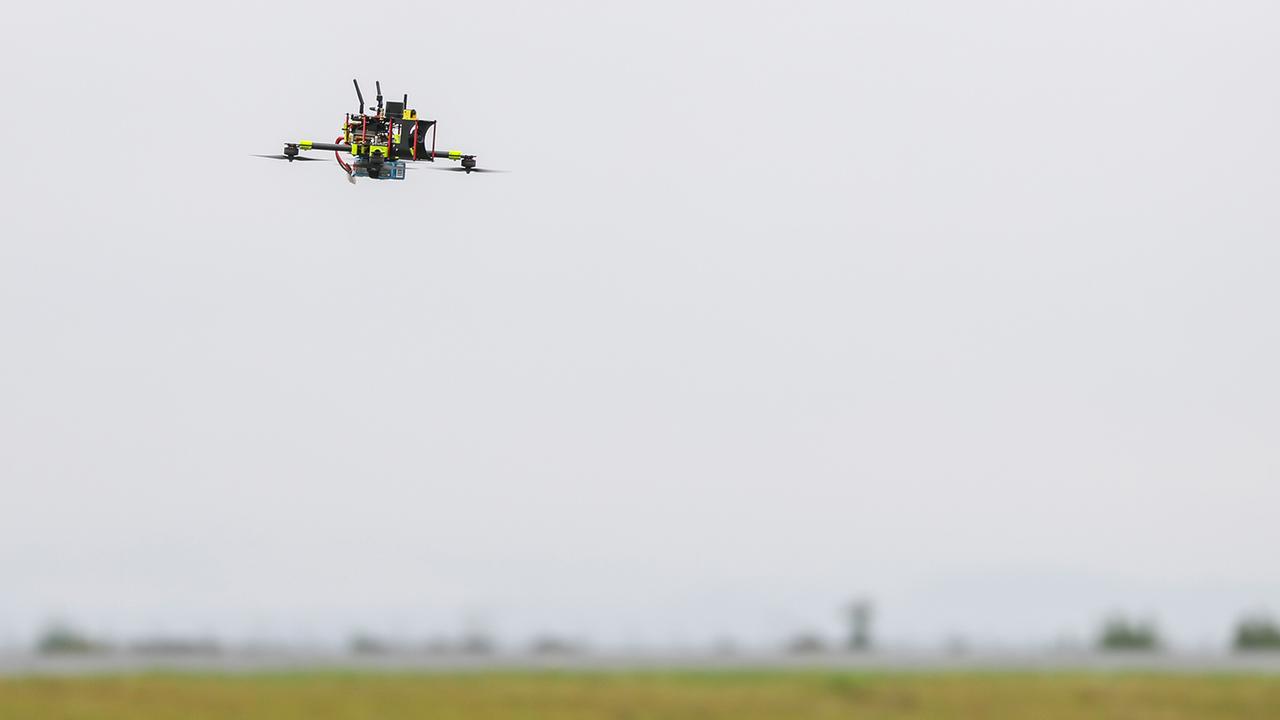
A recent drone incident involving an explosive-laden device near Ukrainian cargo planes at Leipzig Airport has prompted Federal Transport Minister Steffen Bilger to demand accelerated upgrades to drone defense systems across German airports. Concurrently, Schleswig-Holstein's Minister President Daniel Günther advocates for allowing Bundeswehr deployments within Germany and considering…
Imagine someone flew a special toy plane with a firecracker near a big airport in Germany. Now, important people in charge want to quickly get better equipment to spot and stop these planes at all airports. They're even talking about letting soldiers help protect the country from these threats, which is a big deal because soldiers usually don't work inside the country, and they might even change a very important rulebook to allow it.
Analysis
The recent discovery of an explosive-laden drone at Leipzig/Halle Airport has ignited a critical debate within Germany regarding national security and the adequacy of current drone defense capabilities. This incident, occurring near Ukrainian cargo planes, underscores the evolving nature of threats, particularly given Leipzig's role as a vital hub for military aid to Ukraine. The professional execution of the drone operation has led some officials to suspect state-backed involvement, elevating the urgency of the response.
Steffen Bilger
Federal Transport Minister Steffen Bilger has swiftly responded to the heightened threat, emphasizing the immediate need to enhance drone detection and defense systems across German airports. He acknowledged that while major hubs like Frankfurt and Munich are relatively well-equipped, other airports require urgent upgrades. Bilger's commitment to accelerating the procurement and deployment of advanced defense technology highlights a recognition of the existing vulnerabilities and the imperative to close these gaps without delay.
His statements to Politico underscore the critical role of timely drone detection, indicating a shift towards proactive security measures rather than purely reactive responses. The minister's focus on rapid re-equipment signals a governmental push to modernize infrastructure to counter sophisticated aerial threats. This initiative is crucial for maintaining the operational integrity of Germany's air traffic and protecting critical logistical pathways.
Leipzig Airport
The incident at Leipzig/Halle Airport serves as a stark illustration of the tangible risks posed by hostile drone activity. The discovery of an explosive device near aircraft involved in military aid operations for Ukraine suggests a targeted act, potentially aimed at disrupting support efforts or sending a geopolitical message. This event has prompted a significant security response, including Federal Interior Minister Alexander Dobrindt's announcement to double the federal police's anti-drone unit at the Joint Drone Defense Center (GDAZ) from 150 to 300 personnel.
The airport's strategic importance as a transit point for military supplies amplifies the gravity of the attack, transforming a localized security breach into a matter of national and international concern. The defusing of the explosive device by federal police experts prevented a potentially catastrophic outcome, but the incident itself has exposed a critical vulnerability in Germany's defense against asymmetric threats. This has catalyzed a broader re-evaluation of security protocols and resource allocation.
Daniel Günther
Schleswig-Holstein's Minister President Daniel Günther has broadened the discussion beyond airport security, advocating for a fundamental re-evaluation of Germany's internal security framework. He argues for enabling Bundeswehr deployments domestically, asserting that the nature of drone threats blurs the lines between foreign and domestic policy. Günther's call for an amendment to the Basic Law reflects a belief that the current constitutional separation of powers between federal and state governments, particularly concerning external and internal security, is outdated in the face of modern challenges.
His conviction that "professionals are at work" and that a "state infrastructure" might be behind such drone operations underscores the perceived sophistication of the threat. Günther's proposal for stronger cooperation and bundled competencies between federal and state authorities aims to create a more unified and effective national defense posture. This perspective highlights a growing recognition among German politicians that traditional security paradigms may no longer suffice against hybrid warfare tactics.
Key points
- Federal Transport Minister Steffen Bilger calls for rapid improvement of drone defense at German airports.
- The discussion follows a drone incident at Leipzig Airport where an explosive-laden drone was found near Ukrainian cargo planes.
- Schleswig-Holstein's Minister President Daniel Günther advocates for Bundeswehr deployment domestically and a Basic Law amendment.
- Günther suggests the professional nature of the drone incident implies state-backed involvement.
- Federal Interior Minister Alexander Dobrindt announced the doubling of the federal police's anti-drone unit to 300 personnel.
If implemented swiftly, the proposed measures could significantly bolster Germany's airport security, deterring future drone-related threats and ensuring the safe operation of air travel and critical logistics hubs. Enhanced federal-state cooperation could also lead to a more unified and effective national security strategy.
Delays in equipping all airports or political disagreements over constitutional amendments could leave Germany vulnerable to sophisticated drone attacks, potentially disrupting air traffic, endangering lives, and undermining public confidence in national security capabilities. The perceived state-backed nature of the threat suggests a persistent and evolving challenge.