Bitcoin ETFs post third straight weekly inflows despite $465 million in late-week losses
Bitcoin ETFs recorded their third consecutive week of inflows, totaling $33.8 million, despite experiencing significant late-week outflows of $465.26 million on Thursday and Friday.
Intelligence analysis by Gemini 2.5 Flash
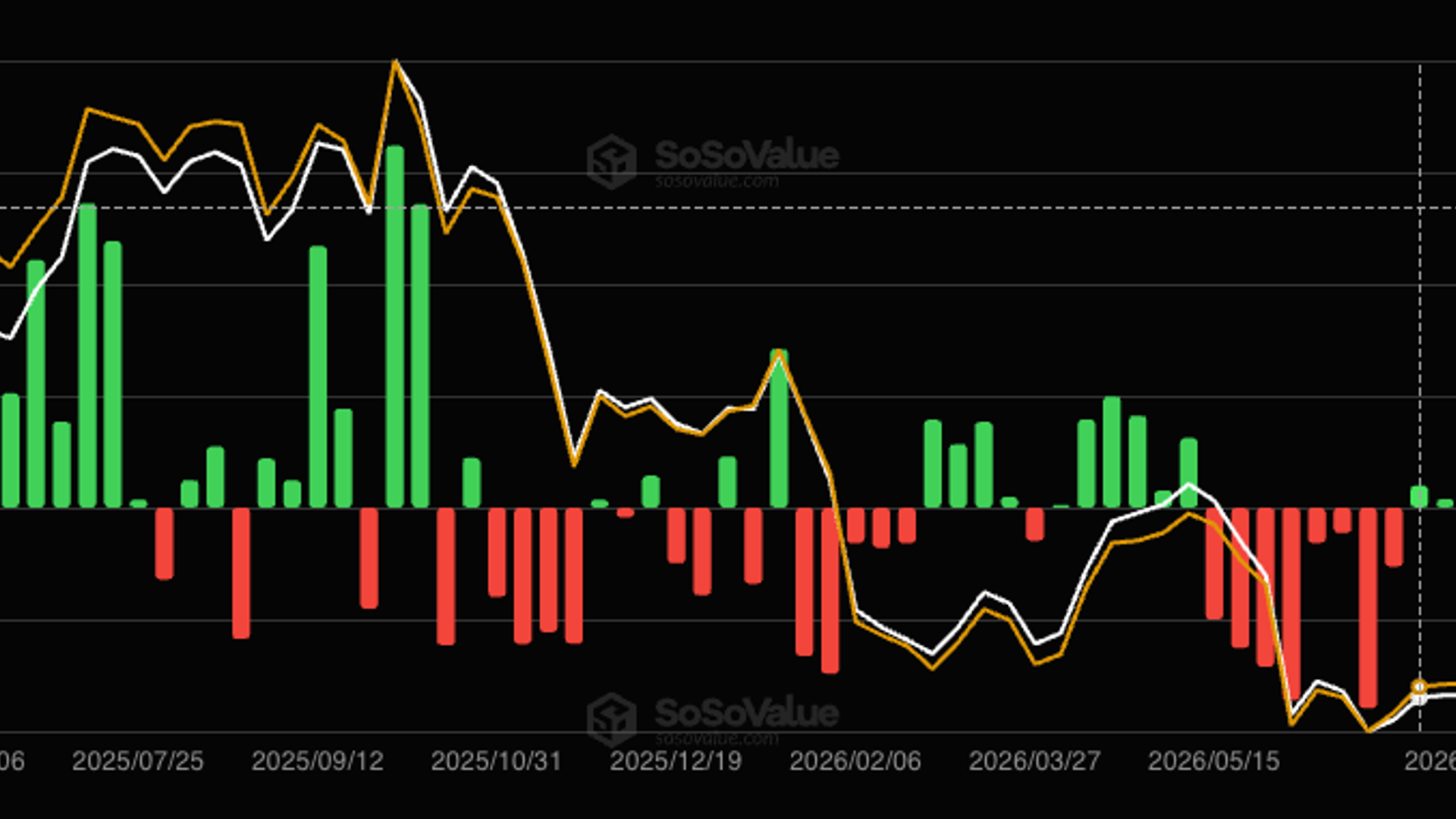
After eight weeks of outflows, U.S.-listed spot Bitcoin ETFs have seen a modest return to positive inflows for three consecutive weeks in July, signaling a repair phase for institutional demand, though it remains cautious and less robust than during typical bull runs.
Imagine Bitcoin ETFs are like special piggy banks where big investors put their money to buy Bitcoin. For a long time, people were taking money out of these piggy banks. But now, for three weeks in a row, more money has been put in than taken out, even though a lot of money was pulled out right at the end of last week. It's like people are slowly starting to put their coins back in, but they're still a bit careful.
Analysis
A Modest Return to Inflows
After a challenging period marked by eight consecutive weeks of outflows stretching back to mid-May, U.S.-listed spot Bitcoin exchange-traded funds (ETFs) have achieved a notable milestone: their third consecutive week of net inflows. The week ending July 24 saw these funds attract a total of $33.79 million, continuing a modestly positive trajectory throughout July. This sustained, albeit small, accumulation suggests a potential stabilization in institutional interest following a significant period of divestment, offering a glimmer of relief to the market.
Late-Week Reversals and Concentrated Outflows
Despite the overall positive weekly figure, the latter half of the week presented a stark contrast, with substantial net outflows of approximately $225.2 million on July 23 and $240.1 million on July 24. These late-week losses, totaling $465.26 million, significantly diminished what would have been a much larger weekly inflow. The vast majority of this activity was concentrated in BlackRock’s IBIT product, which accounted for nearly $415 million of the outflows. This concentration highlights specific institutional movements and profit-taking pressures that continue to influence the market dynamics.
Cautious Institutional Sentiment Amidst Market Volatility
The mixed performance, characterized by overall weekly inflows overshadowed by significant late-week outflows, underscores a cautious institutional sentiment. Crypto analytics firm BRN noted that while July's 'repair phase' has brought relief after heavy outflows in May and June, institutional demand is 'still cautious' and 'anemic,' lacking the power typically observed during bull runs. This sentiment is further complicated by broader market conditions, including Bitcoin's rally to over $66,500 earlier in the week, followed by a retreat below $64,000 due to profit-taking and weak action in the stock market, particularly the Nasdaq 100, which was impacted by chipmaker stocks.
Key points
- Bitcoin ETFs recorded their third consecutive week of net inflows, totaling $33.79 million.
- Late-week outflows on July 23 and 24 amounted to $465.26 million, significantly reducing the weekly net inflow.
- BlackRock's IBIT product accounted for nearly $415 million of the late-week outflows.
- Institutional demand is described as 'cautious' and 'anemic' by crypto analytics firm BRN, despite the return to inflows.
- Bitcoin's price rallied to over $66,500 mid-week before retreating below $64,000 due to profit-taking and weak stock market action.
The third consecutive week of inflows, however modest, suggests a potential bottoming out of institutional selling pressure and a gradual return of confidence. This sustained positive trend could signal a more stable environment for Bitcoin, attracting further investment if the 'repair phase' continues to strengthen.
The significant late-week outflows, particularly concentrated in BlackRock's IBIT, indicate that institutional demand remains fragile and prone to profit-taking. The 'anemic' nature of current inflows suggests that a strong, sustained bull run driven by institutional capital is not yet firmly established, leaving Bitcoin vulnerable to further price corrections.