Bitcoin holds monthly gain, faces 'choppy' August as 'forced-selling' exhausted, analysts say
Bitcoin (BTC) price's July gain survives hawkish Fed, AI meltdown and Coldcard fallout. Analysts say bitcoin has held up better than equities because much of the leveraged positioning was flushed out in late June, limiting forced selling during the latest bout of volatility.
Intelligence analysis by Llama
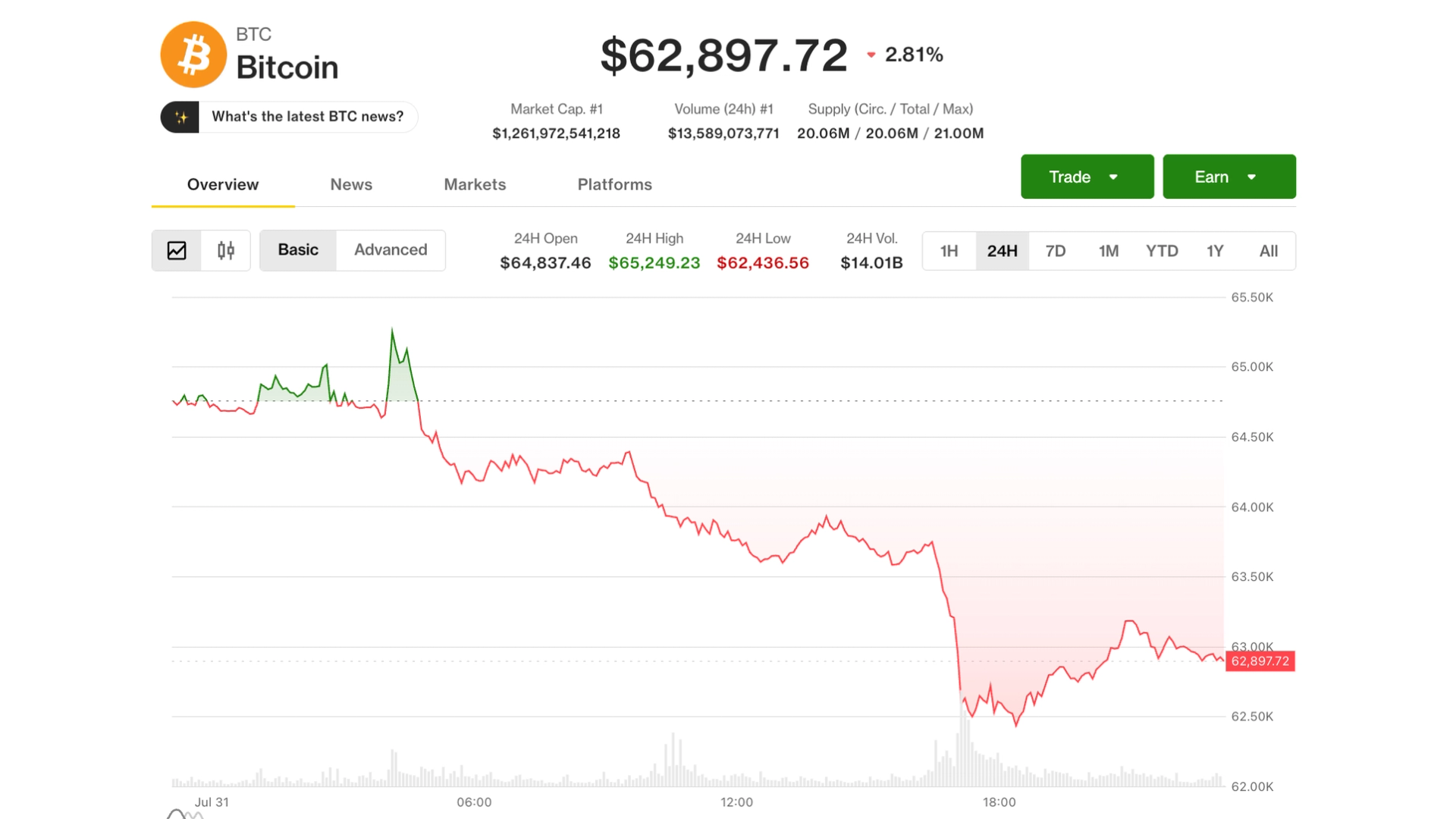
Bitcoin has held up better than equities due to reduced leveraged positioning. Analysts expect investors to remain defensive heading into next week's U.S. jobs report, awaiting a clearer Federal Reserve path to see if spot bitcoin ETF inflows will resume.
Imagine you're playing a game where you can bet on different things happening. Bitcoin is like a special kind of bet that people make on the internet. Even when bad things happen, like the Federal Reserve raising interest rates, bitcoin can still hold its value. This is because people who bet on bitcoin didn't bet as much as people who bet on other things, like stocks. So, when the bad things happened, they didn't have to sell as much bitcoin, which helped it stay strong.
Analysis
Bitcoin's July Gain: A Resilient Performance Amidst Macro Headwinds
Bitcoin's price has managed to end July up about 7.5% despite a series of headwinds, including rising rate-hike expectations, higher bond yields, and AI sell-off. This resilience can be attributed to the reduced leveraged positioning in the crypto market, which limited forced selling during the latest bout of volatility.
The Role of Positioning in Bitcoin's Resilience
The Bitfinex analysts noted that crypto entered the Fed meeting with far less leverage than equities after derivatives traders were largely flushed out during the selloff late June. This reduced leverage has contributed to the limited forced selling in the crypto market, allowing bitcoin to hold its ground.
Security Concerns and Self-Custody
The market is also digesting the fallout from a major exploit involving Coldcard, which resulted in at least $38 million worth of bitcoin being stolen. This incident has reignited debate around the risks of self-custody, one of crypto's fundamental promises. The exploit highlights the operational risks that continue to accompany self-custody, and it may push investors to ETFs.
Eyes on Jobs Data and ETF Flows
Looking ahead, macro uncertainty remains the dominant theme. Analysts expect investors to remain defensive heading into next week's U.S. jobs report, awaiting a clearer Federal Reserve path to see if spot bitcoin ETF inflows will resume. The institutional bid being aggressive or price-agnostic is the signal for traders, which has not fired yet.
Key points
- Bitcoin has held up better than equities due to reduced leveraged positioning.
- Analysts expect investors to remain defensive heading into next week's U.S. jobs report.
- The market is digesting the fallout from a major exploit involving Coldcard.
- The exploit highlights the operational risks that continue to accompany self-custody.
- Analysts expect a clearer Federal Reserve path to see if spot bitcoin ETF inflows will resume.
If the Federal Reserve becomes clearer about its path, investors may become more confident in the market, leading to increased demand for bitcoin ETFs and a potential price increase.
If the Federal Reserve raises interest rates or the dollar strengthens, it could lead to a decrease in demand for bitcoin and a potential price drop.