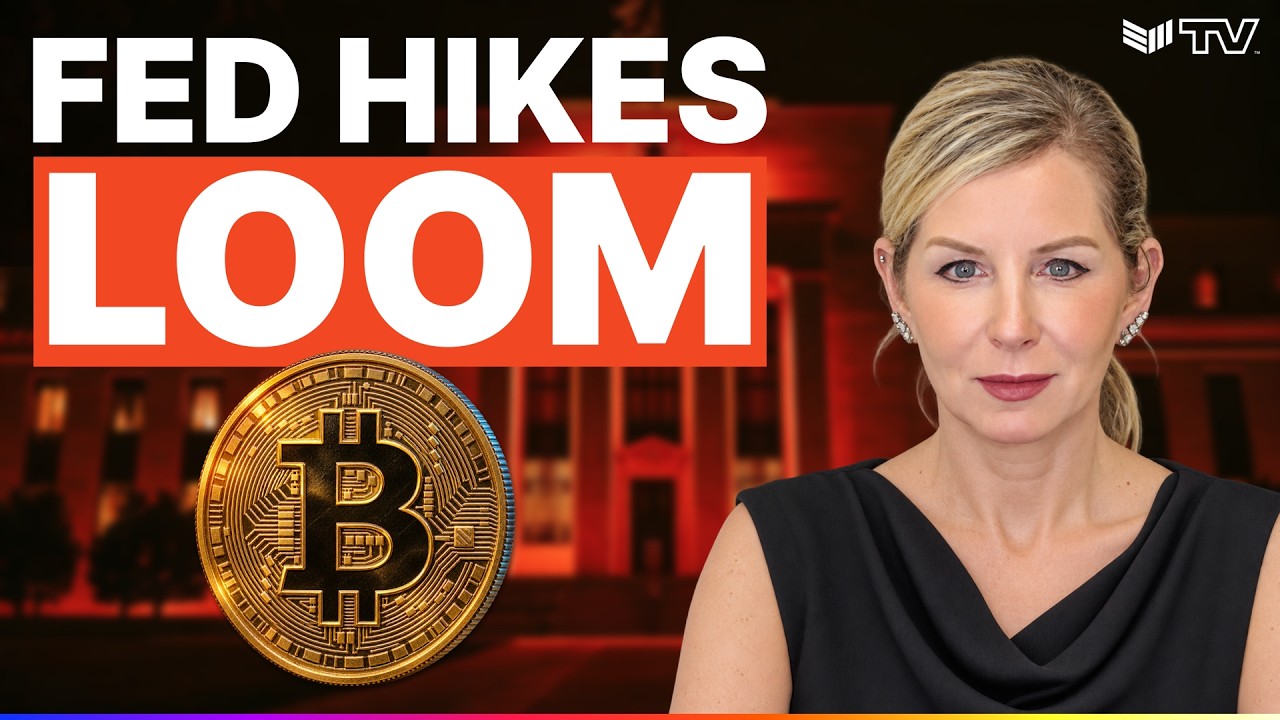
Bitcoin Price Surges Over $81,000 Despite Clarity Act Fail and Interest Rate Hike
Bitcoin's price surged above $81,000, demonstrating resilience despite the blocking of the Clarity Act crypto legislation and a Federal Reserve interest rate hike.
Intelligence analysis by Gemini 2.5 Flash

The cryptocurrency market witnessed a significant rally in Bitcoin's price, which climbed over $81,000, seemingly unfazed by recent negative developments. This surge occurred even as a key piece of crypto regulation, the Clarity Act, failed in Congress and the Federal Reserve increased interest rates to combat inflation.
Imagine Bitcoin is a super-fast race car. Even when the road gets bumpy because new rules didn't pass and the grown-ups in charge of money made it a bit harder to borrow, Bitcoin still zoomed past $81,000! It's like it's saying, 'I'm going my own way, no matter what!'
Analysis
Bitcoin's recent price action, soaring past $81,000, presents a compelling narrative of resilience in the face of adverse market conditions. This surge is particularly noteworthy given two significant headwinds that typically would dampen investor sentiment: the legislative failure of the Clarity Act and the Federal Reserve's decision to raise interest rates. The cryptocurrency's ability to not only withstand these pressures but to rally suggests a potential shift in market dynamics or a robust underlying demand that is less susceptible to conventional economic and regulatory concerns.
The Clarity Act
The Clarity Act was a highly anticipated piece of legislation aimed at providing much-needed regulatory guidance for the digital asset industry. Its failure to pass in a procedural vote was a significant blow to industry bigwigs who have consistently called for clear rules to foster innovation and provide investor protection. The bill sought to delineate oversight responsibilities between various regulators, a move that many believed would reduce uncertainty and encourage institutional adoption. Despite this setback, Bitcoin's price continued its upward trajectory, indicating that either the market had already priced in such a possibility, or that other factors are currently exerting a stronger influence on its valuation.
This legislative defeat could have created a vacuum of regulatory clarity, potentially leading to continued fragmentation and uncertainty in the U.S. crypto market. However, the article notes that regulators like the SEC are already pushing ahead with pro-crypto regulation, which might mitigate some of the negative impact of the Clarity Act's failure. The market's reaction suggests that investors may be looking beyond immediate legislative hurdles, focusing instead on the broader trend of increasing crypto integration and adoption.
Federal Reserve
The Federal Reserve's decision to hike interest rates for the first time, driven by persistent high inflation, typically signals a less favorable environment for risk assets like cryptocurrencies. Historically, Bitcoin has thrived in low interest rate environments due to increased liquidity. The central bank's chair, Kevin Warsh, emphasized price stability as the Fed's top priority, acknowledging that inflation remains too high. This hawkish stance from the Fed would usually lead to a tightening of financial conditions, making speculative assets less attractive as borrowing costs rise and investors seek safer havens.
However, Bitcoin's price initially dipped but then quickly rebounded, defying the conventional wisdom. This counter-intuitive movement suggests that the market might be interpreting the Fed's move differently, perhaps as a mid-cycle adjustment rather than a fundamental shift in the economic cycle, as suggested by asset manager Grayscale. It could also indicate that a segment of investors views Bitcoin as a hedge against inflation, even in a rising interest rate environment, or that the asset's intrinsic value proposition is becoming more recognized, overriding macroeconomic concerns.
Farside Investors
Data from Farside Investors revealed a mixed picture regarding Bitcoin exchange-traded funds (ETFs) in the U.S. Initially, these ETFs experienced net negative flows, with investors withdrawing nearly $427 million over the week. This outflow aligns with the general expectation that negative regulatory and macroeconomic news would lead to a reduction in investment in crypto vehicles. However, the trend reversed on Thursday, with a significant inflow of nearly $160 million into the funds, following two days of consecutive outflows.
This turnaround in ETF flows, coinciding with Bitcoin's price surge, suggests renewed investor confidence or a strategic accumulation phase. The initial outflows might have been a knee-jerk reaction to the negative news, quickly followed by a realization that the underlying demand for Bitcoin remains strong. The positive flows indicate that institutional and retail investors are still actively engaging with Bitcoin through regulated products, reinforcing the asset's market strength despite the broader economic and regulatory landscape.
Key points
- Bitcoin's price surged over 6% in 24 hours, reaching above $81,000.
- The rally occurred despite the U.S. Congress blocking the Clarity Act, a key crypto regulation bill.
- The Federal Reserve hiked interest rates for the first time, citing high inflation, a move typically negative for risk assets.
- U.S. Bitcoin ETFs initially saw net negative flows but turned positive with $160 million in inflows on Thursday.
- Asset manager Grayscale suggested the Fed's rate hike was a mid-cycle adjustment, not a cyclical change, mitigating its impact on Bitcoin.
Bitcoin's ability to rally despite significant regulatory and macroeconomic headwinds suggests a growing maturity and resilience in the asset class. This could indicate a stronger, more independent market dynamic, potentially attracting further investment from those seeking assets less correlated with traditional financial systems.
Despite the recent surge, the failure of the Clarity Act leaves regulatory uncertainty, which could hinder long-term institutional adoption and innovation in the U.S. Furthermore, sustained high interest rates from the Federal Reserve could eventually exert downward pressure on risk assets, including Bitcoin, if the market's current resilience proves temporary.