Bitcoin shrugs off AI selloff but high-stakes Fed meeting could determine what's next
Bitcoin has stayed resilient around $65,000 even as AI-linked tech stocks slumped, but this week’s Federal Reserve decision and key economic data could determine its next big move.
Intelligence analysis by Llama
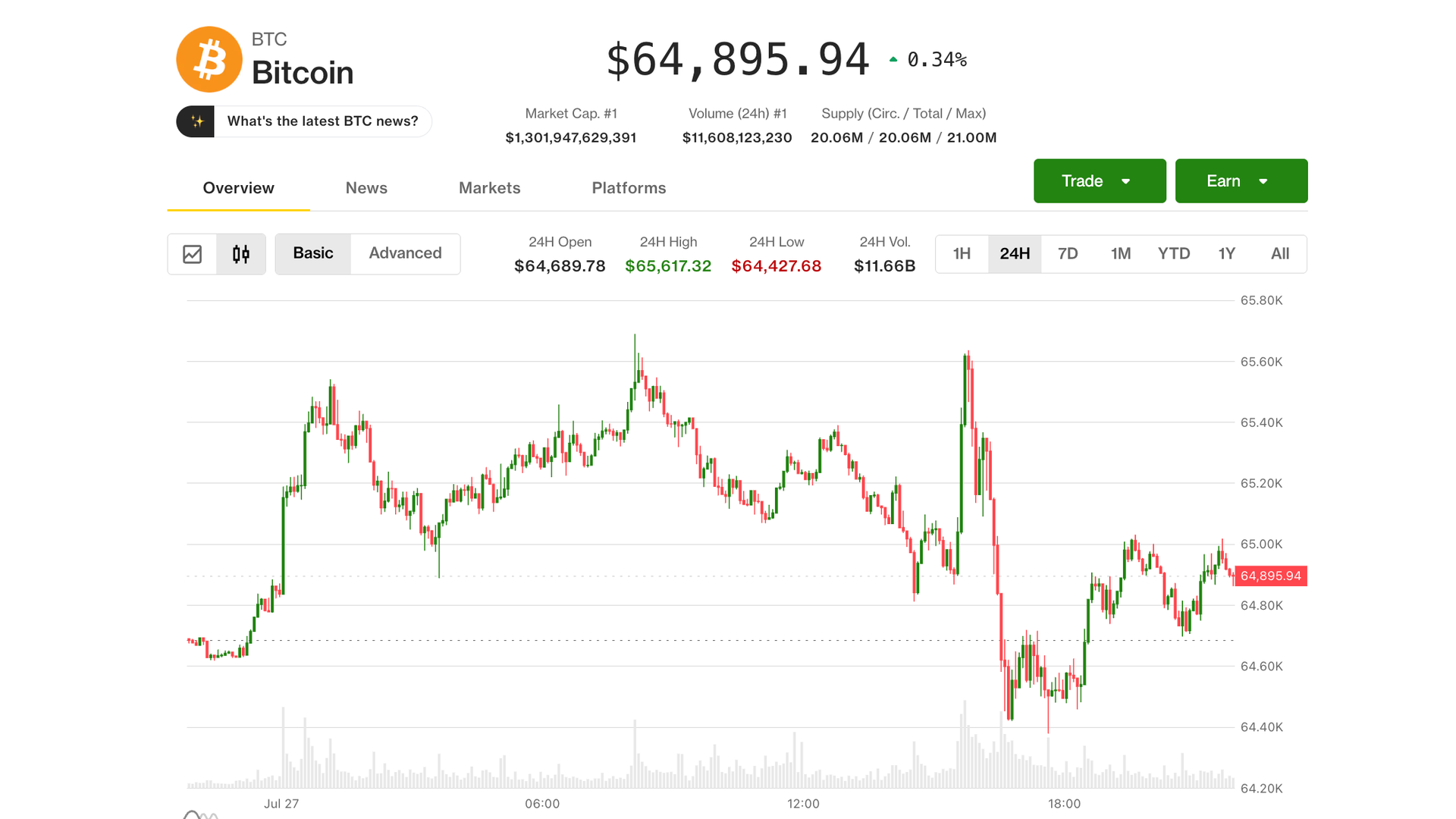
Bitcoin has shown resilience around $65,000 despite AI-linked tech stocks slumping, but the upcoming Federal Reserve decision and key economic data will determine its next move.
Imagine you're at a big store with lots of people buying and selling things. Bitcoin is like a special kind of money that people use to buy and sell things online. Even though some people are selling their special money (AI stocks), the store (bitcoin) is still doing okay. But now, the store's manager (Federal Reserve) is making a big decision that will affect how people buy and sell things. If the manager makes a good decision, the store might get busier and more people will want to buy and sell things. But if the manager makes a bad decision, the store might get less busy and people might not want to buy and sell things as much.
Analysis
Bitcoin's Resilience Amid AI Selloff
Bitcoin has shown remarkable resilience around $65,000 despite the recent selloff in AI-linked tech stocks. This resilience is a positive sign for the cryptocurrency market, as it suggests that investors are not panicking and are still holding onto their assets. However, this resilience is about to be put to the test as the Federal Reserve's policy decision, key U.S. inflation data, and earnings from several technology giants are all due this week. Analysts say that the next few days could determine whether bitcoin finally breaks out of its months-long trading range or rolls over to revisit the June lows.
The Importance of the Fed's Decision
The Federal Reserve's decision will have a significant impact on the cryptocurrency market. If the Fed decides to raise interest rates, it could lead to a decrease in demand for riskier assets like bitcoin. On the other hand, if the Fed decides to keep interest rates low, it could lead to an increase in demand for riskier assets like bitcoin. The Fed's decision will also have a significant impact on the overall economy, and investors will be watching closely to see how it affects the market.
The Role of Key Economic Data
In addition to the Fed's decision, key economic data will also play a significant role in determining the direction of the cryptocurrency market. The U.S. inflation data and earnings from several technology giants will provide valuable insights into the overall health of the economy. If the data suggests that the economy is growing and inflation is under control, it could lead to an increase in demand for riskier assets like bitcoin. However, if the data suggests that the economy is slowing down and inflation is rising, it could lead to a decrease in demand for riskier assets like bitcoin.
Key points
- Bitcoin has shown resilience around $65,000 despite the recent selloff in AI-linked tech stocks.
- The Federal Reserve's decision and key economic data will determine whether bitcoin breaks out of its months-long trading range or revisits the June lows.
- Analysts say that the next few days could determine whether bitcoin finally breaks out of its months-long trading range or rolls over to revisit the June lows.
If the Federal Reserve makes a decision that supports the economy, it could lead to an increase in demand for riskier assets like bitcoin, causing its price to rise.
If the Federal Reserve makes a decision that slows down the economy or leads to rising inflation, it could lead to a decrease in demand for riskier assets like bitcoin, causing its price to fall.
Market signals
- XAU Escalation drives safe-haven demand for gold, per the article's framing of investor reaction.
AI-generated analysis of potential market relevance. Not financial advice.