Bitcoin under $63,000 after new U.S. strike on Iran. Trump's China comment adds to uncertainty
Bitcoin fell after fresh U.S. airstrikes on Iran weighed on risk sentiment. Asian stocks registered losses, with Japan’s Nikkei falling by nearly 3%. The Australian dollar, a risk proxy, weakened after President Donald Trump alleged Chinese interference in the U.S. election.
Intelligence analysis by Llama
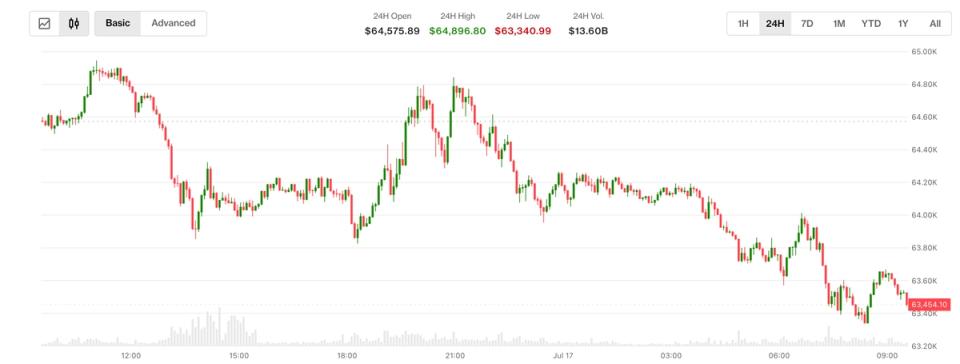
Bitcoin's price dropped below $64,000 after U.S. airstrikes on Iran and President Trump's allegations of Chinese election interference weighed on risk assets, including Asian stocks and the Australian dollar.
Imagine you're playing a game where the rules keep changing. That's what's happening with the global markets right now. The U.S. airstrikes on Iran and President Trump's allegations of Chinese election interference are making people nervous, and that's causing the price of bitcoin to drop. It's like a big game of musical chairs, and nobody knows what's going to happen next.
Analysis
A $60B Vote of Confidence
The recent U.S. airstrikes on Iran have sent shockwaves through the global markets, with bitcoin's price dropping below $64,000. The strikes, combined with President Trump's allegations of Chinese election interference, have weighed heavily on risk sentiment. Asian stocks have registered losses, with Japan's Nikkei falling by nearly 3%. The Australian dollar, a risk proxy, has weakened in response to the allegations. The impact of these events on the global markets is significant, with the potential for uncertainty to spill over into other markets. The article highlights the importance of monitoring geopolitical tensions and their impact on risk assets.
Why Cursor?
The article raises questions about the potential for U.S.-China tensions to escalate ahead of President Trump's meeting with Xi in September. The rhetoric itself could complicate the diplomatic runway into September, regardless of the underlying facts. The article notes that the dispute itself is not market-moving, but its potential to strain U.S.-China ties is likely to keep AUD traders on edge. The article concludes that the rhetoric itself could complicate the diplomatic runway into September, regardless of the underlying facts.
The Road Ahead
The article suggests that the recent events may have a lasting impact on the global markets. The potential for uncertainty to spill over into other markets is significant, and the article highlights the importance of monitoring geopolitical tensions and their impact on risk assets. The article concludes that the recent events may have a lasting impact on the global markets, and the importance of monitoring geopolitical tensions and their impact on risk assets.
Key points
- Bitcoin's price dropped below $64,000 after U.S. airstrikes on Iran and President Trump's allegations of Chinese election interference.
- Asian stocks registered losses, with Japan's Nikkei falling by nearly 3%.
- The Australian dollar, a risk proxy, weakened in response to the allegations.
- The article highlights the importance of monitoring geopolitical tensions and their impact on risk assets.
If the U.S.-China tensions ease, the global markets may stabilize, and the price of bitcoin could recover. However, the article notes that the rhetoric itself could complicate the diplomatic runway into September, regardless of the underlying facts.
If the U.S.-China tensions escalate, the global markets may become even more volatile, and the price of bitcoin could drop further. The article notes that the dispute itself is not market-moving, but its potential to strain U.S.-China ties is likely to keep AUD traders on edge.