Bitcoin’s quantum problem gets a recovery tool, but not for Satoshi’s 1.1 million coins
Project Eleven has developed a zero-knowledge proof system to recover Bitcoin from quantum-vulnerable addresses, addressing a theoretical future threat to over a third of BTC supply.
Intelligence analysis by Gemini 2.5 Flash
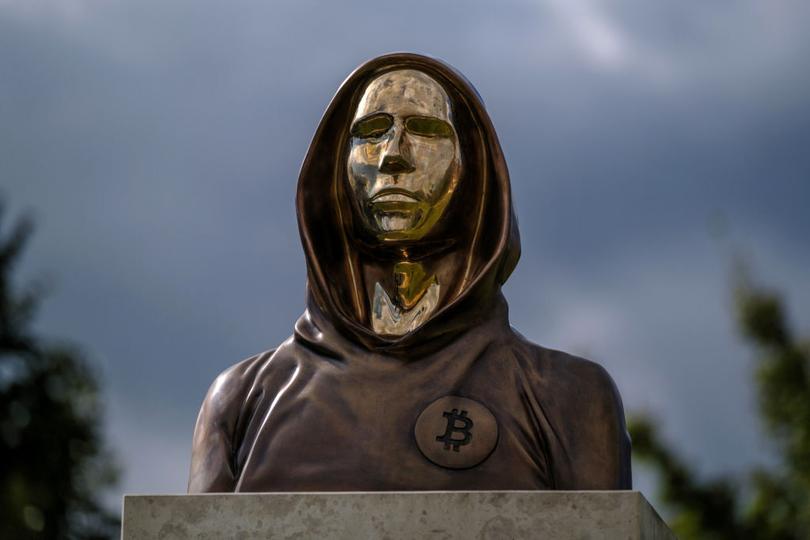
A new recovery tool from Project Eleven aims to protect Bitcoin from future quantum attacks by allowing owners to prove control of funds using modern wallet key derivation paths, which are quantum-resistant. While promising, the prototype is unaudited, incomplete, and notably cannot protect Satoshi Nakamoto's 1.1 million coins or other pre-2012 holdings.
Imagine your secret diary is locked with a special lock that a super-smart future computer could easily pick. This new tool is like a clever way to prove you own the diary by showing you know the secret family tree of keys that led to that lock, without actually showing the key itself. But here's the catch: if your diary was made before 2012, it doesn't have that family tree of keys, so this trick won't work for it, including the very first Bitcoin owner's coins.
Analysis
The Looming Quantum Threat to Bitcoin
Bitcoin's security relies heavily on elliptic curve cryptography (ECC) for transaction signatures. This system ensures that while a public key can be derived from a private key, reversing the process to find the private key from the public key is computationally infeasible for classical computers. However, the advent of quantum computing, specifically Shor's algorithm, poses a significant threat, as it could theoretically break ECC and allow an attacker to derive private keys from exposed public keys, thereby forging signatures and stealing funds.
BIP-361, a proposal by Jameson Lopp and others, addresses this 'Q-Day' scenario by suggesting a freeze on quantum-vulnerable coins, which constitute over 34% of Bitcoin's supply. This includes the substantial holdings of Bitcoin's pseudonymous creator, Satoshi Nakamoto. The proposal envisioned a recovery path using zero-knowledge proofs, a cryptographic technique allowing one to prove knowledge of a secret without revealing the secret itself.
Project Eleven's Novel Recovery Mechanism
Project Eleven, a quantum research firm, claims to have developed a practical zero-knowledge proof system that fulfills the recovery path outlined in BIP-361. Their solution leverages the fact that while elliptic curve signatures are vulnerable to quantum attacks, the one-way hashing functions used in modern hierarchical deterministic (HD) wallets (BIP-32 and later) are not. Grover's algorithm, the best-known quantum attack on hashing, only halves the exponent, leaving a 256-bit hash still effectively uncrackable.
The system allows a user to prove knowledge of the key material higher up in their wallet's derivation tree, which in turn derives the compromised address. This proof, bound to a specific migration transaction, can authorize the movement of funds without ever exposing the private key. Benchmarks for Project Eleven's prototype are impressive, showing proof generation in 243 milliseconds on a laptop and verification in 40 milliseconds, significantly faster than previous attempts and requiring no GPU or trusted setup.
Limitations and the Satoshi Conundrum
Despite its promising performance, Project Eleven's prototype has significant limitations. Crucially, it cannot protect Satoshi Nakamoto's estimated 1.1 million BTC or any other coins held in wallets created before BIP-32 was introduced in February 2012. These older wallets generated keys independently and randomly, lacking the hierarchical derivation path that Project Eleven's solution relies upon. Their public keys were often written directly on-chain, making them inherently vulnerable once quantum computers become powerful enough.
Furthermore, the prototype is currently unaudited, incomplete, and only supports three Bitcoin address types, notably excluding Taproot. For it to protect any live coins, contentious changes to Bitcoin's blockchain rules would be required, a process that is historically difficult and often met with resistance within the community. While a significant step forward in addressing the quantum threat, the solution's inability to secure the earliest and most iconic Bitcoin holdings underscores the complex challenges ahead for quantum-proofing the entire network.
Key points
- Project Eleven has developed a zero-knowledge proof system to recover Bitcoin from quantum-vulnerable addresses.
- The solution leverages quantum-resistant hashing in modern wallet key derivation paths (BIP-32 and later).
- The prototype demonstrates fast proof generation (243ms) and verification (40ms) on a laptop.
- It cannot protect Satoshi Nakamoto's 1.1 million BTC or any other coins from pre-2012 wallets due to their lack of derivation paths.
- The system is currently unaudited, incomplete, and requires contentious blockchain rule changes for live implementation.
This development represents a significant step towards a practical solution for Bitcoin's quantum vulnerability, offering a viable recovery path for a large portion of existing coins. If successfully implemented and adopted, it could secure modern Bitcoin holdings against future quantum attacks, bolstering the network's long-term resilience.
The tool's inability to protect Satoshi's coins and other pre-2012 Bitcoin, which represent a substantial and historically significant portion of the supply, remains a critical flaw. Furthermore, its current unaudited status and the necessity for contentious blockchain rule changes present considerable hurdles to its real-world deployment and widespread adoption.