Blue Origin CEO says New Glenn will fly again before the year ends
Blue Origin says New Glenn can fly again this year after a May 28 launchpad explosion, while NASA's administrator says repairs could stretch to 2028.
Intelligence analysis by GPT-5.4 Mini
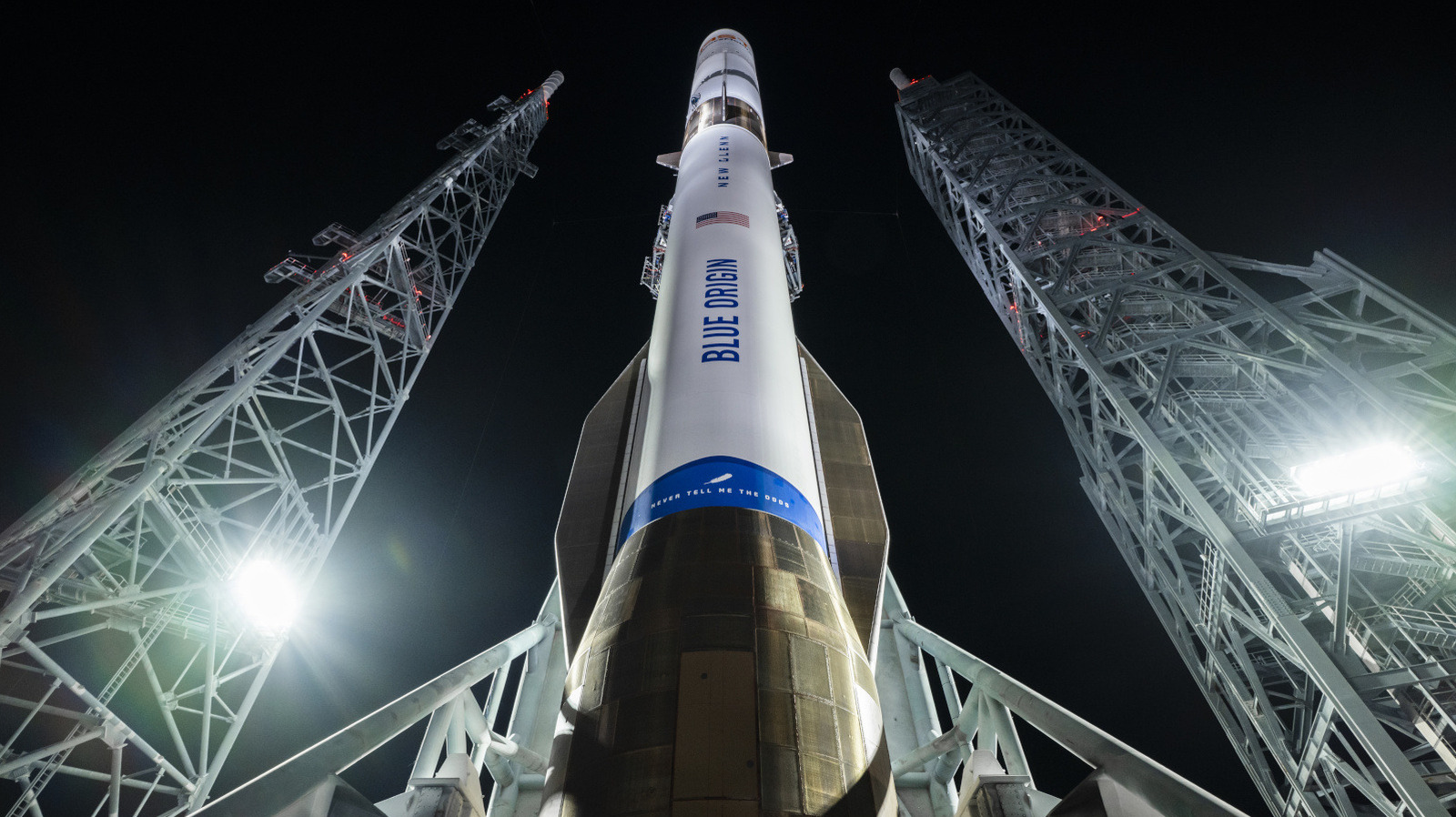
Blue Origin and NASA are offering very different timelines after a May 28 explosion at Launch Complex 36 during a hotfire test for New Glenn. Blue Origin says key pad hardware is still usable and that repairs can happen in place, but NASA's Jared Isaacman says recovery could take serious time.
Blue Origin had a big rocket test, and the place where the rocket launches from blew up. That is a problem because the rocket needs a safe launch spot to fly.
The company says many important parts are still okay, like the fuel tanks. It thinks the damaged tower can be fixed where it stands, kind of like mending a broken fence instead of building a whole new one.
A NASA leader thinks the repairs could take a very long time, even years. Blue Origin thinks it can fix things much sooner and get the rocket flying again before the end of this year.
Analysis
What happened
Blue Origin's Cape Canaveral launchpad exploded on May 28 while the company was conducting a hotfire test for New Glenn's fourth mission. The article says the rocket had only recently returned to testing after being grounded by the FAA following its third flight, which failed to place its payload into orbit.
Two very different repair timelines
NASA administrator Jared Isaacman told CNBC that restoring Launch Complex 36 could take "some serious time," and he said a 2028 timeline is within the realm of possibility. Blue Origin CEO Dave Limp, by contrast, wrote on X that the rocket will fly again "before the end of this year."
Limp later said Blue Origin had regained access to the launchpad and could begin investigating the damage. He said the rocket's fuel tanks were in good shape, and that the support tower was damaged but could be repaired in place instead of being torn down and replaced. He also said the propellant farm and the oxygen, liquid hydrogen, and LNG tanks were all in good shape.
Why the pad matters
The article frames the repair as important because Blue Origin is one of NASA's main launch providers for the Artemis and Moon Base programs. NASA has already chosen Blue Origin for the Moon Base I mission launching this fall. The company is also expected to support Amazon's Leo satellite launches for broadband service. Blue Origin does have another launchpad planned at Vandenberg Space Force Base, but the article says it is not expected to be ready until 2028, so it cannot solve the immediate gap.
Key points
- Blue Origin's New Glenn launchpad exploded during a hotfire test on May 28.
- Dave Limp says the rocket will fly again before the end of 2026.
- NASA's Jared Isaacman says repairs could take serious time, with 2028 possible.
- Blue Origin says several major pad systems are still in good shape.
- The outage matters because New Glenn supports NASA moon missions and Amazon satellite launches.
If Blue Origin is right, the company could repair Launch Complex 36 without rebuilding the whole site. That would let New Glenn return to flight before year-end and keep its NASA and Amazon-linked launch plans moving.
If the damage proves worse than Blue Origin says, repairs could take far longer than expected. The article also notes that the Vandenberg pad will not be ready until 2028, which could leave the company with limited launch options in the meantime.