Boats, bankers and borders: five symbols that sum up Brexit a decade on
The UK's vote to leave the EU in 2016 has left lasting fractures in society, economy, and international relations. Five symbols of the referendum debate reveal the complex legacy of Brexit.
Intelligence analysis by Llama 3.3 70B
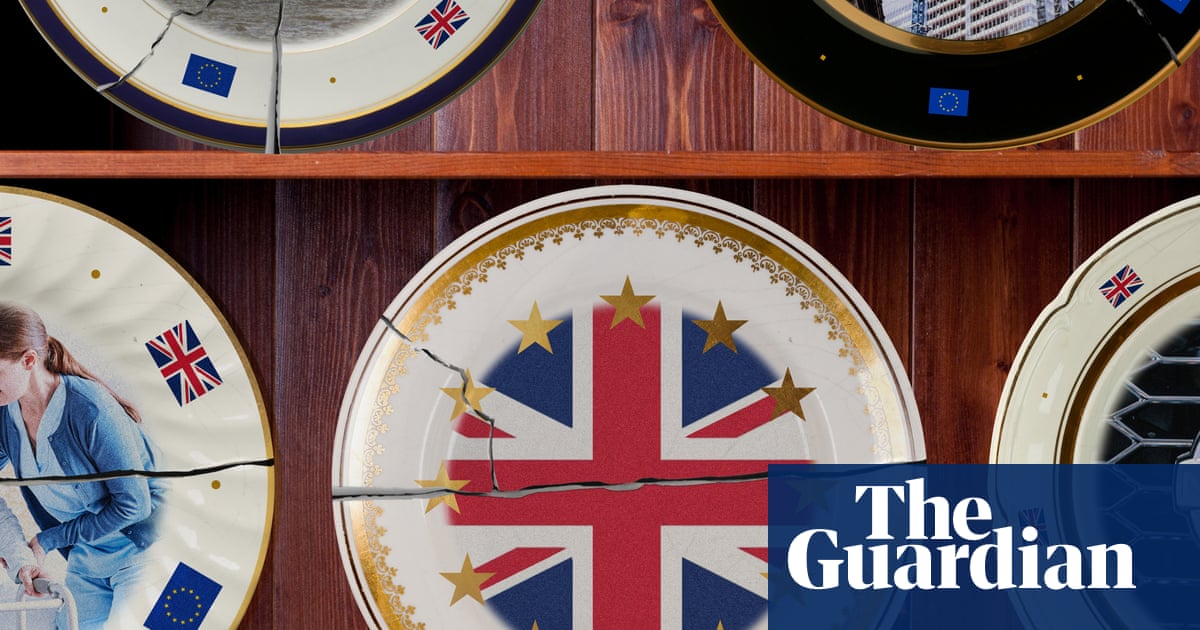
The Brexit referendum's impact is still felt, with symbols like Nissan's Sunderland factory, the Thames flotilla, and border control revealing the complexities of the UK's departure from the EU.
Imagine you have a big box of toys, and you want to play with your friends who have their own boxes of toys. But, you decide you don't want to play with them anymore, so you take your box and go home. That's kind of like what happened with Brexit, where the UK decided to leave the EU's 'playgroup'. Now, the UK has to figure out how to play with other countries and make new friends, but it's not as easy as it sounds.
Analysis
Brexit's Industrial Impact
The fate of Nissan's Sunderland factory was a pivotal issue in the run-up to the referendum. The site symbolized British manufacturing prowess, but the leave campaign's victory led to uncertainty and ultimately, a decline in car production. Despite state aid, the factory's output has decreased significantly since 2016.
The UK's automotive industry has suffered as a result of Brexit, with the country no longer being considered a prime location for investment. The EU's single market and customs union have become more attractive to manufacturers, leaving the UK to face the consequences of its decision.
Fishing and Aquaculture
The fishing industry played a significant role in the Brexit debate, with many fishers blaming the EU for their industry's decline. However, Brexit has failed to turn around the fortunes of the dwindling and aging industry. The UK's departure from the EU's common fisheries policy has not led to the expected benefits, and the industry remains struggling.
Border Control and Immigration
The issue of border control and immigration was a central theme in the Brexit debate. The leave campaign promised to take back control of the UK's borders, but the reality has been more complex. The UK's new immigration rules have made it harder to recruit skilled overseas workers, and the country's economy has suffered as a result.
Economic Consequences
The economic consequences of Brexit are still being felt, with the UK's economy facing significant challenges. The decline of the automotive industry, the struggles of the fishing sector, and the impact of new immigration rules have all contributed to a complex and uncertain economic landscape.
Future Prospects
The future prospects of the UK's economy and society remain uncertain, with the legacy of Brexit continuing to shape the country's trajectory. As the UK navigates its new relationship with the EU and the rest of the world, it must come to terms with the consequences of its decision to leave the EU.
Key points
- The UK's vote to leave the EU has left lasting fractures in society, economy, and international relations
- The automotive industry has suffered as a result of Brexit, with the UK no longer being considered a prime location for investment
- The fishing industry has failed to benefit from Brexit, with the UK's departure from the EU's common fisheries policy not leading to expected benefits
The UK's departure from the EU could lead to new opportunities for trade and investment, as the country seeks to establish itself as a major player on the global stage. With the right policies and strategies in place, the UK could potentially thrive outside of the EU.
The UK's economy and society may continue to suffer as a result of Brexit, with the country facing significant challenges in terms of trade, investment, and immigration. The legacy of Brexit could lead to long-term uncertainty and instability, making it difficult for the UK to recover and thrive.