BOE May Tolerate Temporary Above-Target Inflation to Support UK Economy, Bailey Says
Bailey said the Bank of England could accept inflation above 2% for a time if it helps a weak UK economy, as long as wider price pressures do not spread.
Intelligence analysis by GPT-5.4 Mini
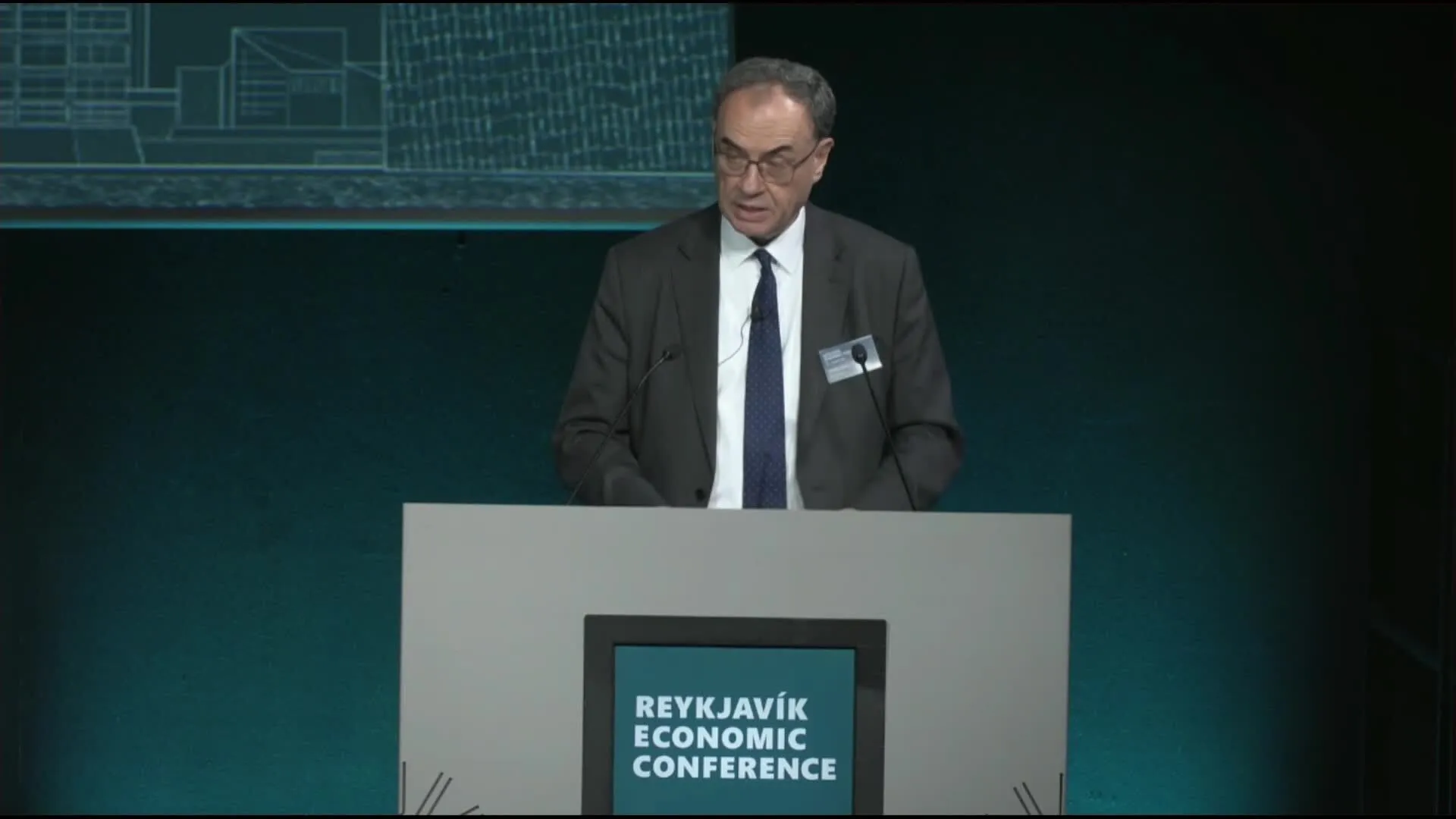
Andrew Bailey said the Bank of England may be willing to live with inflation above target temporarily to give the UK economy support. He framed it as a trade-off, but said the central bank would still watch for second-round price effects.
The Bank of England is like a person steering a car. It usually tries to keep prices steady, but sometimes the road gets bumpy and the driver has to choose between two bad options.
Bailey said the bank might let prices stay a little too high for a short time if that helps the UK economy stay stronger. That is like letting the car go a bit faster for a moment to avoid stalling.
He also said the bank would be careful not to let that small price rise turn into a bigger, lasting problem. It is okay to wait a little, but not okay if the trouble starts spreading everywhere.
Analysis
What Bailey said
At an economic conference in Reykjavík, Iceland, Bank of England Governor Andrew Bailey said the central bank could temporarily tolerate inflation above its 2% target if that helps support the UK economy. He described the situation as a trade-off created by softness in the real economy and uncertainty about the size and duration of the shock.
The policy logic
Bailey’s key condition was that second-round price effects must not emerge. In other words, the BOE would be more comfortable letting inflation run a bit hot for a while if it does not start feeding into broader, self-reinforcing price increases across the economy. That distinction matters because central banks can look through short-lived inflation spikes, but they are much more wary of inflation becoming embedded.
Market relevance
The remarks suggest the BOE may be prepared to prioritize growth support if the economic slowdown remains weak enough to justify it. For investors, that is a signal to watch the balance between inflation data and activity data when trying to infer the next policy move. The statement does not amount to a formal policy shift, but it does clarify how Bailey is thinking about the near-term decision framework: inflation control still matters, but so does avoiding unnecessary damage to an already soft economy.
Key points
- Bailey said the BOE could tolerate temporary above-target inflation if needed to support the UK economy.
- He said that approach is appropriate given softness in the real economy and uncertainty about the shock.
- Bailey warned that second-round price effects must not emerge.
- The comments highlight the BOE’s trade-off between inflation control and economic support.
