Brazil turns to China trade deal after Trump’s tariffs, as years of resistance end
Brazil turns to China trade deal after Trump’s tariffs, as years of resistance end. Chinese President Xi Jinping and Brazilian President Luiz Inacio Lula da Silva agreed on Sunday night to accelerate negotiations for a trade agreement between China and Mercosur.
Intelligence analysis by Llama
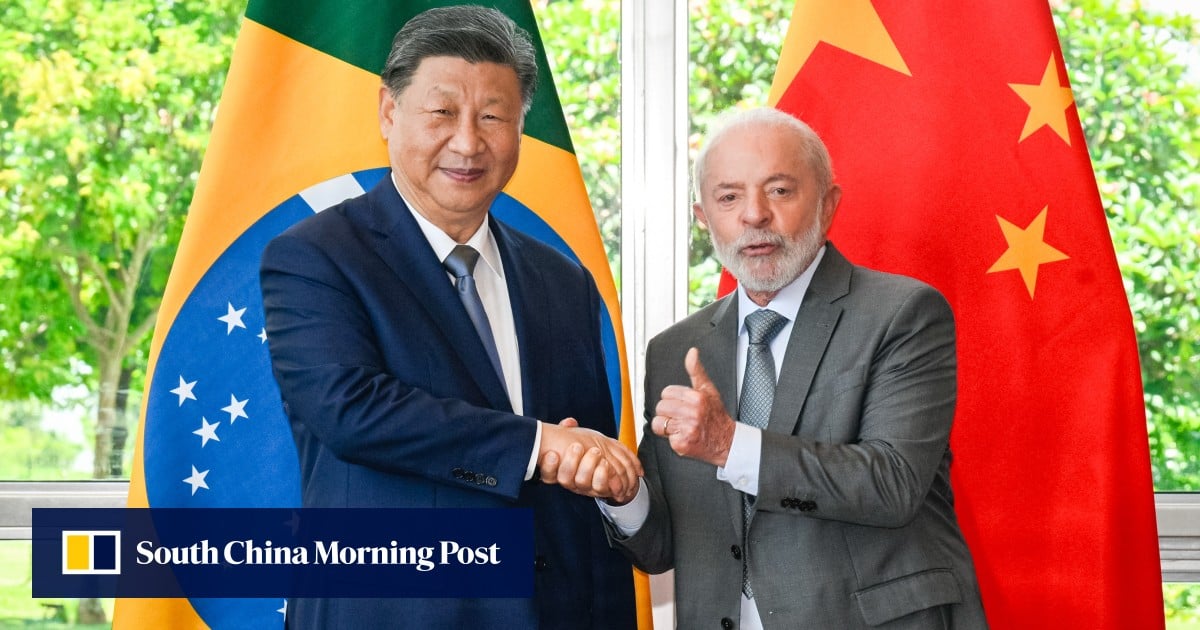
Brazil has agreed to accelerate negotiations for a trade agreement with China, reversing years of resistance. The agreement was reached during a phone call between Chinese President Xi Jinping and Brazilian President Luiz Inacio Lula da Silva. The two leaders discussed aligning their national development projects and expanding cooperation in strategic sectors, including artificial int…
Brazil has agreed to work with China on a trade deal, which means they will try to increase trade between their countries. This is a big change for Brazil, which used to resist working with China. The deal is expected to help Brazil's economy and also help China expand its influence in the region.
Analysis
A $60B Vote of Confidence
Brazil's decision to accelerate negotiations for a trade agreement with China marks a significant shift in the country's stance on trade with the Asian giant. For years, Brazil had resisted such a deal, but the imposition of tariffs by US President Donald Trump on part of Brazil's exports has changed the calculus. The 25 per cent tariff imposed by Trump on part of Brazil's exports took effect just days before the phone call between Xi and Lula, and the Brazilian government is likely to retaliate against the US tariffs. The agreement to accelerate negotiations for a trade agreement between China and Mercosur is a major victory for China, which has been seeking to expand its influence in the region. The deal is expected to boost trade between China and Mercosur, which includes Argentina, Paraguay, and Uruguay, in addition to Brazil. The two leaders also discussed aligning their national development projects and expanding cooperation in strategic sectors, including artificial intelligence and satellites. A short-stay visa waiver agreement was also announced, designed to boost tourism and business travel. The agreement is a significant development in the region, and it is likely to have implications for the global economy.
Why Cursor?
The agreement to accelerate negotiations for a trade agreement between China and Mercosur is a major victory for China, which has been seeking to expand its influence in the region. The deal is expected to boost trade between China and Mercosur, which includes Argentina, Paraguay, and Uruguay, in addition to Brazil. The two leaders also discussed aligning their national development projects and expanding cooperation in strategic sectors, including artificial intelligence and satellites. A short-stay visa waiver agreement was also announced, designed to boost tourism and business travel. The agreement is a significant development in the region, and it is likely to have implications for the global economy.
The Road Ahead
The agreement to accelerate negotiations for a trade agreement between China and Mercosur is a significant development in the region, and it is likely to have implications for the global economy. The deal is expected to boost trade between China and Mercosur, which includes Argentina, Paraguay, and Uruguay, in addition to Brazil. The two leaders also discussed aligning their national development projects and expanding cooperation in strategic sectors, including artificial intelligence and satellites. A short-stay visa waiver agreement was also announced, designed to boost tourism and business travel.
Key points
- Brazil has agreed to accelerate negotiations for a trade agreement with China.
- The agreement was reached during a phone call between Chinese President Xi Jinping and Brazilian President Luiz Inacio Lula da Silva.
- The two leaders discussed aligning their national development projects and expanding cooperation in strategic sectors, including artificial intelligence and satellites.
- A short-stay visa waiver agreement was also announced, designed to boost tourism and business travel.
If this development plays out positively, it could lead to increased trade between Brazil and China, which could boost Brazil's economy and help China expand its influence in the region. The agreement to accelerate negotiations for a trade agreement between China and Mercosur is a significant development in the region, and it is likely to have implications for the global economy.
However, the agreement to accelerate negotiations for a trade agreement between China and Mercosur also raises concerns about the potential impact on Brazil's domestic industries and the country's ability to compete with Chinese imports. Additionally, the imposition of tariffs by US President Donald Trump on part of Brazil's exports could lead to retaliatory measures from Brazil, which could further complicate the situation.