Brazilian Farmers Are Tokenizing Cows to Get Farm Loans—And It's Working
Brazilian dairy farmers used blockchain-tracked cows as loan collateral in a first-of-its-kind deal registered on B3. The structure cut inspection friction and may make livestock-backed lending easier.
Intelligence analysis by GPT-5.4 Mini
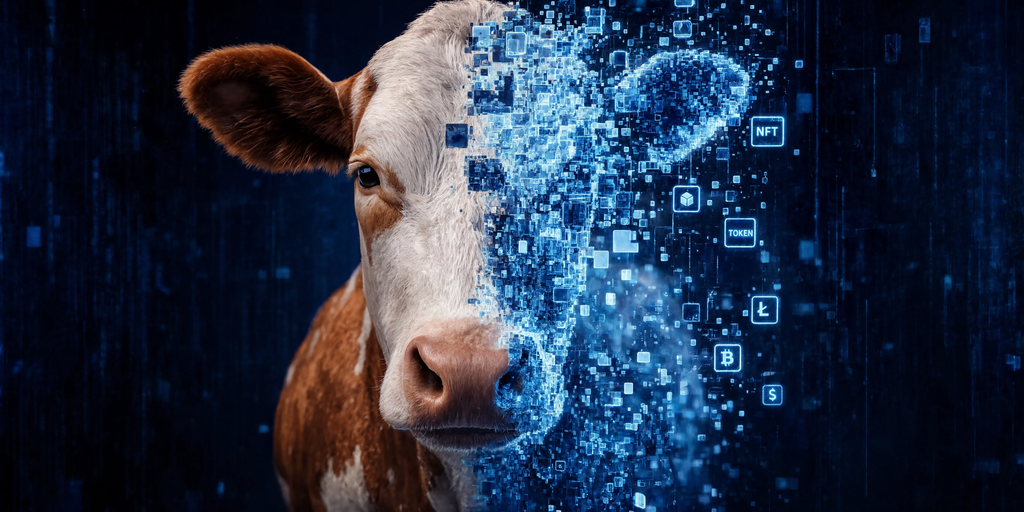
Ten cows at a farm in Paraná backed a R$100,000 CPR-F loan after each animal got a blockchain ID tied to sensor collar data. The deal is being used as a live test of whether tokenized real-world assets can make farm credit cheaper and faster.
A farm used smart bracelets and a digital record for its cows so a bank could trust them as loan security. It is like putting a name tag and tracking card on each cow so the bank knows exactly what it is lending against.
Analysis
Cows as Collateral, Rebuilt for a Digital Market
The key twist in this story is not that cows were pledged as collateral, but how they were documented. According to Decrypt, the animals at Fazenda Engenho Velho were given unique blockchain IDs, with data coming from AI-powered sensor collars supplied by Cowmed. That made the collateral legible to lenders without the usual on-site scrutiny.
That matters because livestock is difficult collateral for banks to price. The article says lenders often apply steep discounts to animal-backed loans, in part because inspection is expensive and the asset can move, die, or change value. By turning the herd into a trackable data set, the financing process becomes more like underwriting a recorded asset than betting on a barn full of living inventory.
B3 Is Turning Tokenization Into Infrastructure
The fact that the deal was formally registered on B3 gives it more weight than a private crypto experiment. It places tokenized livestock inside a recognized market structure rather than outside the system as a novelty. That makes the transaction interesting to anyone watching how blockchains can plug into established financial rails instead of replacing them.
This is also where the story stops being about cows and starts being about credit plumbing. If a stock exchange can recognize tokenized animals as acceptable loan support, then other physical assets could follow the same path. The practical prize is not speculative trading; it is faster verification, lower friction, and potentially broader access to financing for borrowers that traditional lenders have treated as cumbersome.
What This Test Could Prove or Expose
The upbeat case is straightforward: if the model works repeatedly, farmers may get cheaper loans and banks may get more reliable visibility into what they are lending against. The article presents this as a real-world test of whether tokenizing physical assets can actually help farmers, which is a useful benchmark for the broader RWA narrative.
But the risks are just as real. A system built on sensor data and blockchain records still depends on the quality of the hardware, the integrity of the data, and the willingness of lenders to trust the model at scale. If any of those links break, the old problem returns in a new wrapper: financing physical assets that are hard to verify, hard to value, and hard to recover.
Key points
- Ten cows in Paraná backed a R$100,000 CPR-F loan registered on B3.
- Each cow received a unique blockchain ID tied to AI-sensor collar data.
- The setup avoided in-person inspections and reduced the usual livestock collateral discount.
- The deal is being treated as a test of tokenized real-world assets in traditional finance.
If this model keeps working, farmers could borrow more easily because their animals are easier to verify and price. It could also make lending cheaper by reducing the need for time-consuming inspections and heavy collateral discounts.
The system still depends on sensors, data quality, and lender trust, so a technical failure could weaken the whole setup. If banks do not broadly accept the model, the pilot may stay a one-off instead of becoming a standard way to finance farms.