Breakfast News: Brace for an AI Optics Shake-up
Marvell is reportedly in talks to acquire Lumentum, a key player in AI optics, amid a surge in demand for AI components. Alphabet's stock fell despite strong cloud growth, due to high capital expenditures and investment losses. Several tech companies reported earnings wit…
Intelligence analysis by Gemini 2.5 Flash Lite
The AI boom is creating bottlenecks, particularly in optics, with Marvell reportedly eyeing Lumentum. Meanwhile, Alphabet's growth comes at a high cost, impacting its stock. Earnings reports from Fortinet, ServiceNow, and others highlight the challenges and opportunities in the current tech landscape.
Imagine companies are building super-fast race cars (AI). To make them go faster, they need special roads (optics) to connect the engines (chips). One company might buy the company that makes these special roads because there aren't enough to go around. Meanwhile, another company is spending a lot of money building lots of roads, but people are worried it's costing too much.
Analysis
The Optics Bottleneck
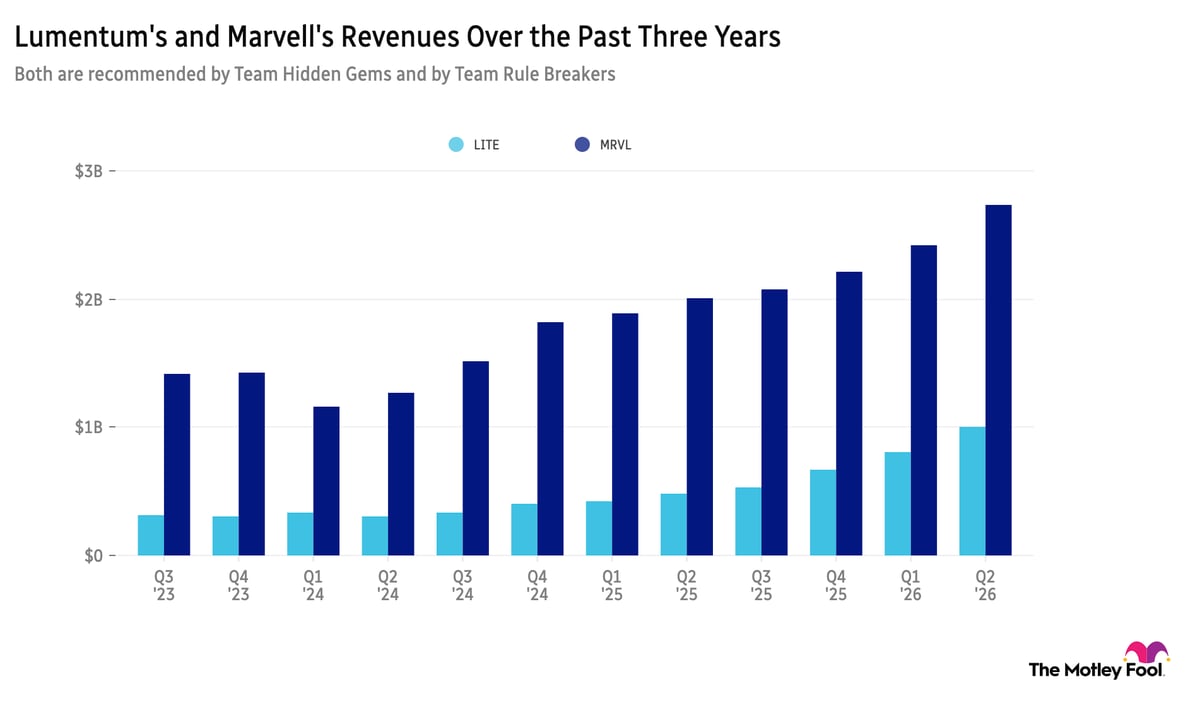
The artificial intelligence revolution is rapidly transforming the technological landscape, and with this transformation comes the emergence of new critical bottlenecks. One such bottleneck is in the realm of AI optics, which are essential for connecting the high-performance chips that power AI data centers. As AI clusters increasingly rely on light-based connections (optics) instead of traditional copper wires to link GPUs, the demand for these components has surged. Lumentum, a company specializing in the lasers and photonic circuits necessary for these connections, finds itself fully booked with AI component orders extending through 2029. This situation highlights a significant supply-demand imbalance, making companies like Lumentum highly strategic assets in the AI race.
Marvell's reported interest in acquiring Lumentum is a direct response to this emerging bottleneck. By potentially acquiring Lumentum, Marvell could gain direct control over the laser technology crucial for connecting AI chips. This strategic move would position Marvell to capitalize on the escalating demand for AI infrastructure, ensuring a stable supply of essential components for its own operations and potentially for its clients. The sheer scale of the potential acquisition, with Lumentum representing a substantial portion of Marvell's market capitalization, indicates the high stakes involved and the perceived value of controlling this critical AI supply chain element. The market's reaction, with Lumentum shares rising and Marvell's falling, reflects the uncertainty and potential financial strain such a large deal could impose.
Alphabet's AI Investment Calculus
Alphabet's recent financial report presented a complex picture, with strong revenue growth driven by its Google Cloud division, yet a significant stock price decline. The company's cloud revenue surged by over 100%, largely fueled by businesses renting AI compute power and utilizing Google's custom Tensor Processing Units (TPUs). This demonstrates the immense demand for AI infrastructure and Alphabet's strong position in providing these services. However, this growth came at a substantial cost, as evidenced by a swing to negative free cash flow and a massive increase in capital expenditures, which consumed nearly 40% of revenue.
The market's negative reaction appears to stem from concerns about the financial sustainability of this rapid AI build-out. While the top-line growth is impressive, the significant increase in spending on data centers and servers for AI training runs raises fears about future profitability and cash flow generation. The company's decision not to provide formal guidance further amplified these concerns, leaving investors uncertain about the trajectory of future investments and returns. The substantial loss on equity investment holdings also contributed to a decline in earnings per share, despite operating income growth, adding another layer of financial pressure.
Earnings Season Volatility
The current earnings season is revealing a stark divergence in performance and market reception, even among companies operating within the high-growth AI sector. Fortinet, a cybersecurity firm, saw its stock plummet after guiding for slower growth in the upcoming quarter, despite solid year-over-year revenue increases. This suggests that even strong current performance may not be enough if future growth expectations are not met or are revised downwards. Similarly, ServiceNow experienced a significant drop in its stock price, attributed to the high costs associated with AI deployments, which led to a gross loss in its professional services segment.
In contrast, Microsoft's stock showed resilience, rising despite a surge in capital spending for its data centers and servers to support AI training. This could be attributed to its diversified business model and strong market position, which may allow it to absorb higher costs more effectively or pass them on to customers. Sterling Infrastructure, on the other hand, saw its revenue more than double, driven by data center and semiconductor demand, though its stock experienced a slight dip, indicating that market sentiment can be complex and influenced by various factors beyond raw revenue growth. Chipotle's stock rose on revenue growth, but a dip in net income highlights that profitability can be a key concern for investors, even in consumer-facing businesses.
Key points
- Marvell is reportedly in advanced talks to acquire Lumentum, a key supplier of AI optics components.
- The demand for AI optics is surging, with Lumentum fully booked through 2029.
- Alphabet's stock fell despite strong cloud revenue growth due to high capital expenditures and investment losses.
- Fortinet and ServiceNow saw significant stock drops following earnings reports due to growth guidance and AI deployment costs.
- The AI build-out requires substantial investment in data centers and servers, impacting company financials.
If Marvell successfully acquires Lumentum, it could solidify its position as a leader in the critical AI optics supply chain, potentially leading to sustained growth and market dominance. Alphabet's continued investment in AI infrastructure, despite current costs, could position it to capture a larger share of the future AI market, driving long-term profitability.
A failed acquisition of Lumentum could leave Marvell vulnerable in the competitive AI optics market, while a large, debt-financed deal could strain its finances. Alphabet's high capital expenditures and negative free cash flow raise concerns about its ability to achieve profitability from its AI investments without significant further cost-cutting or revenue acceleration.