‘BRICS can reduce Iran’s trade costs’
Iran believes leveraging BRICS financial mechanisms and national currency settlements can significantly lower its trade costs, offering a pathway to bypass Western-dominated financial systems.
Intelligence analysis by Gemini 2.5 Flash
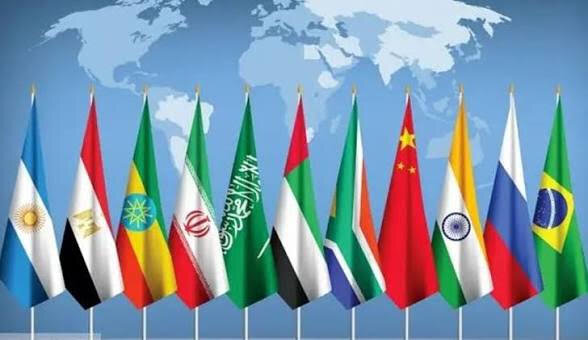
The Vice Chairman of the Iran-Russia Joint Chamber of Commerce highlights BRICS as a crucial platform for Iran and other developing economies to reduce financial vulnerability and enhance bargaining power against the West, primarily through dedicated payment systems and national currency settlements, though internal reforms are essential for Iran to fully capitalize.
Imagine a club where countries can trade their goods without always needing to use the grown-ups' special money, the dollar. Iran wants to join this club, called BRICS, so it can swap its stuff with other countries using its own money, the rial, or their money, like rubles or yuan. This would make trading cheaper and easier, but first, Iran needs to make sure its own money is strong and steady, like a sturdy building block, so other countries trust it.
Analysis
The global economic landscape is undergoing a significant shift, moving away from traditional, Western-centric financial structures towards more multilateral and decentralized mechanisms. Emerging blocs like BRICS are at the forefront of this transition, offering initiatives such as dedicated payment systems and national currency settlements. For Iran, which faces extensive international sanctions and limited access to systems like SWIFT, these developments present a critical opportunity to reduce trade costs and enhance financial independence. The article underscores that while external technical obstacles exist, Iran's ability to fully utilize these opportunities largely depends on internal structural reforms and monetary policymaking.
BRICS Pay
One of the key components of the BRICS initiative discussed is the 'BRICS Pay' system, designed to establish independent payment systems separate from SWIFT. This system aims to facilitate settlements using national currencies, a practical step towards reducing reliance on the U.S. dollar and euro. While the long-term vision of a single BRICS currency is acknowledged as a distant goal, the immediate focus is on enabling multilateral clearing and settlement houses for national currencies. This mechanism would address issues like bilateral trade surpluses and deficits, allowing central banks to coordinate and settle imbalances directly, thereby streamlining trade and making national currencies more viable for international transactions.
Kambiz Mirkarimi
Kambiz Mirkarimi, Vice Chairman of the Iran-Russia Joint Chamber of Commerce, emphasizes that Iran and Russia stand to benefit most from BRICS's financial mechanisms due to their shared experience with sanctions and financial constraints. Mirkarimi points out that the lack of SWIFT connectivity has made financial transfers high-risk and costly for Iranian businesses. He believes that any method facilitating or reforming this path will significantly improve trade relations. Mirkarimi also highlights that while BRICS offers the tools and capacities for investment projects and trade, internal challenges within Iran, such as multiple exchange rates and complex foreign exchange regulations, often push traders towards intermediary currencies like the dollar and euro, despite the availability of bilateral financial messengers.
Iranian rial
For Iran to fully integrate its national currency, the rial, into the BRICS calculation basket, significant monetary stability and regulatory reforms are required. The article notes that currencies like the Russian ruble and Chinese yuan have demonstrated relative stability, making them acceptable for trade among member countries. If Iran wishes for the rial to be similarly defined in this joint basket, it must provide the necessary requirements to stabilize its value. This stabilization is crucial for building confidence among BRICS members to trade using the rial, ultimately leading to a reduction in Iran's overall trade costs and greater financial integration within the bloc.
Key points
- BRICS financial mechanisms, including national currency settlements, can reduce Iran's trade costs and bypass SWIFT.
- Iran and Russia are seen as primary beneficiaries due to existing sanctions and financial constraints.
- The 'BRICS Pay' system aims to create independent payment systems and multilateral clearing houses for national currencies.
- For the Iranian rial to be included in the BRICS currency basket, Iran must stabilize its value and reform domestic foreign exchange regulations.
- Internal barriers like multiple exchange rates and administrative complexities currently deter full utilization of available financial infrastructure.
By leveraging BRICS mechanisms, Iran could significantly reduce its trade costs and bypass Western sanctions, leading to more stable and predictable trade relations with key partners like Russia and China. This shift could enhance Iran's financial autonomy and foster greater economic resilience against external pressures.
Iran's internal economic challenges, including the instability of the rial and complex foreign exchange regulations, could hinder its ability to fully integrate into BRICS financial systems. This might limit the potential benefits, forcing continued reliance on intermediary currencies and preventing a complete reduction in trade costs.