Building the Army of tomorrow: How this force planner is preparing for future warfare
Lieutenant-Colonel Brandon Tan, a force planner in the Singapore Armed Forces, discusses his work shaping the Army's long-term development and the importance of developing soldiers who can adapt and lead through change.
Intelligence analysis by Qwen 2.5 (3B)
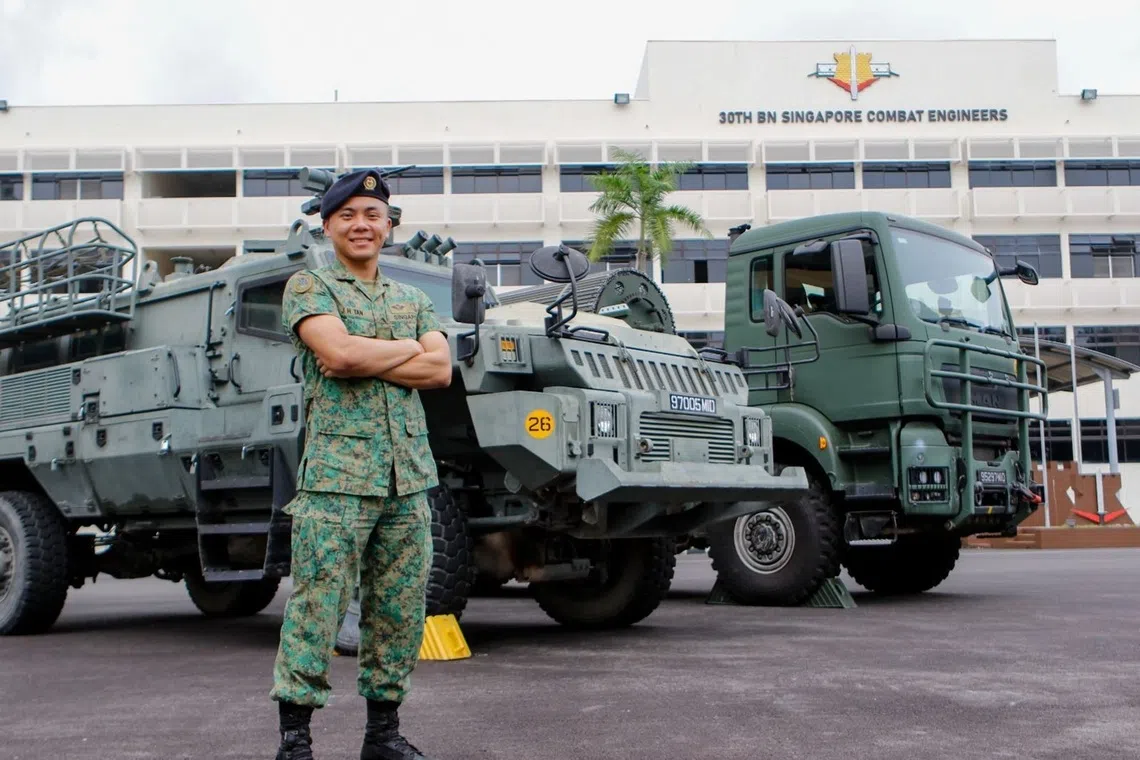
Lieutenant-Colonel Brandon Tan, a force planner in the Singapore Armed Forces, discusses his work shaping the Army's long-term development and the importance of developing soldiers who can adapt and lead through change.
Lieutenant-Colonel Brandon Tan helps plan for the future of the Army. He believes the most important thing is to make soldiers who can think, adapt, and lead. He learned this from his wing commander at Officer Cadet School who always supported his cadets. He wants soldiers to be able to do their best and make their contributions meaningful.
Analysis
The Heartbeat of the Future Army
Lieutenant-Colonel Brandon Tan, as Deputy Assistant Chief of General Staff for Plans and Head Force Plans, is responsible for shaping the Army's long-term development. His work is grounded in the belief that the Army's most important asset is its soldiers. He emphasizes the need to develop soldiers who can think critically, adapt, and lead through change. He draws on his experiences at Officer Cadet School (OCS) where his wing commander's dedication to his cadets left a lasting impression. His wing commander's approach to leadership, which involved being present and supportive, inspired Tan to become a leader who recognizes and brings out the best in every soldier.
The Future of Warfare
Tan believes that while technology is important, it will never fully replace the visceral element of warfare, which requires strong leadership. He draws on Carl von Clausewitz's ideas, emphasizing that technology is a means to an end. He also notes that the Army's most important asset is its soldiers, who must be equipped with the ability to think critically, adapt, and lead through change. He emphasizes the importance of understanding each soldier's interests and strengths, deploying them meaningfully, and showing how their contribution matters to the team.
Putting People-First Leadership into Practice
Tan's approach to leadership is reflected in his role as commanding officer of the 30th Battalion, Singapore Combat Engineers (30 SCE). He encourages soldiers to apply their skills and innovative mindset to improve training and everyday processes. He conducts hands-on equipment inspections with personnel from 30 SCE, demonstrating his commitment to putting people-first leadership into practice. This approach ensures that the last man or woman on the ground is not left behind, and that soldiers bring their best to their subsequent years of Operationally Ready National Service.
Key points
- Lieutenant-Colonel Brandon Tan is a force planner in the Singapore Armed Forces
- He believes the most important asset of the Army is its soldiers
- He emphasizes the need to develop soldiers who can think critically, adapt, and lead
- He learned this from his wing commander at Officer Cadet School who always supported his cadets
- He wants soldiers to be able to do their best and make their contributions meaningful
If the Army can develop soldiers who can think, adapt, and lead, it will be ready for the future of warfare. This will ensure the Army remains relevant and can respond to unforeseen disruptions.
If the Army fails to develop soldiers who can think, adapt, and lead, it may struggle to respond to new technologies and unforeseen disruptions in the future.