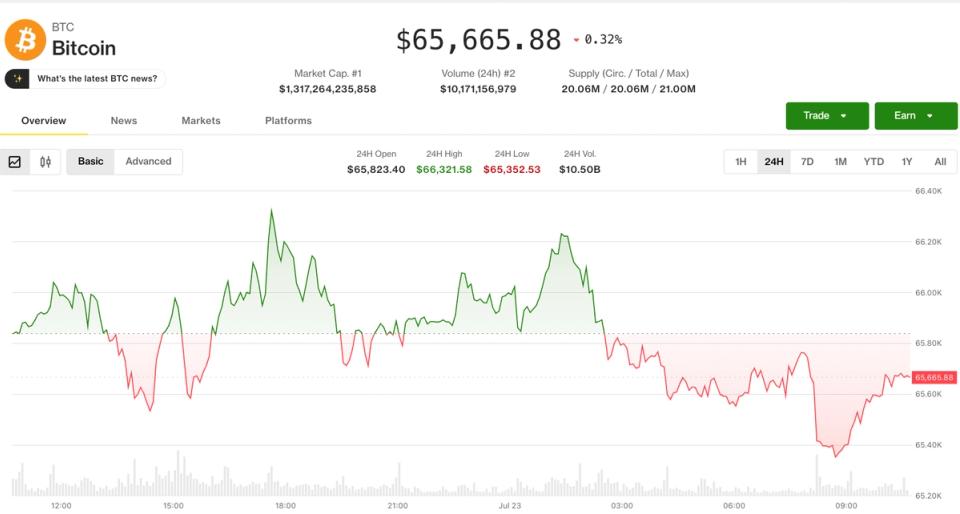
Bulls face a test unlike anything in bitcoin's 17-year history
Bitcoin faces an unprecedented macro challenge from 30-year Treasury Inflation-Protected Securities (TIPS) offering a 17-year high yield of nearly 3% above inflation.
Intelligence analysis by Gemini 2.5 Flash

The crypto market is navigating a unique macro environment where traditional safe-haven bonds offer significant inflation-adjusted returns, potentially increasing the opportunity cost for riskier assets like Bitcoin. Despite this, Bitcoin spot ETFs are seeing inflows, though broader market volatility from tech stocks or ongoing security breaches could still impact crypto.
Imagine you have a piggy bank, and someone offers you a special new piggy bank that promises to give you 3 extra coins for every 100 coins you put in, even after prices go up. This new piggy bank is super safe, like money from the government. Now, your old piggy bank (Bitcoin) doesn't give you extra coins, but some people think it's even better because no one can tell you what to do with it. The big question is whether people will choose the super safe, coin-giving piggy bank or stick with the special, independent one.
Analysis
The Macro Headwind: Elevated TIPS Yields
Bitcoin's current market environment is characterized by a macro challenge unlike any it has faced in its 17-year history. A key factor is the 30-year Treasury Inflation-Protected Security (TIPS) now yielding close to 3% above inflation, a 17-year high. This development presents a compelling 'wealth preservation opportunity' for investors, allowing them to lock in substantial real returns backed by the U.S. government for three decades.
In traditional finance, bonds are considered safe havens. When such an asset offers a guaranteed 3% return in excess of inflation, it significantly raises the opportunity cost of holding non-yielding or inherently riskier assets. This dynamic directly impacts assets like gold and, crucially, Bitcoin, which are often touted for their store-of-value properties but do not offer a yield.
Bitcoin's Resilience Amidst Challenges
Despite the formidable pull of elevated TIPS yields, Bitcoin has shown signs of resilience. Many within the crypto community argue that Bitcoin's decentralized and censorship-resistant nature makes it a superior store of value, an argument not entirely without merit. For instance, housing prices, when measured in Bitcoin, appear significantly cheaper than when denominated in dollars, suggesting a different perspective on its purchasing power.
Furthermore, the market has seen nearly $1 billion in inflows into spot Bitcoin ETFs over seven trading days. This suggests that institutional capital continues to be deployed into the asset, indicating a degree of confidence or a strategic allocation that is, for now, brushing aside the macro headwinds from bond markets. The question remains whether this resilience can be sustained against a prolonged period of high real yields.
Shifting Crypto Landscape and Broader Risks
The macro environment is not the only factor shaping the crypto landscape. The article also highlights BitMEX's decision to cease operations, signaling a deepening consolidation within the crypto derivatives space. As an 'OG exchange' that pioneered perpetual futures, its exit underscores a broader industry shift towards regulatory compliance and institutional maturity, where only a few large, liquid platforms can realistically compete in high-volume, commodity-like derivatives trading.
Simultaneously, the crypto ecosystem continues to grapple with security vulnerabilities. Recent reports detail multiple attacks on Bitcoin and Ethereum-linked protocols, resulting in over $35 million in losses within hours. These incidents, particularly targeting bridges and cross-chain protocols, cap an already punishing year for security. Such breaches erode trust and highlight persistent infrastructure risks. Moreover, the article warns that if bond market dynamics trigger a broader rotation out of tech stocks, the resulting volatility could easily spill over into the crypto market, adding another layer of risk for investors.
Key points
- The 30-year Treasury Inflation-Protected Security (TIPS) yield is near 3% above inflation, a 17-year high, posing a significant macro challenge for Bitcoin.
- This elevated real yield increases the opportunity cost of holding non-yielding or riskier assets like Bitcoin and gold.
- Despite macro headwinds, Bitcoin spot ETFs have seen nearly $1 billion in inflows over seven trading days, indicating continued institutional interest.
- BitMEX, a pioneering crypto derivatives exchange, is shutting down, signaling consolidation and a shift towards regulatory compliance in the industry.
- Recent security breaches on Bitcoin and Ethereum-linked protocols resulted in over $35 million in losses, highlighting ongoing vulnerabilities.
Despite the attractive yields from traditional safe havens, Bitcoin's continued institutional adoption, evidenced by significant spot ETF inflows, suggests a strong underlying demand. Its unique properties as a decentralized and censorship-resistant store of value could allow it to maintain its appeal, especially if investors prioritize these characteristics over yield.
The elevated real yields on U.S. TIPS could significantly increase the opportunity cost of holding non-yielding assets like Bitcoin, potentially drawing capital away from the crypto market. Furthermore, a broader rotation out of tech stocks due to bond market dynamics could trigger widespread volatility that spills over into crypto, exacerbating downward pressure.