Burnham urged to award £2.4bn military satellite contract to Airbus over US rival
Unite's Sharon Graham presses Burnham to award the £2.4bn Skynet 6 satellite contract to Airbus rather than Lockheed Martin, warning of 600 UK job losses and sovereignty risks.
Intelligence analysis by Llama
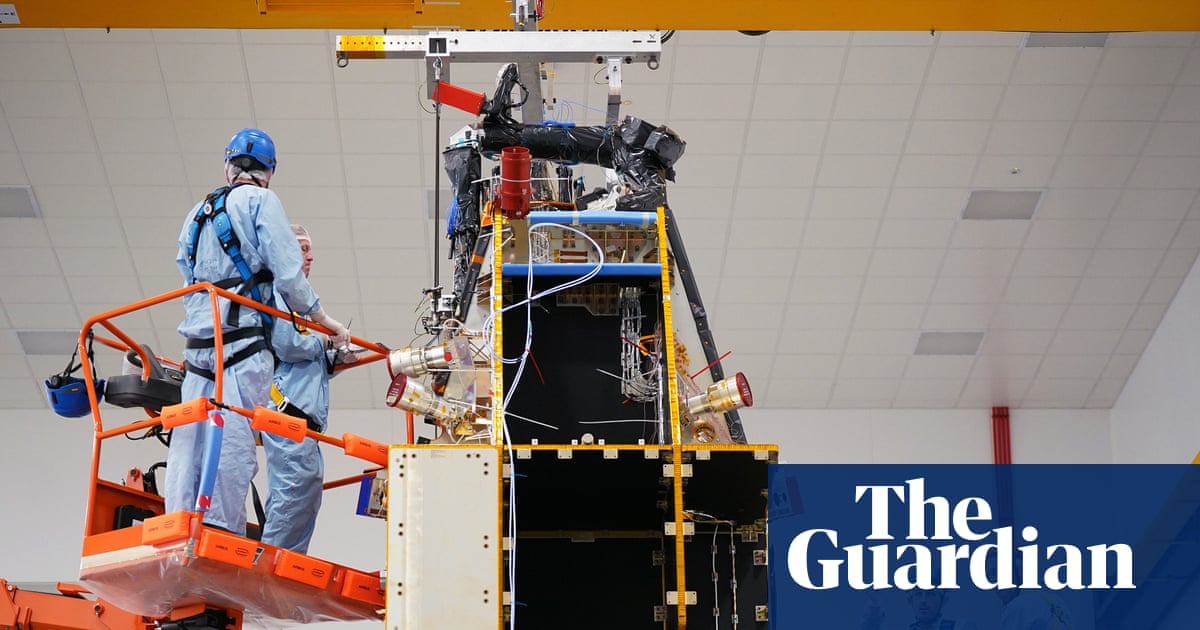
Unite's Sharon Graham presses Andy Burnham to pick Airbus over Lockheed Martin for the £2.4bn Skynet 6 satellite contract, warning that around 600 UK jobs in Stevenage and Portsmouth are at risk and that choosing the US bidder would hand British space capability to America.
Imagine the UK needs two super-important satellites. Two companies want to build them: Airbus, which already makes satellites in English towns, and Lockheed Martin, an American company. The workers at Airbus are worried the American company might win and they'd lose their jobs. Their union boss is asking the government to pick Airbus so everyone keeps their jobs.
Analysis
A Sovereignty Test in Geostationary Orbit
The Skynet 6 wideband satellite system — two geostationary satellites that will carry the UK Ministry of Defence's most sensitive military data — sits at the intersection of industrial policy, national security, and transatlantic diplomacy. Whoever wins the £2.4bn contract will not just build hardware; they will determine whether the UK retains sovereign control over the design and intellectual property behind its military communications backbone. Airbus and its predecessor companies have built every generation of Skynet since the first launch in 1969, anchoring a deep industrial cluster in Stevenage and Portsmouth. Critics of the Lockheed Martin bid, including Unite's Sharon Graham, frame the choice as a question of whether the UK is prepared to hand that capability to a US defence prime.
The concern is not abstract. Senior defence industry insiders quoted in the article warn that awarding the contract to Lockheed could prompt Airbus to relocate satellite construction overseas, undoing decades of accumulated UK expertise. Kevin Bonavia, the Labour MP for Stevenage, calls the satellite design-and-build capability "one of the UK's crown jewels of defence capability," according to the article. The loss would be felt not only in headcount but in the broader export potential of British-built military space technology, a sector where the UK has historically punched above its weight.
The Politics of Procurement
The contract has become an early stress test of Andy Burnham's pledge to use "public procurement to back British industry." That pledge now collides with the parallel promise of a defence investment plan that emphasises sovereign capability. The decision also lands on the desk of Wes Streeting as one of his first major spending calls as defence secretary, putting the political weight of the choice squarely on Labour's new intake. Unite, Labour's largest union backer, has chosen this contract as its first public test, signalling that the relationship between the party and its industrial base will be policed at the level of individual tenders, not just broad policy statements.
There is a transatlantic dimension the UK government cannot ignore. The article notes that the Trump administration wants allied countries to buy more American defence equipment, and that Lockheed Martin already makes parts for the F-35 in the UK. Refusing Lockheed here would be a notable signal to Washington; awarding the contract to Airbus would be read in the same terms. The decision therefore functions as a small but visible datapoint about how the new government will manage the US-UK relationship on defence trade.
Lockheed's Counter-Offer and the Clock
Lockheed Martin has not been passive. The company is promising roughly 500 direct jobs in the north-east of England, including a new assembly facility in Durham, plus around 1,500 roles across its supply chain. It has also committed to a research partnership with Northumbria University in Newcastle, and pledged that any intellectual property developed in the UK will remain in the UK. The pitch blends job creation, regional levelling-up appeal, and integration with the US military's own satellite architecture. The MoD, according to industry publication Defence Eye, is pushing for a decision as soon as 1 August, leaving little time for the political debate to settle.
That compression matters. The Unite campaign, the Bonavia intervention, and the looming Airbus-Thales-Leonardo space merger all converge on a single decision point. Whatever the outcome, the Skynet 6 contract will set a precedent for how Britain's defence procurement is balanced between domestic industrial policy and alliance obligations, a precedent that will be quoted the next time a similar choice arrives.
Key points
- Unite general secretary Sharon Graham urges Burnham to award the £2.4bn Skynet 6 contract to Airbus rather than Lockheed Martin
- Around 600 UK jobs at Airbus sites in Stevenage and Portsmouth are at risk if the US bidder wins, according to the union
- Lockheed Martin has counter-offered roughly 500 direct jobs in the north-east of England plus 1,500 supply chain roles
- The decision is the first major test of Burnham's pledge to back British industry through public procurement and an early call for new defence secretary Wes Streeting
- The MoD is reportedly pushing for a decision as soon as 1 August, and the choice also intersects with UK-US defence trade relations under the Trump administration
If Airbus secures the contract, the UK retains sovereign satellite IP, the Stevenage and Portsmouth clusters are preserved, and the country maintains export capability in a strategically significant defence technology area. The decision would also reinforce Burnham's procurement pledge and could strengthen the UK's negotiating hand on future defence trade with Washington.
If Lockheed wins, Airbus may relocate satellite construction abroad, costing hundreds of skilled UK jobs and weakening the long-term industrial base. The decision could also be read in Washington as a concession, reducing UK leverage on future defence trade talks and accelerating US control of sensitive UK military communications infrastructure.
Market signals
- AIR A £2.4bn Skynet 6 win would be a meaningful order book addition for Airbus and validate its UK satellite business, though the contract has not yet been awarded.
- LMT Sustained UK political pressure against the Lockheed bid, including from Unite, raises the risk that the company misses out on a sizeable UK defence order.
AI-generated analysis of potential market relevance. Not financial advice.