BYD Already Surpassed Ford, and It's Only Now Revving Up Ambitions. Here's How It Can Win.
BYD, a Chinese automaker, has surpassed Ford in total global units sold and is now aiming to become the world's top automaker, surpassing Toyota, within five years. It plans to achieve this goal through exports to emerging markets, continued focus on advanced technologies…
Intelligence analysis by Llama
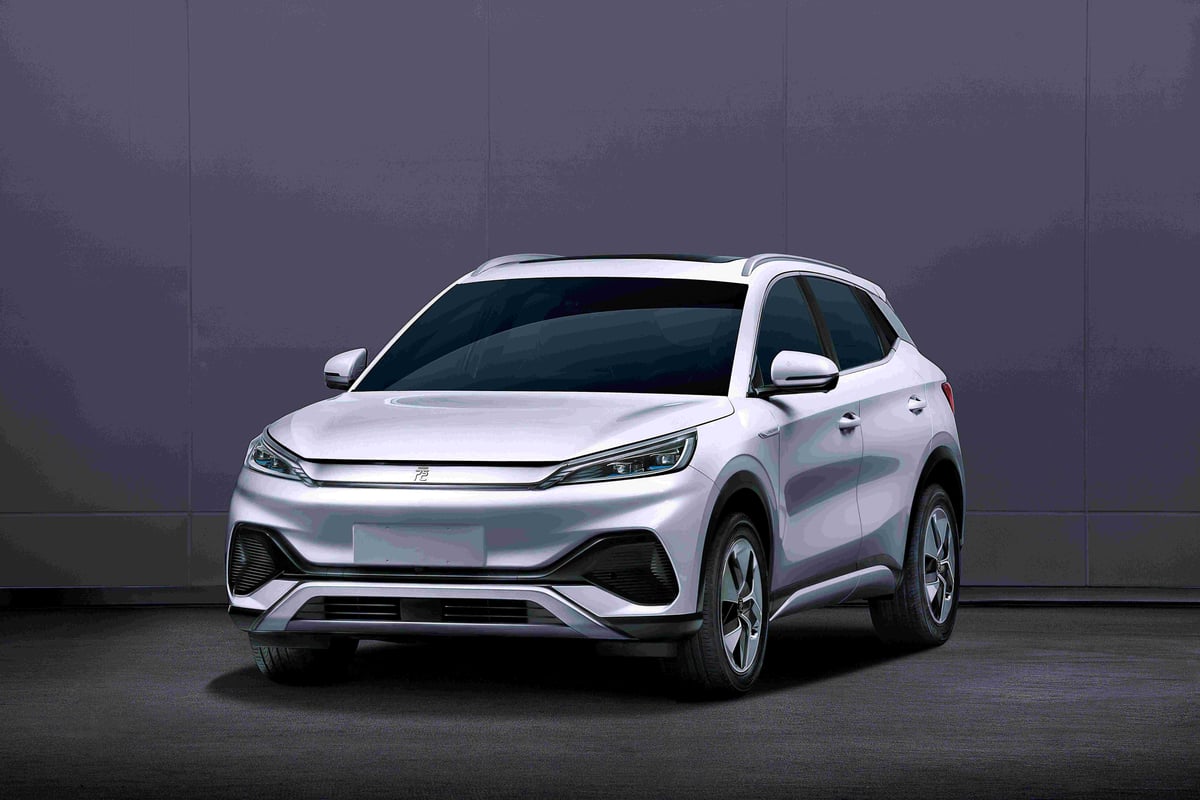
BYD's ambitious goal to become the world's top automaker within five years is driven by its competitive advantages in cost and vertical integration, strong footprint in both powertrains of the future, and ability to rapidly develop technology and new vehicles.
BYD is a Chinese automaker that wants to become the biggest car company in the world in five years. It plans to do this by selling more cars in countries like Europe, Australia, and Latin America, and by making better and more expensive cars. BYD is good at making cars that are affordable and good for the environment, and it wants to keep doing that while also making more expensive cars for people who want them.
Analysis
BYD's Ambitious Goal: Becoming the World's Top Automaker Within Five Years
BYD's new target is ambitious: to overtake Toyota Motor to become the undisputed largest car company in the world in five years. This feat is challenging, considering Toyota sold more vehicles last year globally at 11.3 million than BYD (~4.6 million) and Ford (~4.4 million) combined, by a fairly wide margin. However, BYD's competitive advantages in cost and vertical integration, strong footprint in both powertrains of the future, and ability to rapidly develop technology and new vehicles make it a strong contender for this goal.
BYD's Competitive Advantages
BYD has several competitive advantages that will help it achieve its goal. Firstly, its cost advantage is driven by its vertically integrated supply chain, which allows it to reduce development costs and increase order volume, thereby lowering unit costs. Secondly, BYD has a strong footprint in both powertrains of the future, with a strong presence in both battery-electric vehicles (BEVs) and plug-in hybrid electric vehicles (PHEVs). This allows it to cater to a wide range of customer needs and preferences. Finally, BYD has shown an ability to rapidly develop not only technology but new vehicles at a much faster pace than the global industry is accustomed to.
BYD's Strategy to Achieve Its Goal
BYD plans to achieve its goal through exports to emerging markets, continued focus on advanced technologies, and high-end vehicle development. Firstly, it will continue to focus on exports to regions with surging EV and PHEV demand, such as Europe, Southeast Asia, Australia, and Latin America. Secondly, it will continue to drive greater efficiencies through its vertically integrated supply chain to make its vehicle price points more aggressive. Finally, it will push high-end vehicle development through three brands: Denza, Fangchengbao, and Yangwang. This push will have incremental growth and come with higher margins.
Conclusion
BYD's ambitious goal to become the world's top automaker within five years is driven by its competitive advantages in cost and vertical integration, strong footprint in both powertrains of the future, and ability to rapidly develop technology and new vehicles. Its strategy to achieve this goal is focused on exports to emerging markets, continued focus on advanced technologies, and high-end vehicle development. While the goal is challenging, BYD's competitive advantages and strategy make it a strong contender for success.
Key points
- BYD has surpassed Ford in total global units sold and is aiming to become the world's top automaker within five years.
- BYD's competitive advantages in cost and vertical integration, strong footprint in both powertrains of the future, and ability to rapidly develop technology and new vehicles make it a strong contender for this goal.
- BYD plans to achieve its goal through exports to emerging markets, continued focus on advanced technologies, and high-end vehicle development.
- BYD's focus on exports to emerging markets could lead to increased demand for its vehicles in these regions, driving revenue growth.
- BYD's failure to achieve its goal could lead to increased competition from other automakers, potentially eroding its market share.
If BYD achieves its goal and becomes the world's top automaker, it could lead to increased investment in the Chinese automotive industry, driving further innovation and growth. Additionally, BYD's focus on exports to emerging markets could lead to increased demand for its vehicles in these regions, driving revenue growth.
If BYD fails to achieve its goal and becomes the world's top automaker, it could lead to increased competition from other automakers, potentially eroding its market share. Additionally, BYD's focus on exports to emerging markets could lead to increased regulatory risks, potentially impacting its ability to sell its vehicles in these regions.