BYD Shelves Own Malaysian Plant Plan, Looks to Local Partner
BYD, China's electric vehicle (EV) maker, has shelved plans to build its own assembly plant in Malaysia and is now in advanced talks with a local partner.
Intelligence analysis by Qwen 2.5 (3B)
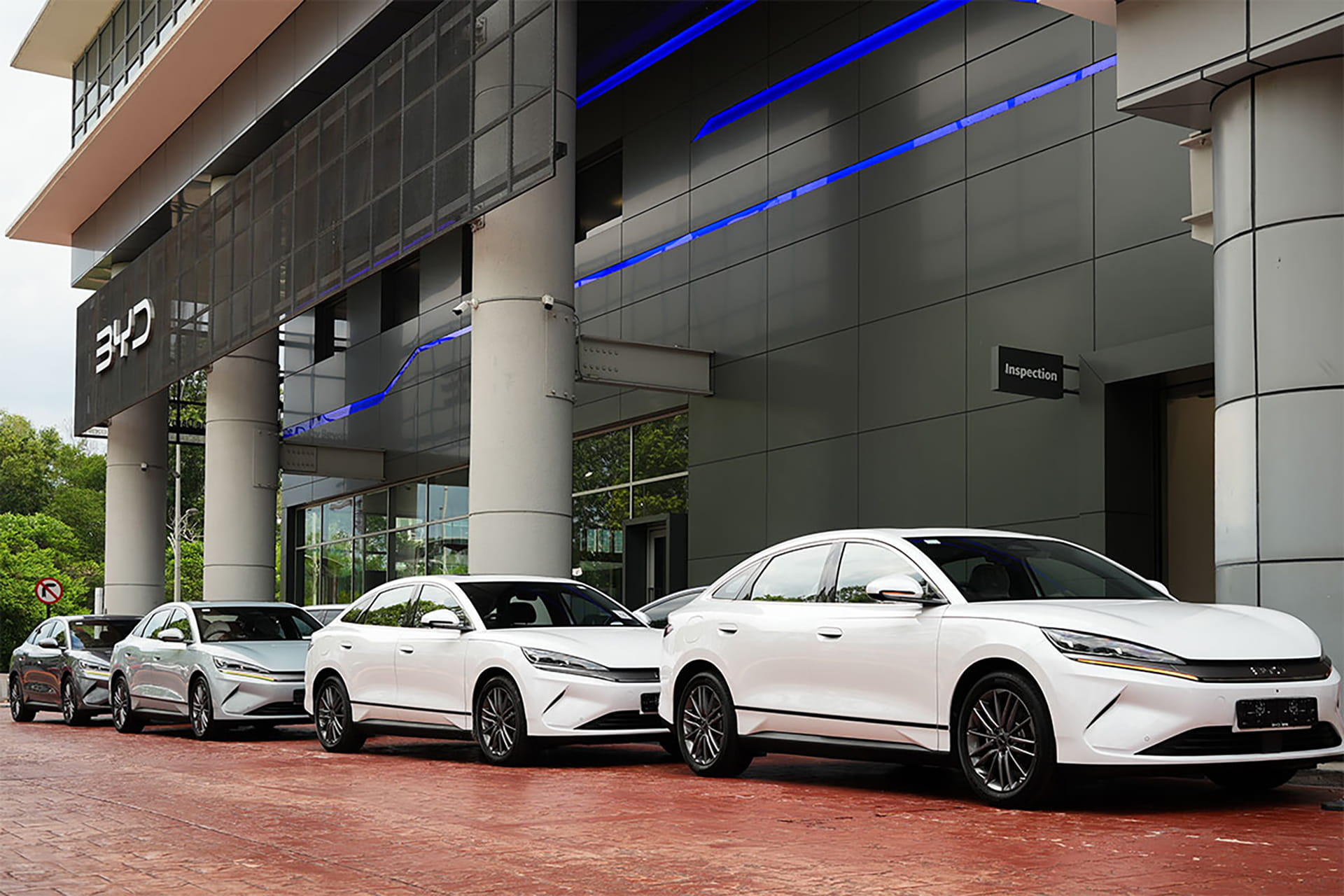
BYD, China's EV company, has decided not to build its own plant in Malaysia and is instead looking for a local partner to assist with production.
BYD, a big car company from China, wanted to build its own factory in Malaysia to make electric cars. But now they're not going to do that. Instead, they're talking to a local company to help them make cars in Malaysia.
Analysis
{"
BYD's Decision to Shelve Plant Plans":"BYD, a leading Chinese EV manufacturer, announced on September 10 that it has shelved its plans to build its own assembly plant in Malaysia. The company's managing director, Jacob Ma, stated that the Tanjung Malim facility will not proceed. Instead, BYD is now in advanced talks with a local partner to meet its production aims in the country. The decision comes after BYD failed to agree to conditions set by the Malaysian Ministry of Investment, Trade and Industry, which included a requirement that up to 80% of locally assembled vehicles are exported. BYD's culture is to explore for the long term, according to Ma.","
BYD's Previous Plans and Current Situation":"BYD had previously announced plans to build the Tanjung Malim facility in August 2025. The company has sold more than 35,000 EVs in Malaysia since entering the market in 2022. In the first six months of 2026, BYD sold over 7,000 EVs, making it the country's biggest EV seller. The new requirements for imported, fully assembled EVs in Malaysia, including a minimum declared cost, insurance, and freight (CIF) value of MYR 200,000 and a minimum power output of 245 horsepower, have made a local assembly plant more pressing for BYD. Sime Motors, BYD's official distributor in Malaysia, operates a plant in Kulim, Kedah, which BYD is considering for potential contract assembly partnerships.","
BYD's Future in Malaysia":"BYD's managing director, Jacob Ma, emphasized that the company is still committed to Malaysia and sees the country as an important market and strategic part of its growth in the future. He stated that changes will always take place as BYD's business grows and that strategies might be ","refined.":". Ma also mentioned that BYD is looking to build on its presence in Malaysia and is considering the location and arrangement of the facility, but the company's intention remains the same."}
Key points
- BYD has shelved plans to build its own assembly plant in Malaysia
- The company is now in advanced talks with a local partner to meet its production aims
- BYD has sold over 35,000 electric vehicles in Malaysia since entering the market in 2022
- New requirements for imported, fully assembled EVs in Malaysia have made a local assembly plant more pressing for BYD
- BYD's managing director, Jacob Ma, emphasized that the company is still committed to Malaysia and sees the country as an important market and strategic part of its growth in the future
BYD may still find a way to produce electric cars in Malaysia, even without their own factory. This could lead to more job opportunities and growth for the local automotive industry.
If BYD cannot find a local partner to help them, they might not be able to meet the new requirements for imported EVs in Malaysia, which could affect their sales and production in the country.