CAG flags shortage of drinking water, fans, toilets at New Delhi, Mumbai, Howrah, other key stations
The Comptroller and Auditor General (CAG) has identified significant shortfalls in basic passenger amenities like drinking water, fans, and toilets at major Indian railway stations, including New Delhi, Mumbai, Howrah, and Sealdah.
Intelligence analysis by Gemini 2.5 Flash
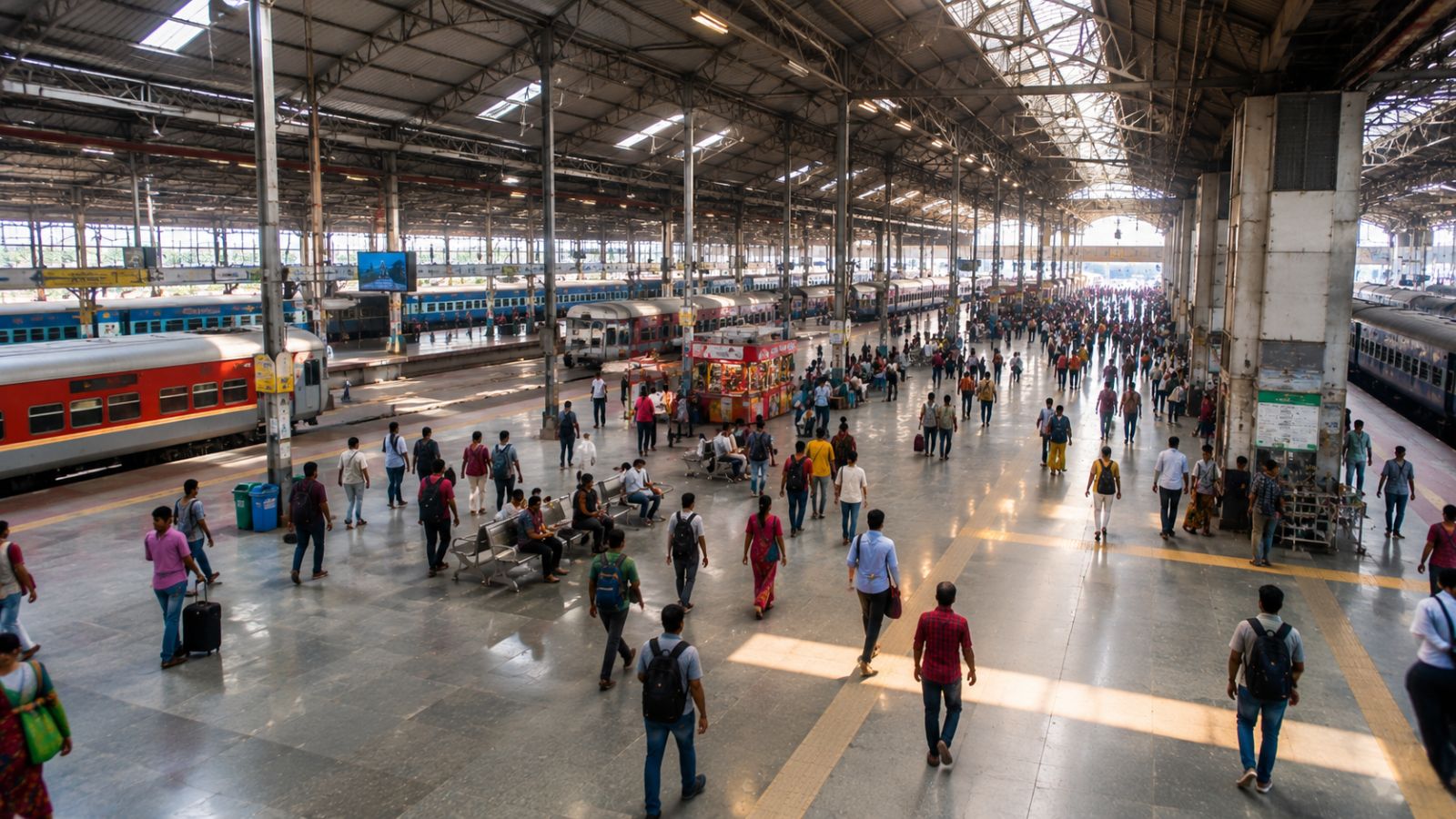
A recent CAG audit, covering 2019-20 to 2023-24, revealed widespread deficiencies in essential passenger facilities and sanitation across Indian Railways, despite detailed norms issued by the Railway Board. The report highlighted non-compliance with mandatory requirements at over 89% of the surveyed stations, indicating systemic gaps in maintenance and monitoring.
Imagine you're going on a train trip, and when you get to the station, there aren't enough water fountains, the fans are broken, and the toilets are dirty. A special government group, like a super-inspector, checked many train stations all over India and found that most of them were missing these important things, even though there are rules to make sure they have them. It's like a school not having enough clean bathrooms or drinking water for the kids, which isn't fair.
Analysis
NSG-1 Category Stations
The CAG audit specifically scrutinized Non-Suburban Group-1 (NSG-1) category stations, which are the highest earning stations with significant passenger traffic. These include major terminals like Chhatrapati Shivaji Maharaj Terminus (CSMT), Howrah, Sealdah, New Delhi, and Mumbai Central. The findings revealed a concerning lack of core passenger amenities, with deficiencies in drinking water taps at 12 stations and fans and water coolers at eight stations each.
Beyond these, the report also noted shortfalls in seating arrangements, sanitary facilities (urinals and latrines), dustbins, and electronic train indicator boards at several of these premier stations. This indicates a systemic issue in the maintenance and monitoring of essential facilities, even at the most critical nodes of the Indian railway network, where passenger expectations for basic services are highest.
While 18 selected NSG-1 stations showed no gaps in seven basic facilities such as waiting halls and platform shelters, 17 of these 18 stations still had deficiencies in the remaining nine essential amenities. This highlights that even stations performing well in some areas are failing to meet comprehensive standards across the board, suggesting a fragmented approach to amenity provision and upkeep.
April 2018 Instructions
The CAG report explicitly references comprehensive instructions issued by the Railway Board (RB) in April 2018, which prescribed Minimum Essential Amenities (MEAs), Recommended Amenities (RA), and Desirable Amenities (DA) for stations categorized from NSG 1 to NSG 6. Crucially, the RB had stipulated that MEAs were to be ensured at all stations by August 31, 2018, with further augmentation planned thereafter.
The audit's findings of persistent and widespread deficiencies directly contradict the intended outcome of these 2018 instructions. The report states that despite these detailed norms and timelines, deficiencies continued to plague Indian Railways. This suggests a significant gap between policy formulation and its actual implementation on the ground, raising questions about the effectiveness of monitoring and accountability mechanisms within the railway administration.
The non-compliance with these mandatory requirements, reiterated comprehensively in 2018, points to a deeper systemic issue rather than isolated incidents. The audit's emphasis on these instructions underscores the fact that the problems identified are not due to a lack of guidelines but rather a failure to adhere to them, impacting the quality of service for millions of passengers.
512 Stations Surveyed
The audit's scope was extensive, covering 512 non-suburban railway stations across various categories. The findings were stark: only 54 of these stations, representing less than 11 percent, had no shortfall in the prescribed basic passenger amenities. This means that a staggering 458 out of the 512 selected stations, accounting for over 89 percent, were deficient in the provision of MEAs.
These deficiencies were not minor; MEAs were either not provided at all or were available below the prescribed norms. This widespread non-compliance indicates a pervasive problem across the Indian Railways network, affecting stations in 13 different Railway Zones. The sheer scale of the problem, as revealed by the audit of 512 stations, suggests that inadequate passenger facilities are a systemic rather than an localized issue.
The report's conclusion that these findings indicate "widespread non-compliance with mandatory requirements and systemic gaps in ensuring minimum standards of passenger facilities" is a critical indictment. It highlights that the problem is deeply embedded within the operational framework of Indian Railways, necessitating a comprehensive and sustained effort to rectify the identified shortcomings and ensure a basic level of comfort and hygiene for all passengers.
Key points
- The CAG audit found widespread deficiencies in basic passenger amenities at major Indian railway stations.
- Over 89% of the 512 surveyed stations were deficient in Minimum Essential Amenities (MEAs).
- Key stations like New Delhi, Mumbai Central, Howrah, and Sealdah lacked sufficient drinking water, fans, and toilets.
- The audit period covered 2019-20 to 2023-24, revealing persistent issues despite 2018 Railway Board instructions.
- Deficiencies also included seating arrangements, dustbins, and electronic train indicator boards at some locations.
The CAG report, by highlighting widespread deficiencies, could prompt Indian Railways to rigorously implement its own prescribed Minimum Essential Amenities (MEAs) and improve monitoring mechanisms. This increased scrutiny might lead to a concerted effort to upgrade facilities, ultimately enhancing passenger experience across the vast railway network.
The persistent and widespread deficiencies flagged by the CAG suggest a systemic failure in maintaining basic passenger amenities, indicating that previous directives have been largely ineffective. Without significant policy changes and stricter accountability, the current state of inadequate facilities at major railway stations is likely to continue, negatively impacting millions of daily commuters.