Cameroon: Eto'o-Mouelle Kombi, the clan war through football
A recent victory by Cameroon's women's national football team failed to quell an ongoing power struggle between Samuel Eto'o, president of Fecafoot, and Narcisse Mouelle Kombi, the Minister of Sports.
Intelligence analysis by Gemini 2.5 Flash
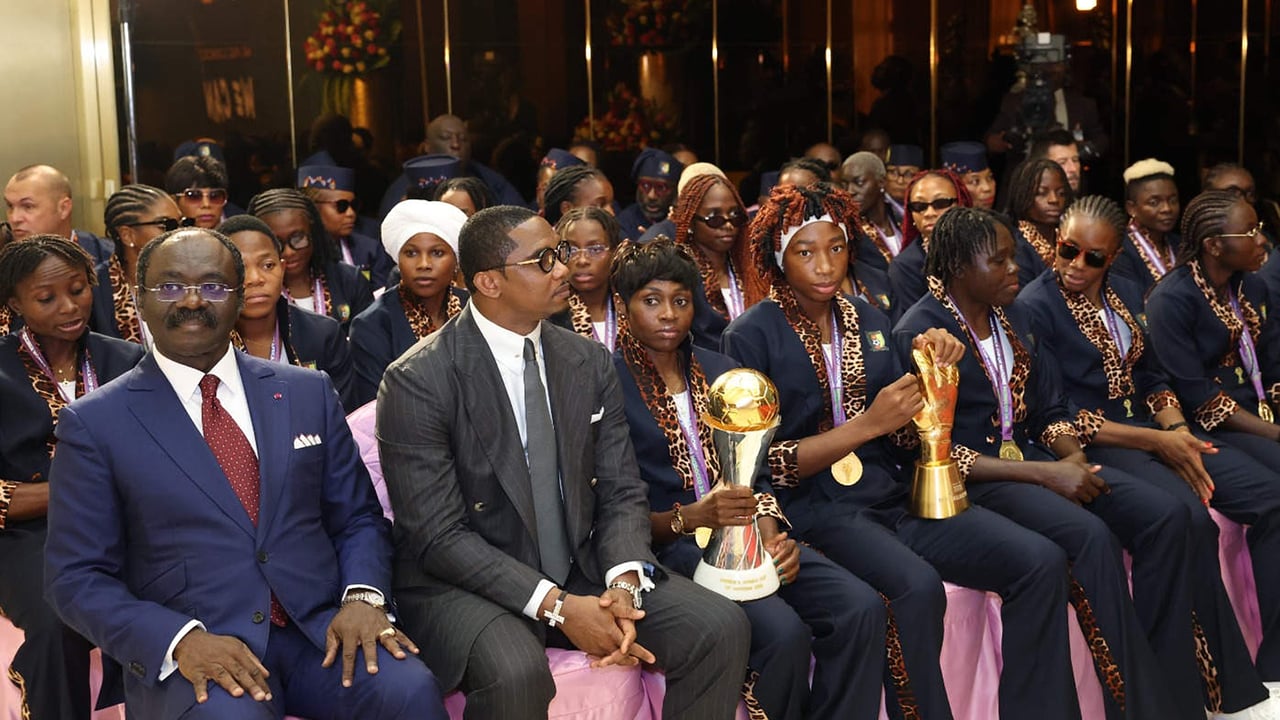
The conflict between Fecafoot President Samuel Eto'o and Sports Minister Narcisse Mouelle Kombi continues to simmer, using football as a proxy for a deeper clan war at the highest levels of the Cameroonian state. Even the Indomitable Lionesses' triumph at the Africa Cup of Nations could not bridge the divide, highlighting persistent political tensions.
Imagine two big bosses, Samuel and Narcisse, who both want to be in charge of how football works in Cameroon. Even when the women's football team, the Lionesses, won a big championship, which made everyone happy, these two bosses couldn't stop arguing. It's like they're playing their own game of power, using football as the field, and it shows that grown-ups sometimes have big disagreements even when something good happens for everyone.
Analysis
The ongoing feud between Samuel Eto'o, the celebrated former footballer and current president of the Cameroonian Football Federation (Fecafoot), and Narcisse Mouelle Kombi, the Minister of Sports, transcends mere administrative disagreements. It is presented as a microcosm of a broader, entrenched clan war within the upper echelons of the Cameroonian government. This conflict, which has been simmering for some time, uses the nation's most popular sport as its battleground, reflecting deeper power struggles and political maneuvering that impact national cohesion.
Fecafoot
Fecafoot, under the leadership of Samuel Eto'o, finds itself at the heart of this political entanglement. Eto'o's tenure has been marked by efforts to reform and professionalize Cameroonian football, but these initiatives have frequently clashed with the authority and directives of the Ministry of Sports. The article highlights that even a significant achievement, such as the Indomitable Lionesses' victory in the Africa Cup of Nations, could not bring a lasting truce to this administrative and political standoff. This suggests that the issues at play are more fundamental than simple policy differences, pointing to a struggle for control and influence over a highly visible national institution.
Mouelle Kombi
Minister Narcisse Mouelle Kombi represents the state's direct oversight and regulatory power over sports. His involvement in the dispute underscores the government's desire to maintain control over national sporting bodies, a common dynamic in many African nations where sports success is often linked to national prestige and political capital. The article implies that Kombi's actions are not just about ministerial duties but are also influenced by the broader political landscape and the interests of the 'clans' he represents. This makes the conflict less about football governance and more about the allocation of power and resources within the state apparatus.
CAN 2026
The recent Africa Cup of Nations (CAN) victory by the Indomitable Lionesses, despite being a moment of national jubilation, served only as a temporary distraction from the underlying tensions. The article notes that the popular joy was fleeting, lasting only a weekend, before the conflict resurfaced. This particular CAN was notable for the women's team's last-minute reinstatement and the hurried appointment of its staff, suggesting a backdrop of administrative chaos even before their triumph. The inability of such a unifying event to resolve the Eto'o-Kombi dispute illustrates the deep-seated nature of the clan rivalries, indicating that these power struggles are resilient and deeply embedded in the political fabric of Cameroon.
Key points
- A power struggle persists between Fecafoot President Samuel Eto'o and Sports Minister Narcisse Mouelle Kombi.
- The conflict is described as a 'clan war' at the top of the Cameroonian state, using football as a proxy.
- The recent victory of Cameroon's women's national football team at the Africa Cup of Nations did not resolve the dispute.
- The popular jubilation following the Lionesses' triumph was short-lived, with the conflict quickly resurfacing.
- The dispute highlights deeper political tensions and struggles for influence within Cameroon's government.
The ongoing conflict between key figures in Cameroonian football and government risks continued administrative instability and could detract from the sport's development. Such persistent internal strife may also signal broader governance challenges and power struggles within the state, potentially hindering national progress.