Cameroon, these "fallen of the Republic" who haunt the Etoudi palace
The article details how Cameroonian President Paul Biya has systematically imprisoned or exiled powerful politicians who once served him, highlighting a pattern of political purges over his 44-year reign.
Intelligence analysis by Gemini 2.5 Flash
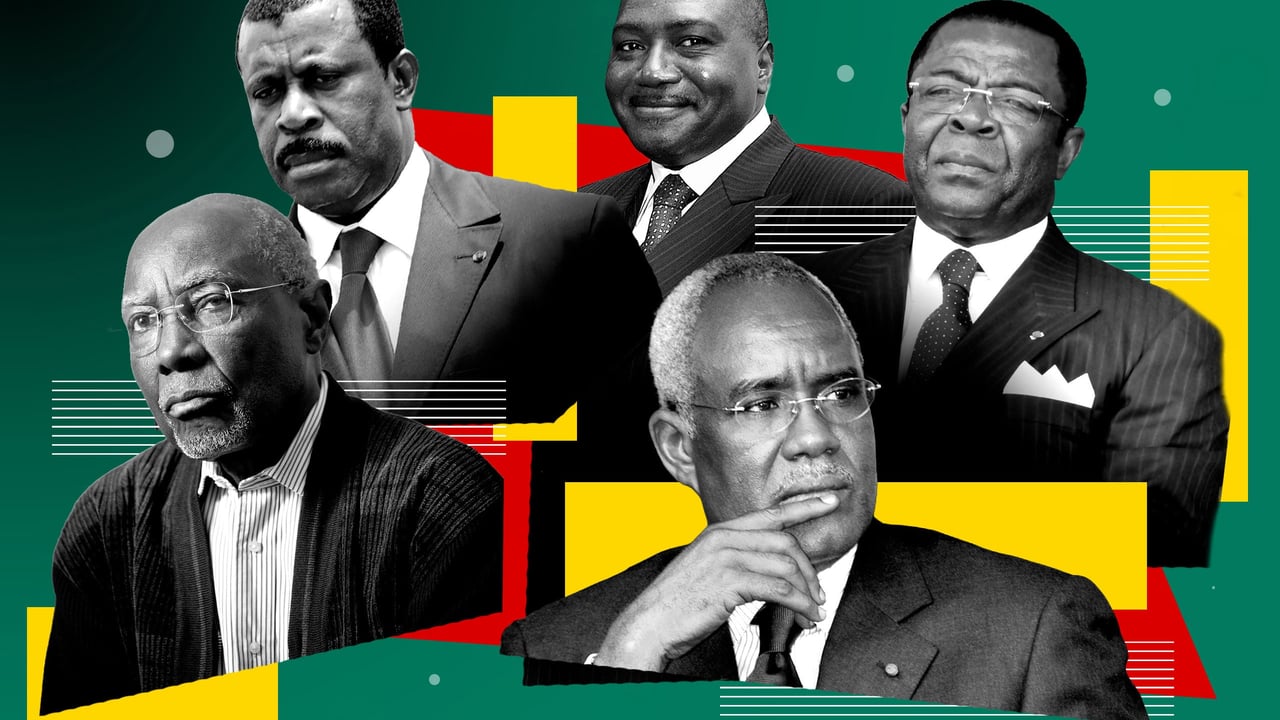
Jeune Afrique examines the careers and subsequent downfalls of several high-ranking Cameroonian officials, including former ministers and a prime minister, who were once close to President Paul Biya but ended up in prison or exile, often through the anti-corruption operation Épervier, which has become a tool for political elimination.
Imagine a very old principal who has run a school for a super long time. He picks his favorite teachers to help him, but if any teacher gets too popular or tries to become principal themselves, he finds a reason to send them away, sometimes even to a special detention room for years! It's like he wants to be the only one in charge forever, and everyone else eventually gets their turn to be 'sent away,' even if they used to be his best friends.
Analysis
Paul Biya's Unyielding Grip on Power
Paul Biya has maintained an iron grip on Cameroon's presidency since 1982, a remarkable 44-year tenure that has seen him, at 93, outlast countless political figures. The article underscores how Biya has masterfully orchestrated the rise and fall of an impressive number of politicians, shaping the country's political landscape to his will. These individuals, once powerful and influential, often found their careers abruptly terminated and their freedom curtailed, serving as stark reminders of the president's absolute authority.
His longevity in power is characterized by an intricate system where loyalty is paramount, but even proximity to the president offers no guarantee against a sudden downfall. The narrative suggests that any perceived ambition to challenge or even share power with Biya is met with severe consequences, reinforcing the idea that in his system, only one person is truly indispensable. This dynamic has created a climate of fear and uncertainty among the political elite, where new courtiers are aware of the cyclical nature of power and the potential for their own eventual demise.
The Tragic Fates of Former Strongmen
The article highlights the individual stories of several prominent figures who experienced dazzling ascents followed by brutal falls. Titus Edzoa, a surgeon who became Secretary General of the Presidency due to his close ties with Biya, spent seventeen years in prison for daring to run against him in 1997. Jean-Marie Atangana Mebara, a brilliant technocrat who managed sensitive presidential files, has been imprisoned for eighteen years. Marafa Hamidou Yaya, once considered a natural successor, endures solitary confinement, suffering severe health issues due to lack of care.
Ephraïm Inoni, the only Cameroonian Prime Minister to be imprisoned, now lives in exile in France after a twenty-year sentence. Edgar Alain Mebe Ngo’o, a former police chief nicknamed "the vice-president," received a thirty-year sentence in 2023, ironically having orchestrated the arrests of some of his current fellow detainees. These cases collectively illustrate a consistent pattern: those who rise too high or are perceived as potential threats are systematically removed from the political stage, often through judicial means.
Épervier: A Political Purge Mechanism
The anti-corruption operation Épervier (Sparrowhawk), launched in 2006 under international pressure to improve governance, has evolved into a potent instrument for political purges. While initially intended to combat corruption, the article asserts that it has become a tool to eliminate rivals and consolidate Biya's power. The cases of the "fallen" politicians demonstrate how this operation has been selectively applied, targeting individuals who, despite their past loyalty and proximity to the president, were ultimately deemed expendable.
This transformation of an anti-corruption initiative into a political weapon underscores the deep-seated issues within Cameroon's governance structure. It sends a clear message to the political class: no one is immune to the president's wrath, and even the most powerful figures can be brought down if they deviate from the established order. The operation Épervier thus serves as a chilling reminder of the risks inherent in Cameroonian politics, where the pursuit of power can lead to severe personal consequences.
Key points
- Paul Biya has reigned over Cameroon for 44 years, systematically making and unmaking the careers of powerful politicians.
- Several high-ranking officials, including former ministers and a prime minister, have been imprisoned or exiled after falling out of favor with Biya.
- Notable figures like Titus Edzoa, Jean-Marie Atangana Mebara, Marafa Hamidou Yaya, Ephraïm Inoni, and Edgar Alain Mebe Ngo’o are examples of these political downfalls.
- The anti-corruption operation Épervier, launched in 2006, has reportedly become an instrument for political purges rather than solely for good governance.
- The article emphasizes that in Biya's system, no one is indispensable except the president himself, leading to a cycle of loyalty and eventual elimination for those perceived as threats.
The article suggests a continuation of political repression and a lack of genuine democratic transition in Cameroon, with the anti-corruption drive serving as a tool for political purges. This pattern could lead to further instability, stifle political dissent, and perpetuate a system where power remains concentrated in the hands of a few, hindering institutional development and good governance.
