Can autonomous AI-powered killer drones take morality onboard?
The article examines whether AI drones can be given moral rules for war as militaries push toward greater autonomy.
Intelligence analysis by GPT-5.4 Mini
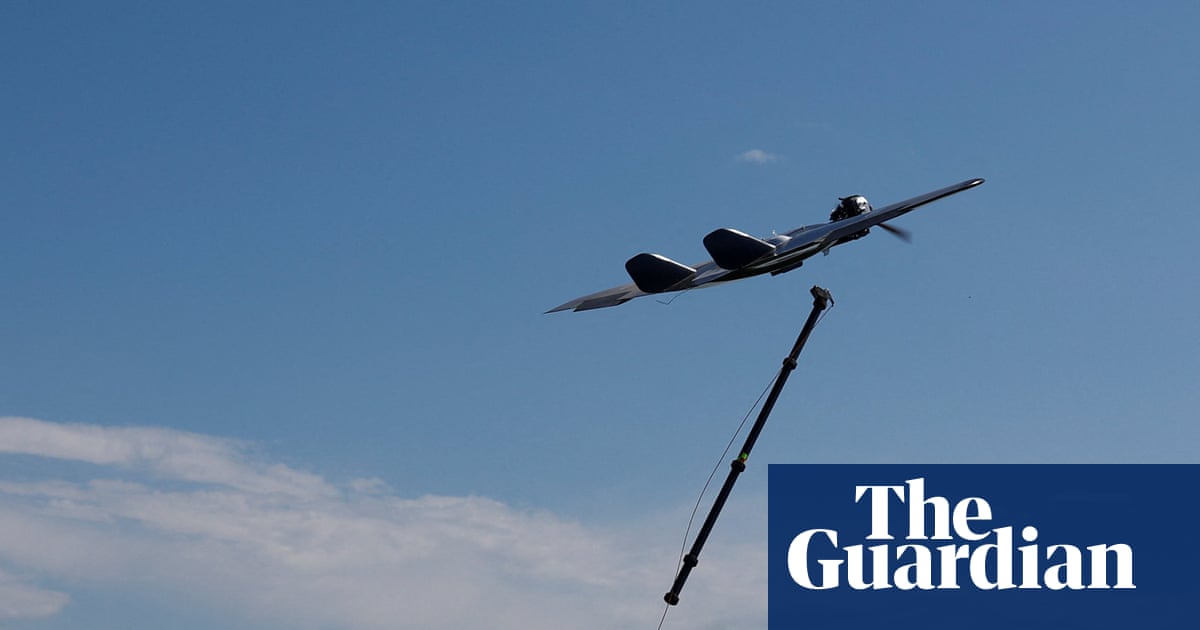
The Guardian weighs a central question in modern warfare: whether autonomous drones can be programmed with something like morality. Experts are split between those who say machine ethics is impossible and those who argue autonomy will be necessary in future conflicts.
The story is about whether a robot drone can ever be trusted to make good choices in war, like telling the difference between a soldier and a civilian. It is like asking a super-fast guard dog to follow rules that humans still argue about.
Analysis
The core question
The article asks whether future AI-powered drones can make morally acceptable decisions on their own, or whether that responsibility must stay with humans. The issue is becoming more urgent, according to the piece, because drones are already being used in large numbers in Ukraine and AI is assisting bombing missions in the Iran conflict.
Why experts disagree
Some figures in the AI world are skeptical that machines can ever be moral agents. The article cites Mustafa Suleyman saying AIs cannot be moral beings, and Zee Talat arguing that large language models work by predicting likely outputs, which is not how humans reason through ethics. Andrew Rogoyski adds that morality is complex, contested, and culturally shaped, and says humans do not fully agree on it themselves.
The legal and operational problem
Jessica Dorsey warns that programming morality into drones raises hard questions about whose morality counts and how a system would reliably tell combatants from civilians. The article points to Article 57 of the Geneva conventions, which requires feasible checks to verify military targets. Dorsey says mistakes could be repeated at scale if AI-powered drones are deployed widely, and at AI-like speed those errors may be hard to untangle.
Why some still see autonomy as necessary
Other voices argue that greater autonomy may be unavoidable if rivals keep advancing similar systems. Nicholas Wright says militaries will need many systems capable of making decisions on their own to stay competitive. The article also notes that more than 100 startups in the US and Europe are building drones and drone software.
What industry players envision
The companies described do not agree on what autonomy should look like. Neros co-founder Olaf Hichwa says AI-assisted weapons should extend the operator’s judgment rather than replace it, and suggests autonomy could handle tasks like the last mile of a mission. Fortem’s Jon Gruen says autonomous systems already identify targets in defense settings. Swarmer’s Alex Fink describes a future in which humans certify a kill box rather than choosing each target individually. The article closes by saying the technology is advancing, but the moral and legal consensus is not.
Key points
- The article centers on whether autonomous drones can be given a moral framework for wartime decisions.
- AI researchers and law experts doubt that machines can truly make moral judgments or apply them consistently.
- Some defense voices argue that greater autonomy may be necessary as rival militaries develop similar systems.
- The article says the technology is still nascent, but more than 100 startups in the US and Europe are building drone platforms.
- Industry views diverge between preserving human judgment, automating parts of missions, and allowing systems to act in a defined kill box.
If autonomy is limited to helping operators rather than replacing them, drones could reduce the burden on human pilots and make missions easier to manage. The article also suggests AI may help identify targets and handle parts of a mission more efficiently.
The article warns that moral rules are hard to codify and that machines may not reliably distinguish combatants from civilians. If flawed judgments are built into autonomous systems, those mistakes could be repeated at scale and at very high speed.