Can Beijing’s stock support deliver a long bull run and fuel its high-stakes tech drive?
Beijing has intervened in its US$15 trillion stock market with state buying and pledges of further measures to prevent a rout, aiming to protect its technology innovation drive and safeguard over 200 million individual investors.
Intelligence analysis by Gemini 2.5 Flash
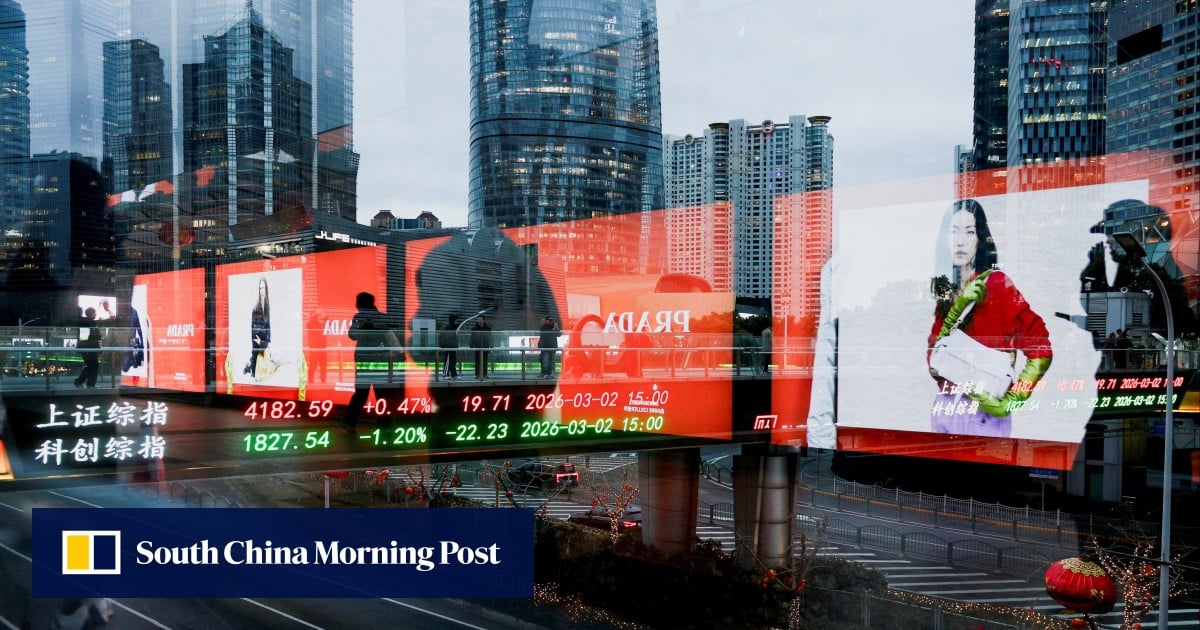
China's government is actively stabilizing its stock market to ensure capital access for domestic tech firms, crucial for its strategic self-sufficiency goals, and to maintain household wealth amid economic challenges. The intervention seeks to engineer a sustainable bull run, preventing an uncontrolled liquidation that could undermine confidence and financing conditions for its high-…
Imagine China's stock market is like a big piggy bank where people put money to help companies grow, especially those making cool new tech like smart robots. Recently, the piggy bank started losing money, which made people worried. So, the government stepped in, putting some of its own money in and promising to help more. They want to make sure the tech companies still get enough money to invent new things and that regular people don't lose their savings, like making sure your favorite toy store always has new toys and your allowance is safe.
Analysis
Beijing's recent, swift intervention in its stock markets highlights a critical juncture for the nation's economic strategy, particularly its high-stakes push for technological self-sufficiency. The government's actions, including direct state buying and pledges of further stabilizing measures, are not merely about market correction but are deeply intertwined with national strategic objectives. The stability of the US$15 trillion stock market is seen as essential for providing the necessary equity financing for home-grown tech companies, many of which are pivotal to China's AI and advanced technology ambitions. An uncontrolled market collapse would not only erode household wealth for over 200 million individual investors but also severely restrict capital market access for these strategic firms, jeopardizing China's long-term technological independence.
Beijing's Strategic Market Intervention
The intervention by Chinese policymakers is a clear signal of their resolve to prevent an uncontrolled liquidation that could threaten national confidence and financing conditions. The immediate catalyst for action was a significant decline in the tech-heavy Star Market 50 Index, which had plunged into bear-market territory. In response, the China Securities Regulatory Commission chairman, Wu Qing, vowed to restore confidence, leading to two state buyers injecting approximately 60 billion yuan (US$8.9 billion) into stocks. Furthermore, five state-backed insurers, including major players like Ping An Insurance Group and China Life Insurance, pledged to increase their equity investments. These coordinated efforts initially yielded positive results, with the Star Market 50 Index rebounding by 11 percent, demonstrating the immediate impact of state-backed support in repairing risk appetite.
The Dual Imperatives of Stability and Innovation
Beijing's market support serves a dual purpose: safeguarding the wealth of its vast base of individual investors and, crucially, ensuring a stable funding environment for its technology sector. The government recognizes that a healthy stock market is indispensable for sustaining the capital flow required for innovation, especially in critical areas like artificial intelligence, semiconductors, and advanced manufacturing. Without reliable access to capital markets, China's tech firms would struggle to compete with global rivals, undermining the nation's broader strategy for technological leadership and self-reliance. The challenge now lies in transforming this short-term stabilization into a durable and sustainable bull run, one that can consistently fuel the high-stakes tech drive without fostering excessive speculation or creating new systemic risks.
Sustaining the Bull Run for Tech Advancement
The long-term success of Beijing's intervention hinges on its ability to engineer a sustained period of market growth that genuinely supports strategic tech development. While initial measures have stemmed the immediate rout, the underlying economic pressures, including a weakening labor market and a property downturn, remain significant. Policymakers must navigate the delicate balance between market intervention and allowing natural market forces to operate, ensuring that capital is allocated efficiently to innovative and productive enterprises rather than propping up underperforming assets. The credibility of China's strategic technology push ultimately depends on its capacity to provide consistent, robust financing, making the stock market's trajectory a critical barometer for the nation's future in global technology leadership.
Key points
- China's government is intervening in its US$15 trillion stock market to prevent a rout and foster a sustainable bull run.
- The intervention aims to protect the country's high-stakes technology innovation drive and safeguard over 200 million individual investors.
- Measures include direct state buying (around 60 billion yuan) and pledges from state-backed insurers to boost equity investments.
- The tech-heavy Star Market 50 Index initially rebounded by 11 percent after falling into bear-market territory.
- Policymakers seek to ensure capital market access for home-grown tech companies crucial for strategic self-sufficiency.
If Beijing's stock market support measures prove effective and sustainable, it could lead to a prolonged period of stability and growth, ensuring that China's high-stakes tech firms, including those in AI, have consistent access to crucial equity financing. This would bolster the nation's drive for technological self-sufficiency and protect the wealth of its numerous individual investors, fostering broader economic confidence.
Should Beijing's intervention fail to engineer a durable bull run, the Chinese stock market could face renewed instability, potentially cutting off vital capital market access for domestic tech companies. This would undermine China's strategic push for technological innovation and self-sufficiency, further eroding household confidence amidst existing economic challenges like a weakening labor market and property downturn.
Market signals
- Star Market 50 Index The index saw an 11 percent jump following Beijing's market stabilization efforts and capital injections, indicating a positive short-term reaction.
AI-generated analysis of potential market relevance. Not financial advice.