Can Harvey Nichols find its way back to being Absolutely Fabulous again?
Harvey Nichols, a department store in London, is struggling to turn a profit since the pandemic. Its owner, Sir Dickson Poon, has put the business up for sale, with Mike Ashley's Frasers Group and Next bidding to take control.
Intelligence analysis by Llama
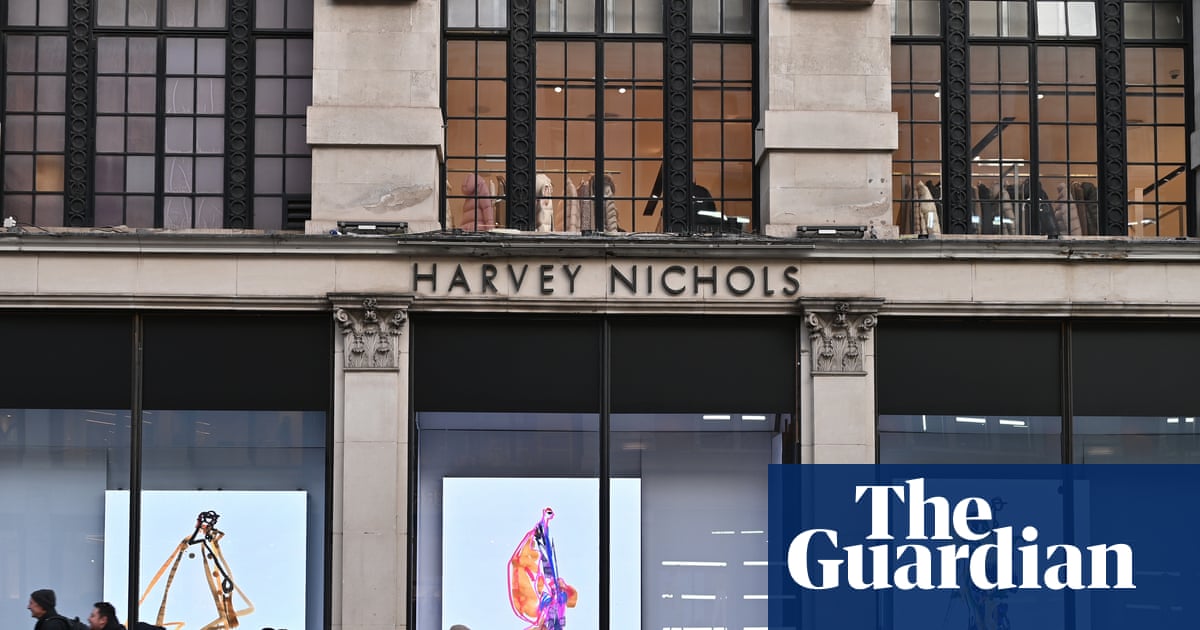
Harvey Nichols, a London department store, is in trouble after not turning a profit since the pandemic. Its owner, Sir Dickson Poon, has put the business up for sale, with Mike Ashley's Frasers Group and Next bidding to take control. The store's recent attempts to revive its bricks and mortar offering have been met with mixed results.
Imagine you have a favorite store where you love to shop and have a drink. But over time, the store becomes less special and starts to look like other stores. That's what happened to Harvey Nichols, a department store in London. Now, the store's owner is trying to sell it, and people are worried about what will happen to the store and its employees.
Analysis
A Death Spiral: Harvey Nichols' Struggle for Survival
Harvey Nichols, a once-iconic department store in London, is facing a crisis of identity and relevance. The store's pre-tax losses were £35.3m in 2024, and its owner, Sir Dickson Poon, has put the business up for sale. Mike Ashley's Frasers Group and Next are among the bidders, but the store's future remains uncertain.
The 90s were a different time for Harvey Nichols. It was a hub of glamour and fashion, with its marvellous bar on the fifth floor and a reputation for stocking the latest designer brands. However, over the years, the store has lost its edge, and its brand identity has become diluted. Retail experts suggest that Harvey Nichols has become too similar to other department stores, such as Selfridges and Harrods, and lacks a unique selling point.
Jonathan De Mello, founder of JDM Retail Consulting, believes that Harvey Nichols needs to refocus on its design-forward approach. 'They had a strong design forward focus … and they need to do more [of that],' he says. 'If you can’t get [a brand] anywhere else and you have to go to Harvey Nichols, then it becomes something interesting again.'
However, De Mello also notes that Harvey Nichols' digital presence needs work. 'The majority of retailers that succeed in today’s marketplace do so with a variety of different channels to interface with the consumer,' he argues. 'So they can essentially experience the brand wherever they might be or whatever they might be doing.'
In recent years, Harvey Nichols has attempted to revive its bricks and mortar offering, particularly its Knightsbridge store. Julia Goddard, previously at Alexander McQueen, has been chief executive since 2024, and highly respected fashion editor Kate Phelan has become creative director. A 2025 redesign put high-end jewellery on the ground floor and added new designers and curated objects.
The retailer declined to comment for this article, but fashion journalist Tony Glenville believes that the team should remain in place, given time to turn things around. 'The [recent] windows with the illustrations were absolutely great,' he says. '[But] I think they weren’t sure what to follow that with. It’s unfortunate that anything takes time. You can’t do it all in five minutes.'
Key points
- Harvey Nichols is a department store in London that has not turned a profit since the pandemic.
- The store's owner, Sir Dickson Poon, has put the business up for sale.
- Mike Ashley's Frasers Group and Next are among the bidders for the store.
- Harvey Nichols has attempted to revive its bricks and mortar offering, particularly its Knightsbridge store.
- The store's recent redesign put high-end jewellery on the ground floor and added new designers and curated objects.
If Harvey Nichols can refocus on its design-forward approach and improve its digital presence, it may be able to turn things around and become a successful department store again.
However, if the store's current problems are not addressed, it may be too late to save Harvey Nichols, and the store may eventually close.