Can Russia and China Ever Have a Truly Equal Relationship?
The article argues that Russia's deepening dependence on China makes the idea of equal partnership hard to sustain.
Intelligence analysis by GPT-5.4 Mini
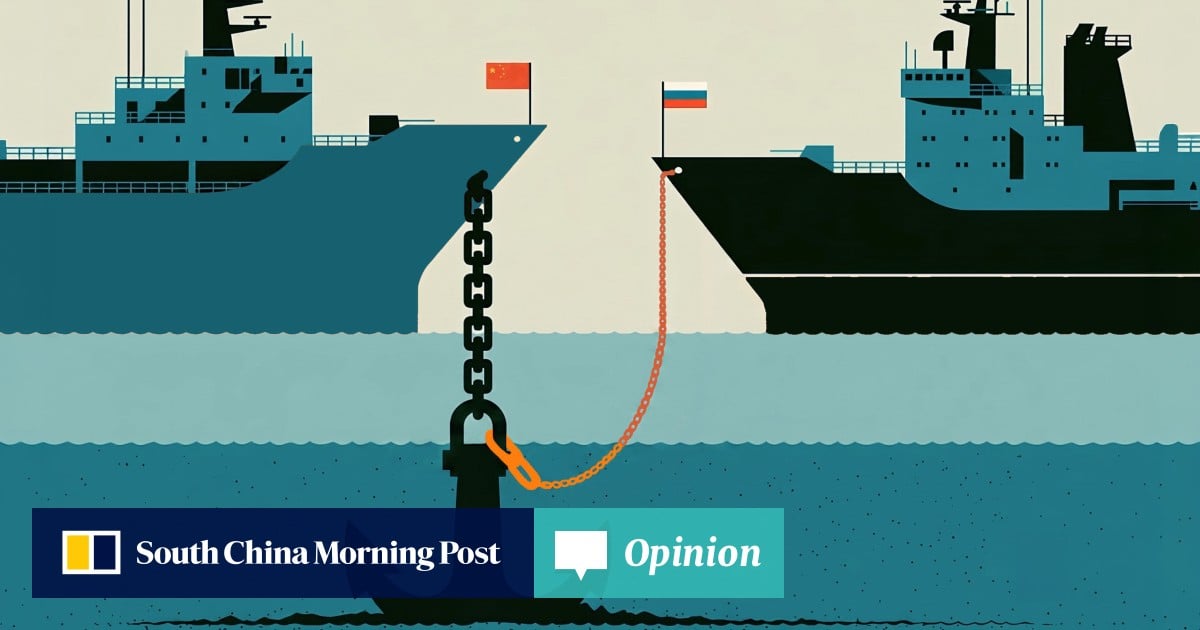
Although Moscow and Beijing describe their ties as strategic and equal, the piece says trade imbalance gives China far more leverage. Russia turned toward China after losing Europe as its main economic partner, but that shift also narrowed its options.
The article says Russia and China act like two friends working together, but one friend needs the other much more. If one kid always has to borrow snacks and tools from the other, they are not really equal, even if both say they are.
Analysis
Trade Weight, Not Just Diplomatic Language
The article’s core argument is simple: equality is difficult to claim when one side is overwhelmingly more important to the other’s economy. It points out that China is Russia’s largest trading partner, while Russia makes up only about 4 percent of China’s foreign trade. That imbalance matters more than the diplomatic language used by officials.
The piece also pushes back on Kremlin claims that the relationship is based on equality. In practice, the side with more alternatives usually sets the terms, and the source suggests China has those alternatives while Russia has fewer. That makes the rhetoric of partnership sound warmer than the underlying balance of power.
How Europe Used To Anchor Russia
The article places the current relationship in a longer economic history. Before the Ukraine crisis in 2014, the European Union was Russia’s main economic partner, accounting in 2013 for about 57 percent of Russian exports and 46.5 percent of its imports. Russia was then a major gas supplier to Europe, especially Germany, which benefited from cheaper energy via Nord Stream.
That arrangement began to unravel after the removal of Viktor Yanukovych, Russia’s annexation of Crimea, and the conflict in Donbas. As the EU imposed sanctions, Moscow looked for another large market for its gas exports. China emerged as the obvious substitute, but the article implies that replacing one dominant customer with another did not restore true balance.
Why The Partnership Still Feels Uneven
The article suggests that Russia’s pivot to China was born from necessity rather than choice. The 30-year, US$400 billion gas deal signed by Xi Jinping and Vladimir Putin in 2014 symbolized that shift, but it also showed how reliant Russia had become on finding an external buyer. When a country needs access to markets and imports, its bargaining position weakens.
That is why the piece ends up skeptical of the equality claim. A formal strategic partnership can still hide a clear hierarchy if one partner depends on the other for revenue and critical goods. The article’s broader warning is that geopolitical friendship does not erase economic dependence; it often masks it.
Key points
- The article questions whether Russia and China can be equal when China dominates the trade relationship.
- It says Russia was once far more tied to the European Union before sanctions and the Ukraine crisis changed its options.
- Russia's turn toward China was driven by the loss of Europe as its main economic partner.
- A major 2014 gas deal symbolized the pivot, but also highlighted Russia's dependence on a new market.
If the imbalance continues, Russia may become even more dependent on China for sales, imports, and diplomatic room to maneuver. That would make Moscow's claims of equal partnership look increasingly like a slogan rather than a real power balance.