Canada slaps retaliatory tariffs on US goods worth US$20 billion as trade war intensifies
Canada has announced counter-tariffs on US goods worth US$20 billion in response to the US imposing 50% duties on Canadian autos. The retaliatory tariffs will take effect on September 8 and will impose duties ranging from 15% to 50% across 700 US products.
Intelligence analysis by Llama
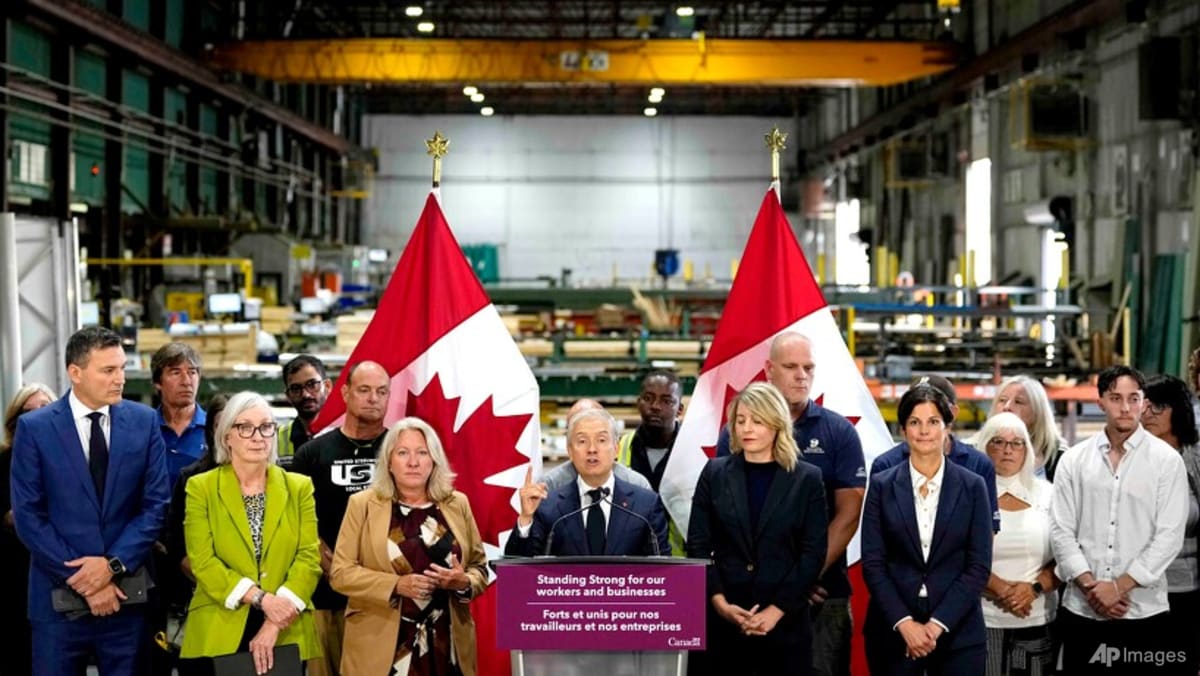
Canada has retaliated against the US by imposing tariffs on US goods worth US$20 billion in response to the US imposing 50% duties on Canadian autos. The tariffs will take effect on September 8 and will impact industries including steel, dairy, and electronics.
Imagine you're playing a game of tit-for-tat with your friend. You both keep taking turns imposing tariffs on each other's goods. That's basically what's happening between Canada and the US right now. Canada is imposing tariffs on US goods worth US$20 billion in response to the US imposing 50% duties on Canadian autos. This could lead to higher prices for consumers and a decline in trade between the two countries.
Analysis
Trade War Escalation: Canada's Retaliatory Tariffs
The trade war between Canada and the US has taken a significant turn with Canada's announcement of retaliatory tariffs on US goods worth US$20 billion. This move comes in response to the US imposing 50% duties on Canadian autos, which has been met with criticism from Canadian officials.
The retaliatory tariffs will take effect on September 8 and will impose duties ranging from 15% to 50% across 700 US products. This includes steel, dairy, and electronics, among other industries. The tariffs are designed to match the US levels, with Finance Minister Francois-Philippe Champagne stating that they will 'meet the moment' and 'fight back' against the US tariffs.
The impact of these tariffs will be significant, with manufacturers in Quebec, New Brunswick, and Ontario expected to be affected the most. The tariffs will also raise the US effective tariff rate on Canadian exports to 6.9% from 5.1%, according to Oxford Economics.
The trade war between Canada and the US has been ongoing for several months, with both countries imposing tariffs on each other's goods. The US has imposed 50% duties on Canadian autos, while Canada has retaliated with tariffs on US goods worth US$20 billion. The escalation of the trade war has significant implications for the global economy and trade relations between the two countries.
Implications for the Global Economy
The trade war between Canada and the US has significant implications for the global economy. The tariffs imposed by both countries will increase the cost of goods for consumers, leading to higher prices and reduced demand. This could have a ripple effect on the global economy, with countries that trade with both Canada and the US potentially feeling the impact.
The trade war also has implications for the US economy, with the tariffs imposed on Canadian autos expected to increase the cost of goods for American consumers. The US has already imposed tariffs on Canadian steel and aluminum, which has led to a decline in trade between the two countries.
Conclusion
The trade war between Canada and the US is a complex issue with significant implications for the global economy. The retaliatory tariffs imposed by Canada are a response to the US imposing 50% duties on Canadian autos, and are designed to match the US levels. The impact of these tariffs will be significant, with manufacturers in Quebec, New Brunswick, and Ontario expected to be affected the most. The trade war has significant implications for the global economy and trade relations between the two countries.
Key points
- Canada has announced retaliatory tariffs on US goods worth US$20 billion in response to the US imposing 50% duties on Canadian autos.
- The tariffs will take effect on September 8 and will impose duties ranging from 15% to 50% across 700 US products.
- The tariffs are designed to match the US levels and will impact industries including steel, dairy, and electronics.
- The trade war between Canada and the US has significant implications for the global economy and trade relations between the two countries.
- The US has imposed 50% duties on Canadian autos, while Canada has retaliated with tariffs on US goods worth US$20 billion.
If the trade war between Canada and the US is resolved, it could lead to a boost in trade between the two countries. This could result in lower prices for consumers and an increase in economic activity. However, this is dependent on both countries being able to come to an agreement and lift the tariffs.
If the trade war between Canada and the US continues to escalate, it could lead to a decline in trade between the two countries. This could result in higher prices for consumers and a decline in economic activity. Additionally, the trade war could have a ripple effect on the global economy, leading to a decline in trade and economic activity worldwide.