CBSE Revaluation: Supreme Court Refuses to Reopen Portal
The Supreme Court dismissed a petition seeking to reopen the CBSE Class 12 revaluation portal for students complaining about the on-screen marking system, stating that extended deadlines would trigger endless fresh claims.
Intelligence analysis by Llama
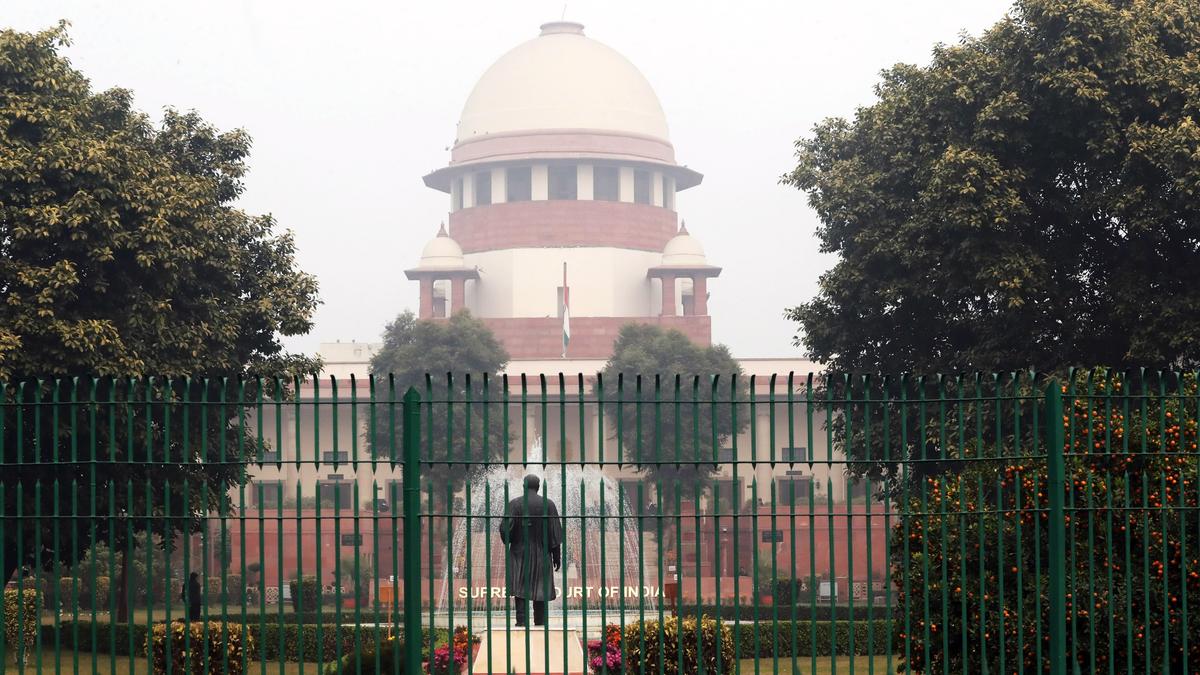
The Supreme Court has refused to reopen the CBSE Class 12 revaluation portal, citing concerns that extended deadlines would lead to endless fresh claims. The decision was made after a petition was filed by students who were dissatisfied with the on-screen marking system.
Imagine you took a test and didn't get the marks you thought you deserved. You wanted to re-do the test, but the system that was supposed to help you was broken. The Supreme Court said that it's not fair to keep asking for a re-do because it would just keep happening over and over again. It's like trying to fix a broken toy that keeps breaking again and again.
Analysis
CBSE Revaluation Portal Reopening Rejected by Supreme Court
The Supreme Court of India has dismissed a petition seeking to reopen the CBSE Class 12 revaluation portal, citing concerns that extended deadlines would trigger endless fresh claims. The decision was made after a petition was filed by students who were dissatisfied with the on-screen marking system.
The on-screen marking system, which was introduced by the CBSE, allows students to scan their answer sheets and get their marks digitized. However, the system has been plagued by issues such as scanning errors, lack of clarity, and some pages being left unexamined. Students have been complaining about these issues, and some have even filed petitions seeking to reopen the revaluation portal.
The Supreme Court, in its ruling, stated that extending the deadline for revaluation would only lead to more students filing fresh claims, which would be a never-ending process. The court also noted that the CBSE had already provided a sufficient amount of time for students to file their claims, and that the on-screen marking system was a fair and transparent process.
The decision has significant implications for the education system in India, particularly for students who were hoping for a re-evaluation of their marks. The CBSE has already announced that it will not be reopening the revaluation portal, and students who were awaiting the re-evaluation of their marks will have to accept the marks they have been given.
The Supreme Court's ruling has also sparked a debate about the use of technology in the education system. While the on-screen marking system was introduced to make the process more efficient and transparent, it has been plagued by issues such as scanning errors and lack of clarity. The decision has raised questions about the effectiveness of technology in the education system and whether it is being used in a way that is fair and transparent.
Implications of the Decision
The decision has significant implications for the education system in India, particularly for students who were hoping for a re-evaluation of their marks. The CBSE has already announced that it will not be reopening the revaluation portal, and students who were awaiting the re-evaluation of their marks will have to accept the marks they have been given.
The decision has also sparked a debate about the use of technology in the education system. While the on-screen marking system was introduced to make the process more efficient and transparent, it has been plagued by issues such as scanning errors and lack of clarity. The decision has raised questions about the effectiveness of technology in the education system and whether it is being used in a way that is fair and transparent.
Future of CBSE Revaluation
The decision has significant implications for the future of CBSE revaluation. The CBSE has already announced that it will not be reopening the revaluation portal, and students who were awaiting the re-evaluation of their marks will have to accept the marks they have been given.
The decision has also raised questions about the use of technology in the education system. While the on-screen marking system was introduced to make the process more efficient and transparent, it has been plagued by issues such as scanning errors and lack of clarity. The decision has raised questions about the effectiveness of technology in the education system and whether it is being used in a way that is fair and transparent.
Key points
- The Supreme Court dismissed a petition seeking to reopen the CBSE Class 12 revaluation portal.
- The decision was made after a petition was filed by students who were dissatisfied with the on-screen marking system.
- The Supreme Court stated that extending the deadline for revaluation would only lead to more students filing fresh claims.
- The decision has significant implications for the education system in India, particularly for students who were hoping for a re-evaluation of their marks.
The Supreme Court's decision may seem harsh, but it could actually lead to a more efficient and transparent education system in the long run. By addressing the issues with the on-screen marking system, the CBSE can work towards creating a more reliable and fair process for students.
The decision may lead to students feeling frustrated and disappointed, which could affect their motivation and performance in future exams. It could also lead to a lack of trust in the education system, which could have long-term consequences.