CCS issues warning letter to HelloRide for trying to propose price discussions with Anywheel
Singapore's Competition and Consumer Commission issued a warning letter to HelloBikeSG after a representative twice tried to initiate pricing talks with rival bike-share operator Anywheel in 2025.
Intelligence analysis by Llama
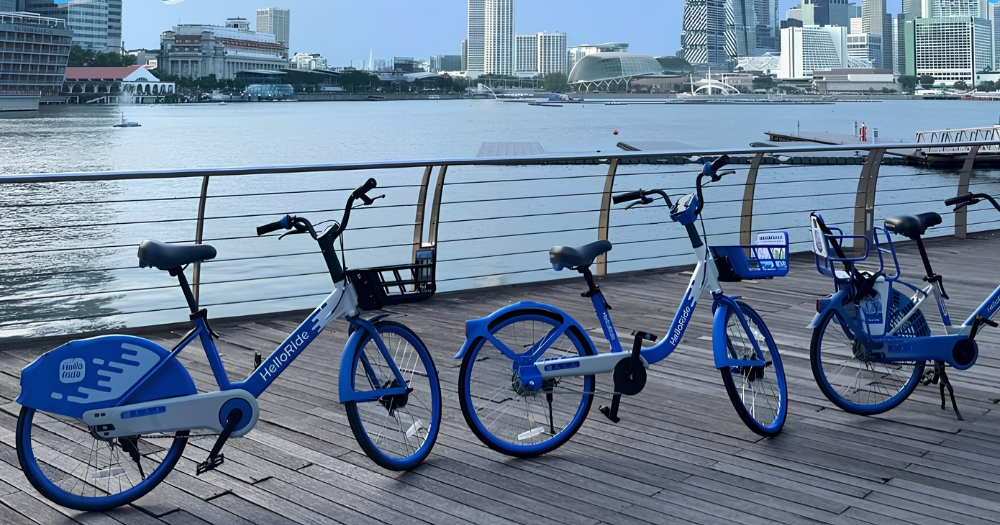
CCS has formally warned HelloRide for attempting to coordinate pricing with Singapore's only other licensed bike-share rival, Anywheel. While no actual discussions occurred and no commercially sensitive information was shared, the regulator said the outreach could have had a direct and significant impact on competition.
Singapore only has two bike-sharing apps — HelloRide and Anywheel — and that's it. HelloRide tried to talk to Anywheel about raising prices together, like two kids agreeing to charge more for lemonade. Anywheel said no and told a grown-up (the competition watchdog). No actual deal was made, so HelloRide didn't get punished hard, but the watchdog sent a warning: don't try this again, or there will be real trouble.
Analysis
HelloRide's July and October 2025 outreach
On two separate occasions in 2025, a key representative of HelloRide reached out to an Anywheel counterpart to propose pricing discussions between the two firms. CCS does not specify which individual was involved, nor does it detail the medium of the communication, but the regulator treats the act of proposing coordination as the trigger for the warning. Anywheel's refusal to engage — followed by its prompt reporting of both contacts — is what transformed a private exchange into a public regulatory matter. The fact that no commercially sensitive data changed hands, and no prices were actually negotiated, is precisely what kept HelloRide out of formal infringement territory. It is the intent and the attempt, not the outcome, that CCS chose to address.
Section 34 and what wasn't disclosed
CCS concluded that HelloRide's conduct did not infringe Section 34 of the Competition Act, the provision that prohibits agreements, decisions, or concerted practices that prevent, restrict, or distort competition. The narrow reason is procedural: without disclosure of pricing, output, or other competitively sensitive information, and without Anywheel reciprocating the proposal, the statutory elements of a cartel-like arrangement were not met. CCS was careful to note that the finding reflects the specific facts, including Anywheel's refusal and its whistleblowing. In other words, the same outreach could plausibly have crossed the line had Anywheel engaged even briefly. The warning letter therefore functions as a calibrated signal — short of prosecution, but loud enough to reset behaviour across Singapore's small but concentrated sharing-mobility market.
S$120,000 whistleblowing incentive
Alongside the case, CCS reiterated its leniency programme and reward scheme, under which individuals with useful information on cartel activity can receive monetary rewards of up to S$120,000. The regulator also published a clear three-step playbook for approached businesses: immediately decline participation, publicly distance from the discussion, and report the matter to CCS. CCS Chief Executive Alvin Koh framed Anywheel's conduct as the model to emulate, praising it as "what we expect of responsible market participants." For a duopoly market like shared bicycles — where there is essentially no other competitor to complain — the reward scheme effectively converts one rival into the regulator's enforcement arm. HelloRide, for its part, said the outreach was intended to discuss the broader public transport and pricing environment, not shared-bike pricing between operators, and that the receiving party "interpreted differently" what was meant. The two accounts now sit on the public record, and CCS has used the episode to remind every Singapore-licensed operator that informal pricing overtures carry consequences even when nothing is agreed.
Key points
- CCS issued a warning letter to HelloBikeSG for attempting to propose pricing discussions with Anywheel on two occasions in 2025
- The outreach did not result in disclosure of commercially sensitive information, so HelloRide was not found to have infringed Section 34 of the Competition Act
- Anywheel refused to engage and reported both contacts to CCS, drawing public praise from CCS CEO Alvin Koh
- HelloRide said its outreach was meant to discuss Singapore's broader public transport landscape, not shared-bike pricing between operators
- CCS highlighted its leniency programme and a whistleblower reward scheme offering up to S$120,000 for information on cartel activity
The warning letter, combined with CCS's public praise of Anywheel's whistleblowing, sets a clear precedent that encourages rivals to report anti-competitive outreach rather than ignore it. With a licensed duopoly now on notice, future attempts at coordination in Singapore's sharing-mobility market are likely to be deterred, preserving competitive pricing for users.
Because no commercially sensitive information was disclosed and no agreement was reached, HelloRide faces no financial penalty and the warning carries limited deterrent force. If the regulator's soft-touch response is read by other operators as a low-cost ceiling for attempted coordination, informal pricing outreach could become more common in Singapore's small concentrated markets before any actual cartel is ever consummated.