Centre aims to cut foreign reliance in key power systems by 2029
India is drawing up a roadmap to develop indigenous software and hardware for Supervisory Control and Data Acquisition (SCADA) systems used to monitor and control the power network, as it seeks to eliminate dependence on foreign technology in critical electricity infrastr…
Intelligence analysis by Llama
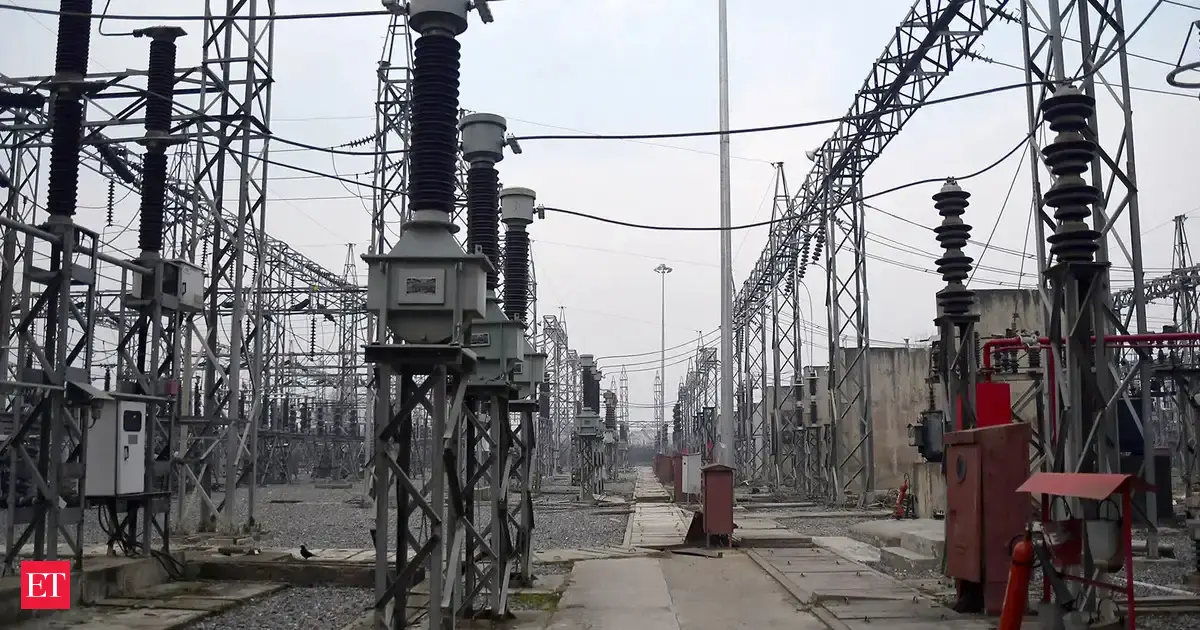
The Central Electricity Authority (CEA) has proposed developing most software and hardware modules by 2028-29, backed by pilot projects, a dedicated testing ecosystem and government funding. The government plans to develop homegrown control systems and equipment for critical power infrastructure, including the national grid, to end reliance on foreign technology and strengthen energy …
Imagine the power grid as a big computer system that needs to be controlled and monitored in real-time. India wants to make its own software and hardware for this system, so it doesn't have to rely on foreign technology. This will help keep the power grid safe and secure, and also create jobs and boost the economy.
Analysis
SCADA Systems: The Central Nervous System of the National Power Grid
The Central Electricity Authority (CEA) has described SCADA systems as the “central nervous system of the National Power Grid”, enabling the “One Nation, One Grid, One Frequency” framework through real-time monitoring and control. They collect and transmit critical data from power plants and substations to control centres, giving grid operators real-time visibility over equipment and enabling supervisory control of the electricity network.
Dependence on Foreign OEMs: A Strategic Concern
The CEA has flagged strategic concerns around dependence on foreign original equipment manufacturers. It said dependence on foreign OEMs and proprietary technologies has created interoperability constraints, delayed customisation and system upgrades, and increased reliance on external support services. “In an increasingly complex geo-political landscape, such dependence poses potential risks to national energy security,” the report said.
Local Content: A Gradual and Challenging Process
The power ministry had earlier prescribed a minimum local content requirement of 50% for SCADA systems. However, the CEA's assessment found that actual local content in grid SCADA remains below 20%, with exemptions having been granted in the past. The report noted that software accounts for about 25% of the cost of a SCADA system, while hardware accounts for the remaining 75%, making the localisation of equipment a more gradual and challenging process.
Software and Hardware Roadmap
The CEA finalised a timeline covering 38 software modules and 25 hardware components identified by Grid India. The software roadmap includes core SCADA applications, communication systems, historian and data storage platforms, Energy Management System functions such as state estimation and contingency analysis, automatic generation control, cybersecurity applications, load forecasting and network management systems. The committee found that 36 of the 38 software modules could be developed in the short term, although real-time testing and validation through digital twins and parallel operation at State Load Despatch Centres would remain key challenges.
Key points
- India is drawing up a roadmap to develop indigenous software and hardware for SCADA systems.
- The CEA has proposed developing most software and hardware modules by 2028-29.
- The government plans to develop homegrown control systems and equipment for critical power infrastructure, including the national grid.
- The initiative is part of New Delhi's broader self-reliance push, aimed at eliminating import dependence and ensuring that SCADA systems are available from Indian entities.
If India is successful in developing its own SCADA systems, it could lead to a significant reduction in import dependence and a strengthening of energy security. This could also create new job opportunities and boost the economy.
However, the development of indigenous SCADA systems is a complex and challenging process. If India fails to meet its targets, it could lead to a continued reliance on foreign technology and a weakening of energy security.