Ceuta Crisis: Sánchez Calls for Urgent EU Meeting, Schengen Suspended, First Checks at Fiumicino
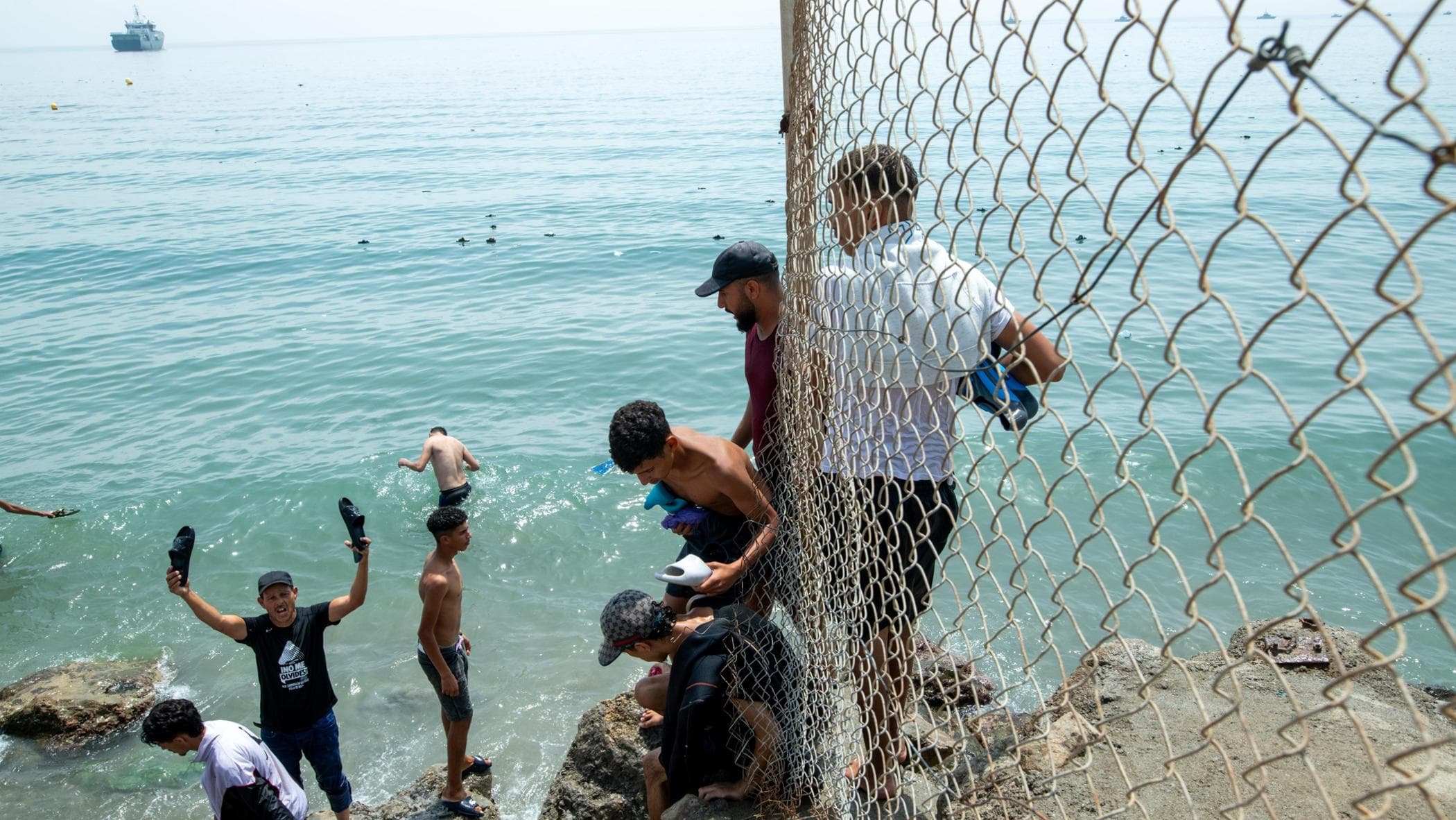
The Spanish enclave of Ceuta is grappling with a massive influx of migrants from Morocco, prompting Spain to seek urgent EU intervention and leading Italy to temporarily suspend Schengen with Spain.
Intelligence analysis by Gemini 2.5 Flash
Spain's Prime Minister Pedro Sánchez has appealed to the EU for a coordinated response to the migration crisis in Ceuta, emphasizing shared border security responsibility, while Italy has unilaterally reintroduced border checks for arrivals from Spain, highlighting growing European tensions over migration management.
Imagine a special club of countries where people can travel freely without showing their passports at every border. Spain, a member of this club, is having a big problem with many people trying to cross its border from a nearby country. Spain is asking the other club members for help, saying it's a problem for everyone. But one club member, Italy, got worried and decided to temporarily check passports again for people coming from Spain, just to be safe.
Analysis
The Ceuta Influx and Immediate Response
The Spanish autonomous city of Ceuta has been overwhelmed by an unprecedented influx of migrants from Morocco, with local authorities estimating nearly 60,000 arrivals, though the Spanish government reports 48,300 have already been returned. The humanitarian situation is dire, with 67 bodies recovered from the coast as search efforts continue for more victims near the Tarajal breakwater. In response, Spanish authorities have begun installing 500-meter-long floating containment barriers off the Tarajal pier to deter further migrant entries by sea. A temporary facility has been set up at Ceuta's port to house the recovered remains, and forensic experts from mainland Spain are expected to assist with autopsies and identification.
Spain's Call for EU Solidarity
Spanish Prime Minister Pedro Sánchez has formally requested an urgent meeting of EU Interior Ministers, addressing letters to EU Council President Antonio Costa, Commission President Ursula von der Leyen, and the Irish Council Presidency. Sánchez stressed that "border security is a common responsibility," arguing that Spain has maintained an effective, solidarity-based migration policy that has drastically reduced irregular arrivals, making its land border with Africa the EU's second safest external frontier. He also reminded European partners of Spain's past assistance in accommodating migrants who arrived via Belarus in 2021 and Lampedusa in 2023, implicitly calling for reciprocal support in the current crisis.
European Reactions and Schengen Implications
The crisis has quickly escalated into a broader European concern. Italy and Denmark have jointly spearheaded a letter to EU leaders, signed by 22 countries (not including Spain or France), demanding an "urgent extraordinary videoconference of Interior Ministers" to jointly assess the situation and formulate a coordinated European response. Concurrently, Italy has taken unilateral action by temporarily suspending the Schengen agreement with Spain for one month. This decision has led to the reintroduction of sample border checks at Fiumicino Airport for non-EU passengers arriving from Spain, aimed at verifying their eligibility to circulate within the Schengen Area. While these checks are described as selective and swift, they signal a significant strain on the principle of free movement within the EU.
Key points
- Ceuta is experiencing a massive migrant influx from Morocco, with tens of thousands arriving and many already returned.
- Spain's Prime Minister Pedro Sánchez has requested an urgent EU Interior Ministers' meeting, emphasizing shared border security responsibility.
- Italy and Denmark, along with 20 other EU countries, have called for an extraordinary videoconference to address the Ceuta situation.
- Italy has temporarily suspended the Schengen agreement with Spain, reintroducing sample border checks at airports for one month.
- At least 67 migrant bodies have been recovered in Ceuta, highlighting the humanitarian tragedy of the crisis.
- Spain has begun installing floating barriers off Ceuta's coast to deter further irregular migrant entries by sea.
The urgent calls for an EU-wide meeting and a coordinated response could lead to a more unified and effective European strategy for managing external borders and migration flows, potentially strengthening EU solidarity and burden-sharing mechanisms. A successful joint approach could alleviate pressure on frontline states like Spain and prevent further unilateral actions that strain the Schengen system.
The crisis risks further fragmenting EU migration policy, with member states resorting to unilateral border controls, potentially undermining the Schengen Area's integrity. A lack of swift, coordinated EU action could exacerbate humanitarian challenges in Ceuta, strain diplomatic relations between member states, and fuel anti-immigrant sentiment across the continent.