Chad: After his liberation, Succès Masra leaves the door open for a national unity government
Former Chadian Prime Minister and opposition leader Succès Masra, recently pardoned, has expressed openness to forming a national unity government, despite remaining ineligible for office.
Intelligence analysis by Gemini 2.5 Flash
Following his release from prison after a presidential pardon, Chadian opposition figure Succès Masra met with supporters and the press, signaling his desire for a political future. He proposed the formation of a unity government, emphasizing the need for a political truce and collective effort to build a solid future for Chad, even though his pardon does not restore his eligibility f…
Imagine two kids, one named Succès and one named Mahamat, who used to argue a lot about how to play a game. Succès even got sent to his room for a while. Now, Mahamat has let Succès out, and even though Succès can't be the main player in the game right now, he's saying, 'Hey, let's all play together! We can make a super team where everyone helps.' It's like he's trying to get everyone to stop fighting and work together to make the game fun for everyone in Chad.
Analysis
The recent liberation of Succès Masra, a significant opposition figure and former Prime Minister in Chad, marks a pivotal moment in the country's political landscape. His release, granted through a presidential pardon by Mahamat Déby Itno, comes after more than a year of detention and a 20-year prison sentence. This act of clemency, while not an amnesty, has immediately reignited discussions about national unity and the future direction of Chad's transitional government.
Succès Masra
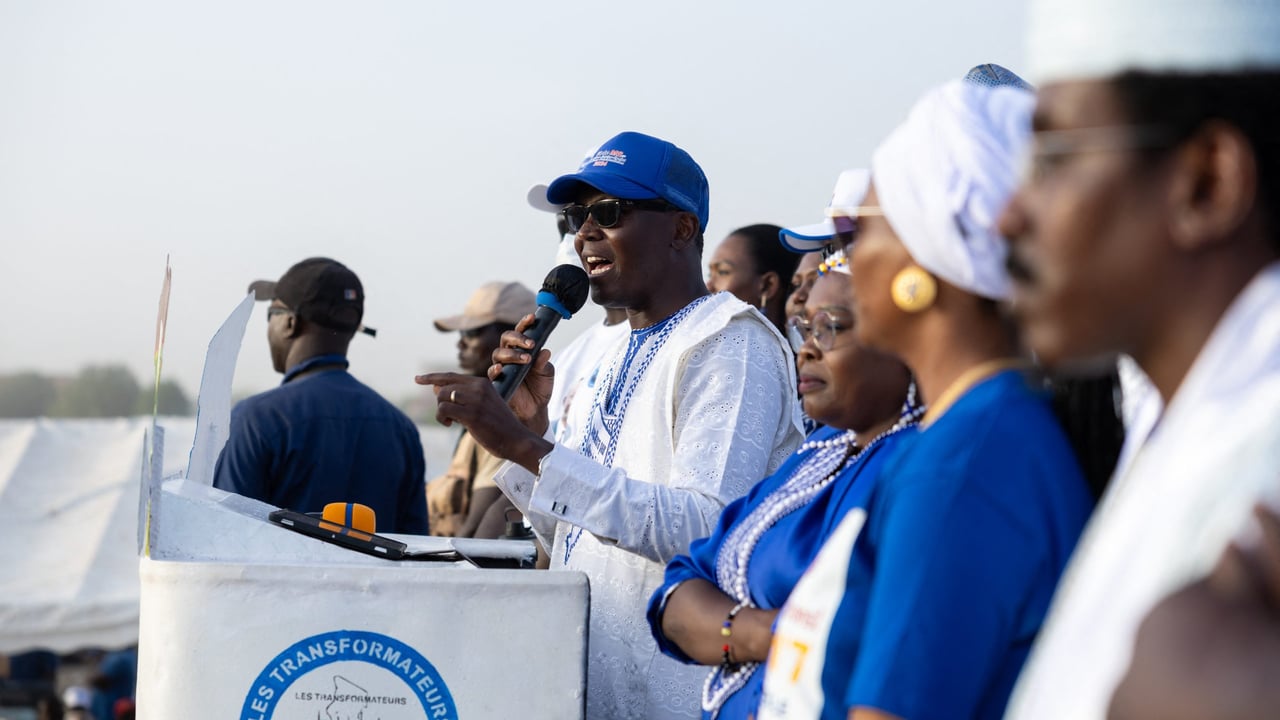
Succès Masra, leader of the Les Transformateurs party, has quickly leveraged his newfound freedom to articulate a vision for Chad's political future. Despite remaining ineligible for electoral office due to the nature of his pardon, Masra has publicly stated his willingness to participate in a government of national unity. He views his release as an opportunity for a political truce, suggesting that the next five years could be dedicated to building a more inclusive and stable nation.
His proposal for a unity government underscores a potential shift from confrontation to collaboration, aiming to bring together various Chadian factions, including those recently released from prison and members of the diaspora. Masra's emphasis on hope and the need to 'unleash Chad's energies' suggests a desire to move past past grievances and focus on collective solutions for the country's challenges. This stance could be instrumental in bridging divides within the deeply fractured political scene.
Mahamat Déby Itno
President Mahamat Déby Itno's decision to pardon Succès Masra is a calculated move that could reshape the dynamics of Chad's political transition. By releasing a high-profile opponent, Déby Itno demonstrates a willingness to engage with the opposition, potentially aiming to de-escalate political tensions and broaden the legitimacy of his government. Masra himself acknowledged that the President 'could have left me there' but chose to free him, implying a recognition of Masra's potential utility to the country outside of prison.
The President's reported acceptance of a 'joint commission for dialogue' further indicates an openness to Masra's calls for broader political inclusion. However, the ultimate power to form a unity government rests with the executive, as Chad operates under a presidential regime. Déby Itno's response to Masra's specific proposal for a government of unity and change will be a critical indicator of the sincerity and extent of his commitment to national reconciliation.
Les Transformateurs
Succès Masra's party, Les Transformateurs, serves as the primary platform for his political aspirations and proposals. His return to the party headquarters in N'Djamena, where he addressed supporters and the media, signifies the immediate re-activation of his political base. The party will likely play a crucial role in advocating for Masra's vision of a unity government and mobilizing support for any potential dialogue or collaboration with the ruling power.
The party's ability to rally support and maintain its influence, even after Masra's imprisonment and continued ineligibility, highlights its resilience and the enduring appeal of its leader. The future trajectory of Les Transformateurs will depend heavily on the outcomes of the proposed dialogue and whether Masra's calls for national unity translate into concrete political arrangements that genuinely integrate opposition voices into Chad's governance structure.
Key points
- Succès Masra, former Prime Minister and opposition leader, was pardoned by President Mahamat Déby Itno after over a year in prison.
- Masra remains ineligible for electoral office despite his liberation, which was a presidential pardon, not an amnesty.
- He has expressed openness to joining a national unity government and suggested forming a joint commission for dialogue.
- Masra emphasized the need for a 'political truce' and collective effort from all Chadians to build a solid future.
- The decision to form a unity government ultimately rests with President Déby Itno, as Chad operates under a presidential regime.
Succès Masra's openness to a national unity government could lead to a significant de-escalation of political tensions in Chad. This collaboration between the ruling power and a key opposition figure might foster greater stability, inclusivity, and a more consensual approach to governance, potentially accelerating Chad's democratic transition and addressing long-standing national challenges.
Despite Masra's willingness, his continued ineligibility for office could limit the impact of his participation in a unity government, potentially leading to frustration among his supporters. If the proposed dialogue fails to yield genuine power-sharing or if the presidential regime maintains ultimate control without meaningful concessions, the political truce could be short-lived, risking renewed instability and opposition discontent.