Child among three killed in Russian missile attacks near Kyiv
Russian missile attacks near Kyiv killed at least three people, including a child, and wounded three others, causing significant damage to buildings and infrastructure. This comes amidst an escalation of hostilities and faltering mediation talks.
Intelligence analysis by Gemini 2.5 Flash
Overnight Russian strikes targeted areas near Ukraine's capital, Kyiv, resulting in casualties and destruction, just days after a previous attack killed 21. Ukrainian President Zelensky highlighted the critical need for anti-ballistic systems, while also confirming Ukrainian counter-attacks on Russian oil refineries and Black Sea vessels, as he seeks international support in Serbia.
Imagine two neighbors are having a big fight. One neighbor, Russia, keeps throwing things at the other neighbor's, Ukraine's, house, even hitting kids. Ukraine's leader, Zelensky, is trying to get special shields from his friends to stop the attacks, but they're not coming fast enough, so people are getting hurt. Ukraine is also trying to hit back at Russia's money-making places, like oil factories, to make it harder for Russia to keep fighting. Meanwhile, Zelensky is visiting other neighbors to ask for help and support.
Analysis
Kyiv
Russian forces launched a series of missile attacks in the early hours of Saturday, targeting areas east of the Ukrainian capital, Kyiv. These strikes resulted in the deaths of at least three individuals, including a child, and left three others wounded. Witnesses reported hearing powerful explosions, indicating the intensity of the assault, which caused significant damage to residential buildings and vehicles.
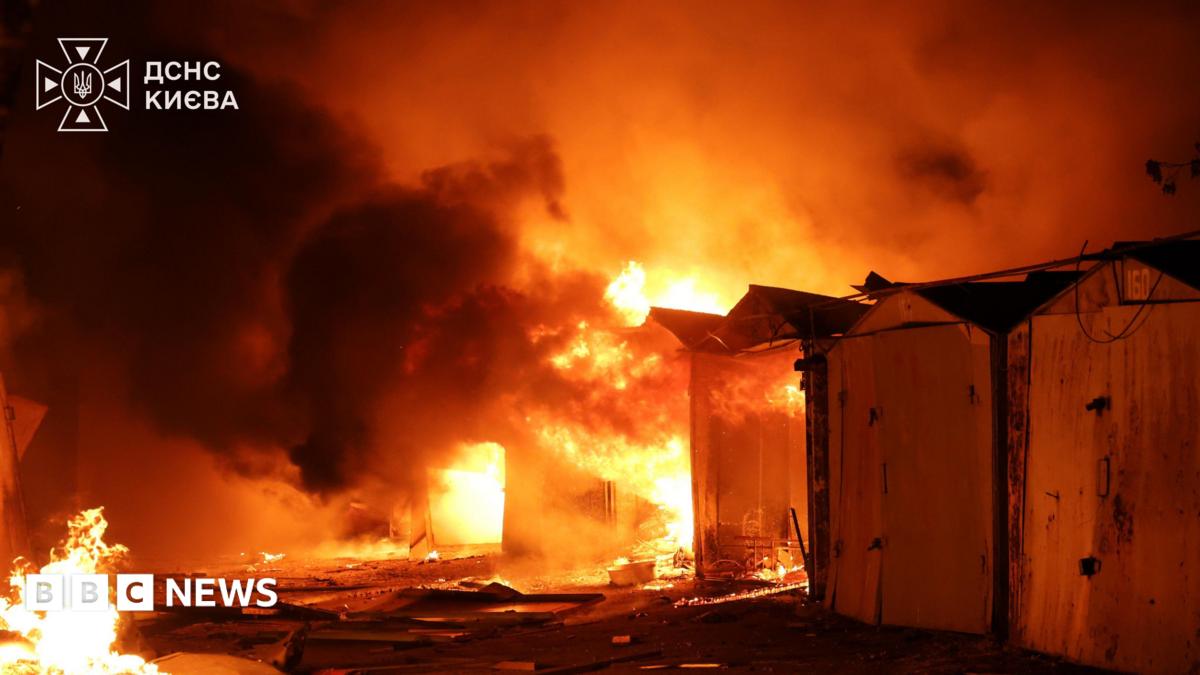
The regional military administration head, Timur Tkachenko, confirmed the casualties and the extent of the damage, noting that falling debris from the ballistic missiles impacted apartment buildings and cars. Additionally, a fire erupted at a separate building, requiring emergency crews to battle the flames. Kyiv Mayor Vitaly Klitchko also reported fires at a building and a fuel tank within the city, with Ukraine's state emergency service, DSNS, sharing images of garages and businesses ablaze in the Holosiivskyi district.
Volodymyr Zelensky
Ukrainian President Volodymyr Zelensky has been actively engaged in diplomatic efforts to bolster international support for Ukraine, making his first visit to the Serbian capital, Belgrade. During his visit, he is scheduled to meet with Serbian President Aleksandar Vučić to discuss a range of issues, including economic ties, security concerns, and Serbia's relationship with the European Union. This outreach is crucial as Zelensky aims to build wider backing for Ukraine, even as Serbia has maintained its stance of not applying sanctions against Russia, despite providing aid to Ukraine and pledging assistance for post-war reconstruction.
Earlier in the week, President Zelensky voiced strong concerns regarding the delays in receiving anti-ballistic missile systems from international partners. He emphasized that the lack of these interceptor capabilities directly contributes to "horrific casualties and destruction," asserting that a stronger defense could have "saved lives" in recent deadly assaults. He further noted a "significantly reduced" supply of interceptors from allies this year, highlighting a critical vulnerability for Ukraine's defense against ongoing Russian attacks.
Ilsky
In response to the continued Russian aggression, Ukraine has intensified its counter-attacks, targeting key Russian infrastructure. The Ukrainian military successfully struck two oil refineries deep inside Russian territory, specifically the Ilsky and Syzran refineries, during overnight operations. These strikes caused significant fires at both facilities, demonstrating Ukraine's capability to project force beyond its borders and disrupt Russia's war-financing mechanisms.
President Zelensky explicitly stated that these attacks, which also included targeting Moscow-linked vessels in the Black Sea, were intended to limit the oil revenues that Russia utilizes to "finance" its ongoing war in Ukraine. This strategic move aims to cripple Russia's economic capacity to sustain its military operations. The escalation of these reciprocal attacks follows the faltering of recent mediation talks between Ukraine and Russia, indicating a deepening of the conflict rather than a move towards de-escalation.
Key points
- Russian missile attacks near Kyiv killed three people, including a child, and wounded three others.
- The strikes caused fires and damaged apartment buildings, cars, and other infrastructure.
- Ukrainian President Volodymyr Zelensky is visiting Belgrade to seek wider support and discuss economic and security ties.
- Zelensky criticized delays in receiving anti-ballistic systems, stating they lead to 'horrific casualties and destruction'.
- Ukraine launched counter-attacks, hitting Russia's Ilsky and Syzran oil refineries and Black Sea vessels to limit war financing.
- Recent mediation talks between Ukraine and Russia have faltered, contributing to the escalation of attacks.
Zelensky's diplomatic efforts in Belgrade could lead to increased international support for Ukraine, potentially securing more aid and anti-ballistic systems. Serbia's commitment to providing aid and helping with post-war rebuilding offers a positive sign for future recovery and stability in the region.
The faltering mediation talks and the escalation of reciprocal attacks suggest a prolonged and intensified conflict, leading to more civilian casualties and destruction. Delays in receiving crucial anti-ballistic systems will continue to leave Ukrainian cities vulnerable to devastating Russian missile strikes.
Market signals
- OIL Ukrainian strikes on Russian oil refineries could disrupt supply or create market uncertainty, potentially pushing oil prices higher.
AI-generated analysis of potential market relevance. Not financial advice.