Chiltern Railways enters public ownership in Labour nationalisation push
Chiltern Railways, a commuter rail operator, has become the sixth to enter public ownership under Labour's nationalisation push.
Intelligence analysis by Qwen 2.5 (3B)
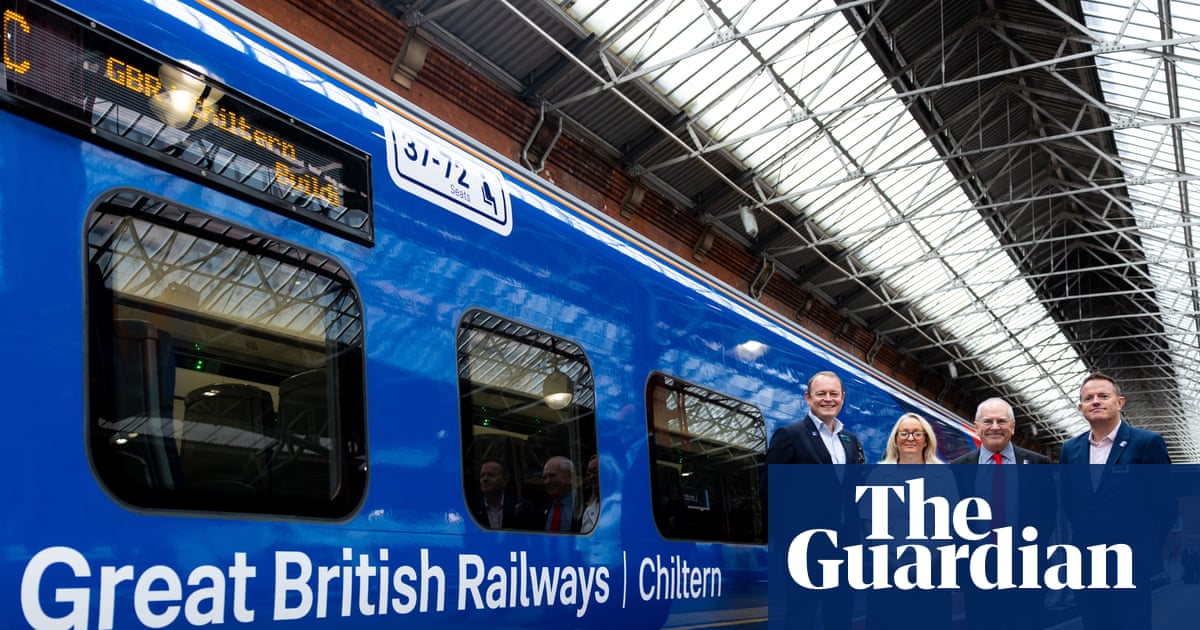
Chiltern Railways, which runs services between London and Birmingham, has entered public ownership as part of Labour's nationalisation strategy.
Chiltern Railways, a train company that runs between London and Birmingham, is now owned by the government. This means they can make the trains run better and have more seats for people to ride in.
Analysis
{"heading_1":"Chiltern Railways' Transition to Public Ownership","paragraph_1":"The DfT emphasized that the move would bring more frequent, comfortable trains that turn up on time, as they set up Great British Railways (GBR) to establish an integrated body.","paragraph_2":"The next operator to transfer into public ownership is due to be Great Western Railway in December. The government seeks to demonstrate the benefits of the publicly owned railway.","daily frustration":" of overcrowding. The DfT also highlighted that 25 daily services would be introduced on the Chiltern network from December, with 10,000 extra seats each weekday, as more new trains are rolled out.","paragraph_3":"The DfT's announcement was met with opposition from unions, particularly the RMT union, which is due to demonstrate outside London Marylebone station on Monday and members are being balloted for strike action over plans for driver-only operation.","heading_2":"Chiltern Railways' Improvement Package","heading_3":"Nationalisation Strategy and Future Plans"}
Key points
- Chiltern Railways enters public ownership under Labour's nationalisation push
- The move aims to improve services and reduce overcrowding
- 25 daily services will be introduced from December, with 10,000 extra seats each weekday
- The move could lead to strikes and delays due to plans for driver-only operation
- The next operator to transfer into public ownership is due to be Great Western Railway in December
The move towards public ownership could lead to more reliable and comfortable trains, which would benefit passengers and the economy.
However, the move could also lead to strikes and delays, as some unions oppose the plans for driver-only operation.