China has 6 of world’s 10 most innovative humanoid robot start-ups: report
China dominates the ranking of the world's most innovative humanoid robot start-ups, with six Chinese firms making the top 10. The US falls behind, with only three start-ups in the top 10.
Intelligence analysis by Llama
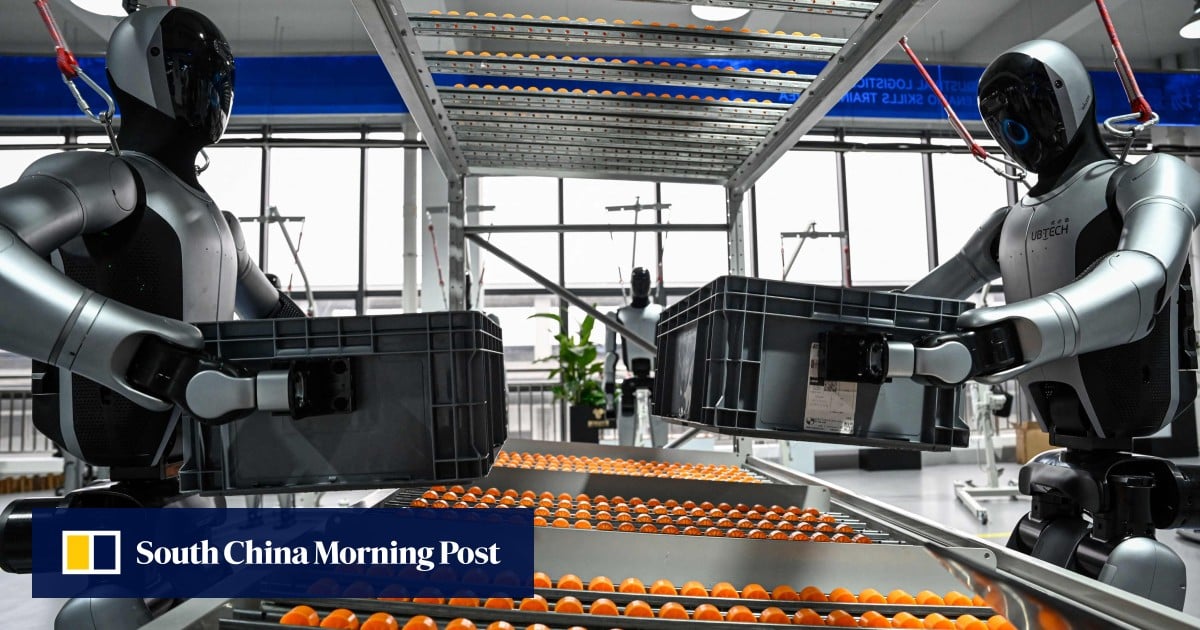
China's lead in humanoid robot innovation is widening, with six Chinese firms in the top 10, according to a new report. The US and Germany trail behind, with only three and one start-ups in the top 10, respectively.
Imagine you're building a robot that can walk and do things like humans. China is really good at making these robots, and they have six of the top 10 best ones in the world. The US and Germany are not as good at making these robots, and they only have a few of the top 10. This is important because it could change the way robots are made and used in the future.
Analysis
A Clear Shift Towards China
China's lead in humanoid robot innovation is not a new phenomenon, but the latest report from LexisNexis highlights the extent of its dominance. The report evaluated the strength of patent assets held by private start-ups that had demonstrated at least one bipedal walking robot. The results show that Chinese firms account for six of the world's 10 most innovative start-ups in the sector. The top five places went to Shanghai-based Fourier and AgiBot, Shenzhen-based LimX Dynamics and Pudu Robotics, and Hangzhou-based Unitree Robotics. Shenzhen's Leju Robot also made the top 10, ranking ninth. By contrast, only three US start-ups made the cut: Figure AI, Apptronik and Agility Robotics, which took sixth, eighth and 10th positions, respectively. Germany's Agile Robots was the sole European entrant, ranking seventh. The report's findings are based on a proprietary metric, the Patent Asset Index, which measured patent portfolio size, technological value and geographic scope. The study highlighted a 'clear shift towards China' in terms of innovation across three key humanoid technologies. Over the past decade, patent filings from China-based inventors doubled in interaction systems, expanded by 2.5 times in morphology, and jumped fivefold in control and planning architectures, it said. The results not only reflected the high number of patents filed in China, but also the value of those inventions based on market coverage and the degree to which subsequent innovations build upon them, according to LexisNexis. The report's findings have significant implications for the global robotics industry. China's dominance in humanoid robot innovation could lead to a shift in the global balance of power, with Chinese firms potentially becoming leaders in the sector. This could have significant implications for the US and other countries, which may need to adapt their strategies to compete with Chinese firms. On the other hand, the report's findings also highlight the need for Chinese firms to continue innovating and improving their technologies to maintain their lead. The report's findings also raise questions about the impact of the US's restrictions on imports of robots, including those made in China. The report's findings are based on a proprietary metric, the Patent Asset Index, which measured patent portfolio size, technological value and geographic scope. The study highlighted a 'clear shift towards China' in terms of innovation across three key humanoid technologies. Over the past decade, patent filings from China-based inventors doubled in interaction systems, expanded by 2.5 times in morphology, and jumped fivefold in control and planning architectures, it said. The results not only reflected the high number of patents filed in China, but also the value of those inventions based on market coverage and the degree to which subsequent innovations build upon them, according to LexisNexis.
Key points
- China dominates the ranking of the world's most innovative humanoid robot start-ups, with six Chinese firms in the top 10.
- The US falls behind, with only three start-ups in the top 10.
- The report highlights a 'clear shift towards China' in terms of innovation across three key humanoid technologies.
- China's lead in humanoid robot innovation could lead to a shift in the global balance of power, with Chinese firms potentially becoming leaders in the sector.
If China continues to innovate and improve its humanoid robot technologies, it could lead to significant advancements in the field and potentially create new opportunities for businesses and industries. This could also lead to increased investment in robotics research and development, which could have positive impacts on the global economy.
If the US and other countries are unable to adapt their strategies to compete with Chinese firms, it could lead to a decline in their robotics industries and potentially even job losses. Additionally, the restrictions on imports of robots, including those made in China, could lead to trade tensions and potentially even a trade war.

