China powers green computing hub, smart factories amid AI push
China launched a prefabricated energy hub for computing sites and a four-tier smart factory system to support AI growth.
Intelligence analysis by GPT-5.4 Mini
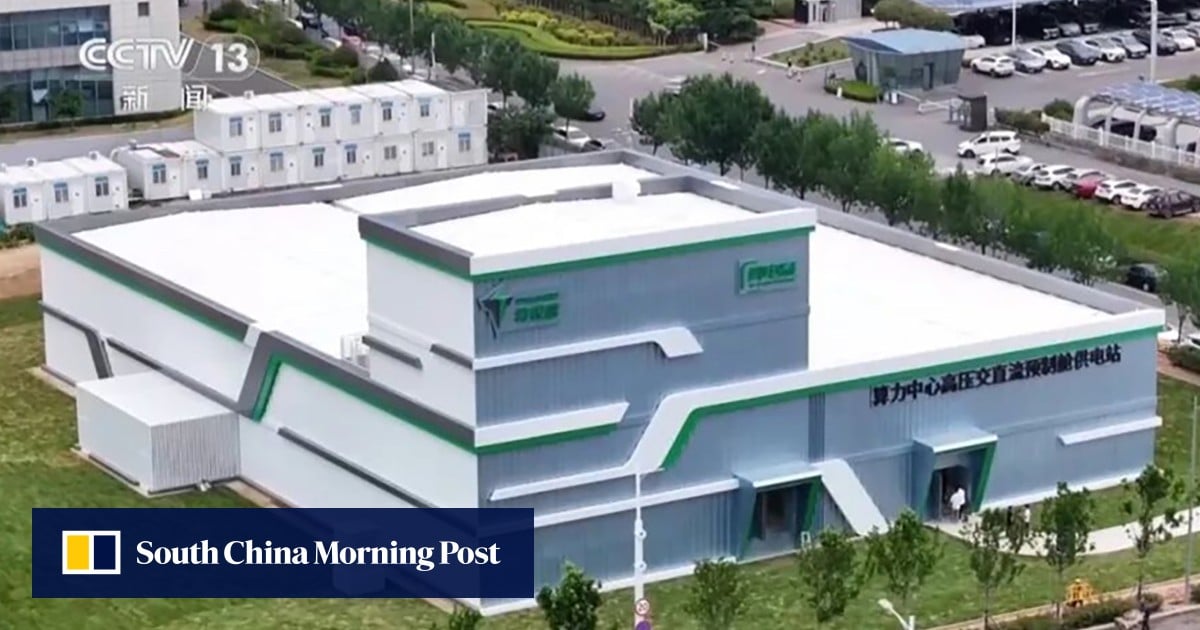
Beijing is pairing AI expansion with cleaner, more efficient industrial infrastructure. The article highlights a new computing energy hub in Qingdao and a nationwide smart factory system meant to cut land use, costs and emissions.
China is building a new kind of power box for giant computer centers, like giving a factory a cleaner, smarter battery. It is also organizing factories into a smarter system, so machines and electricity can work together better.
Analysis
China is moving to support its AI buildout with infrastructure designed to be both greener and more efficient. In Qingdao, eastern Shandong province, officials unveiled what state broadcaster CCTV described as the world's first prefabricated energy hub for computing facilities. The hub is intended to serve as the “heart” of computing centres by supplying green power to large data infrastructure.
According to the report, the new system was developed by Qingdao-based electricity equipment company TGOOD and is already being connected to enterprise-built data centres. National-level computing facilities are expected to adopt it in the second half of 2026. The pitch is that the hub can connect directly to green electricity and achieve “100 per cent green electricity consumption,” while also shrinking land requirements by more than 30 per cent and reducing overall costs by 20 per cent.
The article places the launch in a broader national push to coordinate computing capacity with renewable energy development. That matters because AI is driving higher electricity demand, which in turn is putting pressure on China’s power grid. The hub’s design tries to make power supply and computing load work in sync through a smart system, which could also lower computing power prices if the model scales.
The piece also says Beijing is establishing a nationwide four-tier smart factory system, suggesting the AI push is not limited to data centres. It is part of a wider effort to modernize industrial infrastructure so that digital expansion does not come at the cost of runaway energy use and higher operating expenses.
Key points
- China unveiled a prefabricated energy hub for computing facilities in Qingdao.
- CCTV said the hub is designed for direct green electricity use and 100% green power consumption.
- The system is said to cut land use by more than 30% and overall costs by 20%.
- National-level computing facilities are expected to adopt the hub in the second half of 2026.
- Beijing is also rolling out a nationwide four-tier smart factory system alongside the AI push.
If the hub performs as described, it could help data centres use cleaner power while taking up less space and costing less to build and run. That would make it easier for China to expand AI infrastructure without increasing pressure on the grid as much.
The promises depend on the system scaling beyond a showcase project and working reliably in real deployments. If adoption is slow or the savings do not hold up, the pressure from AI-driven power demand could remain a problem.