China reaches mass production of key isotope in quantum computing, Beijing says
China has achieved a breakthrough in producing an ultra-pure form of silicon-28, critical for building quantum computers.
Intelligence analysis by Qwen 2.5 (3B)
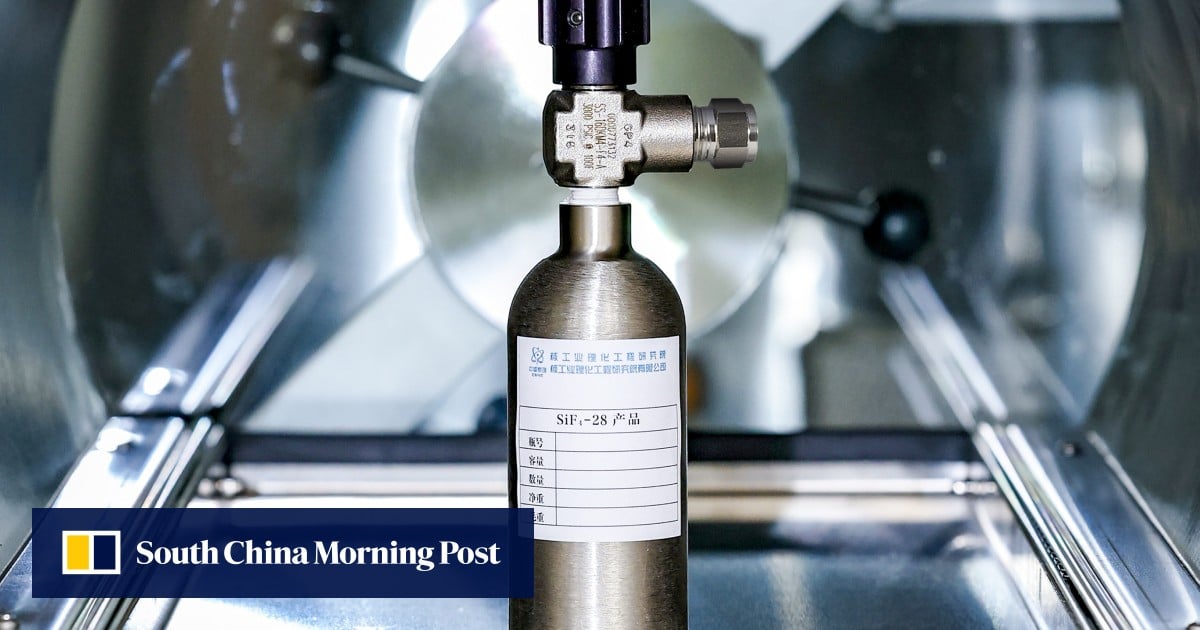
China's state-owned nuclear corporation announces successful mass-production of high-purity silicon-28 isotope, marking progress in self-reliance in strategic areas like quantum computing.
China made a special kind of silicon that is very pure. This is important because it helps build computers called quantum computers, which are super-smart but need the pure silicon to work well.
Analysis
Background on Quantum Computing
Quantum computers use qubits, which can exist as both a zero and one simultaneously. They are more powerful than traditional computers but require extremely pure silicon-28 isotope to function reliably.
China's Achievement
China National Nuclear Corporation (CNNC) announced the successful mass-production of high-purity silicon-28 with an isotopic abundance above 99.99 per cent, marking a significant step towards self-reliance in quantum technology.
Implications
This breakthrough helps plug a gap in China's supply chain for this critical material and could lead to advancements in quantum computing technologies.
Key points
- China National Nuclear Corporation announced successful mass-production of high-purity silicon-28 isotope
- This breakthrough helps plug a gap in China's supply chain for quantum computing components
- The material, silicon-28, is crucial for creating qubits in quantum computers
- This could lead to advancements in self-reliance and innovation in advanced technology sectors
This development could help China become less dependent on other countries for making parts needed in advanced technology like quantum computers, potentially leading to more self-reliance and innovation.
However, this achievement might not immediately change the global balance of power in tech, as many other countries are also working on similar technologies. There could be challenges in scaling up production and integrating new materials into existing technology.