China Unicom and Huawei deploy 5G-A network at World Humanoid Robot Games
China Unicom and Huawei deployed a dedicated 5G-Advanced (5G-A) network at the World Humanoid Robot Games in Beijing to support over 2,000 competing robots. This network provides low latency and high uplink speeds, crucial for real-time coordination and data transmission …
Intelligence analysis by Gemini 2.5 Flash
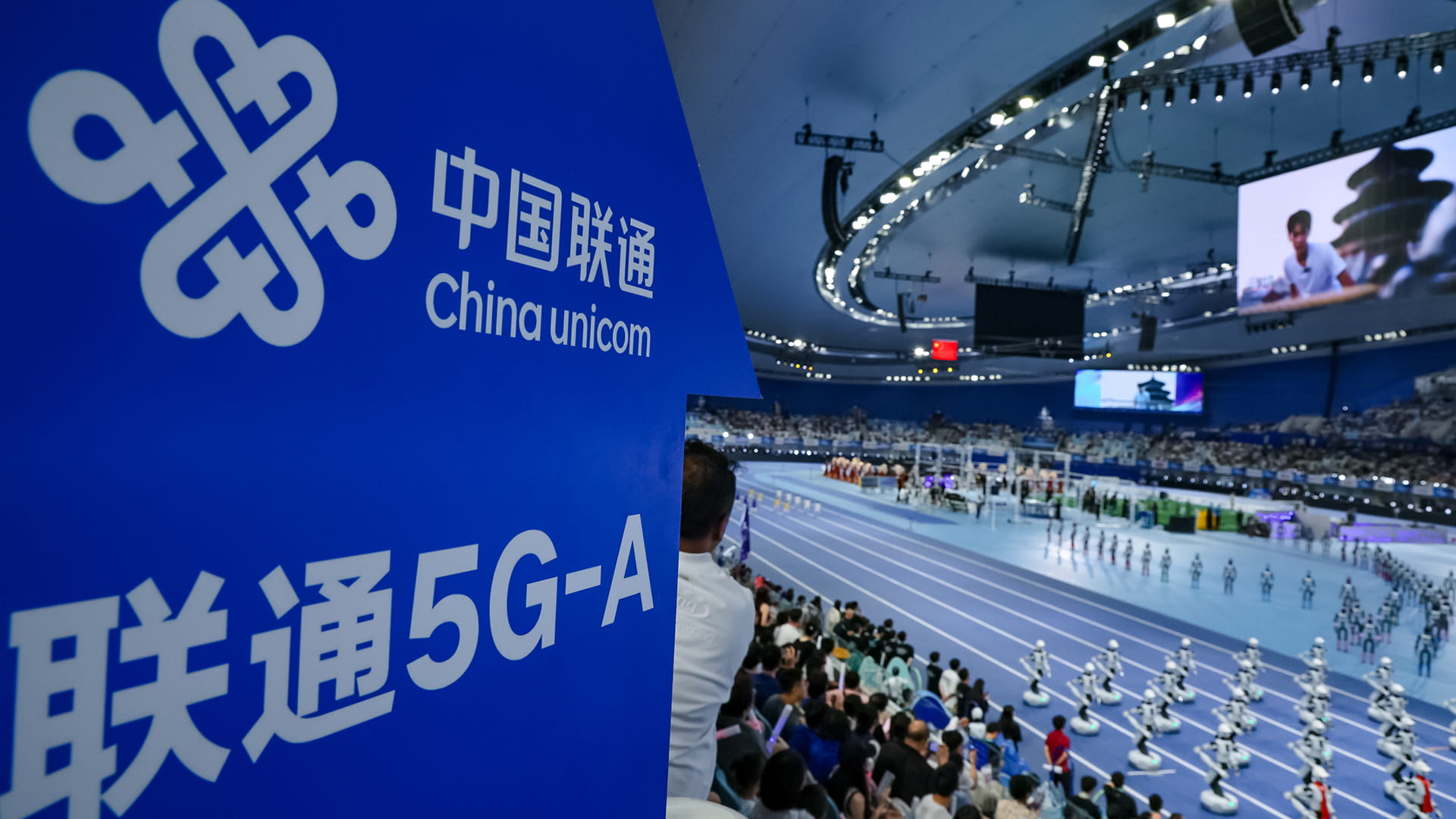
China Unicom and Huawei showcased their 5G-Advanced (5G-A) network capabilities at the World Humanoid Robot Games, demonstrating how enhanced uplink and low latency can support complex, multi-robot tasks. This deployment highlights a strategic shift in mobile network design to accommodate the increasing data demands of AI-enabled devices, moving beyond traditional consumer download-ce…
Imagine a big robot sports day where thousands of robots play games like soccer and table tennis. To make sure they don't bump into each other and can move smoothly, China Unicom and Huawei built a super-fast internet network, like a special highway just for robots. This network helps them talk to each other and their control centers super quickly, so they can play their games without any lag, just like how you need a good internet connection to play online video games without freezing.
Analysis
World Humanoid Robot Games
The second World Humanoid Robot Games, held at Beijing’s National Speed Skating Oval, served as a critical proving ground for advanced telecommunications infrastructure. Featuring 2,056 humanoid robots from 666 teams competing in 1,301 sessions across 51 events, the games placed a significant emphasis on autonomous and complex tasks. New head-to-head events like table tennis and kickboxing, alongside scenario-based competitions simulating industrial production, hotels, homes, and logistics, underscored the demanding real-time coordination and data exchange requirements.
This unique event provided a tangible demonstration of how cutting-edge network technologies can support sophisticated robotics applications. The sheer scale and complexity of the robot interactions offered invaluable insights into the practical challenges and capabilities of embodied intelligence in dynamic environments. It validated the theoretical advancements in 5G-Advanced networks by showcasing their performance under high-stress, real-world conditions, paving the way for broader industrial and commercial adoption.
5G-Advanced Network
To meet the stringent demands of the robot games, China Unicom and Huawei deployed a dedicated 100 megahertz 5G-Advanced (5G-A) network, complemented by a 300 MHz LampSite system for extensive indoor coverage. This specialized setup achieved end-to-end latency below 30 milliseconds and recorded peak uplink speeds of one gigabit per second during on-site tests. These figures are crucial for enabling tasks such as multi-robot coordination, precise obstacle avoidance, and intricate fine-motion control, where even slight delays can lead to significant operational failures.
The emphasis on enhanced uplink capacity represents a pivotal shift in mobile network design philosophy. Traditionally, mobile networks have been optimized for consumer downloads, like streaming videos. However, the proliferation of AI-enabled devices, particularly robots, necessitates robust uplink capabilities to transmit large volumes of telemetry and other data back to the network for processing or interaction. Huawei has explicitly identified stronger uplink as a cornerstone of 5G-A networks, positioning it as essential for the emerging "mobile AI era."
BeiDou Satellite Navigation System
A key component of this advanced deployment is its integration with the BeiDou satellite navigation system, China’s indigenous equivalent to GPS. Utilizing real-time kinematic (RTK) technology, the network provides decimeter- to sub-decimeter-level positioning accuracy for the competing robots. This high degree of precision is indispensable for autonomous systems that require exact spatial awareness to navigate complex environments and perform delicate tasks without errors.
The incorporation of BeiDou underscores China's strategic commitment to developing a comprehensive and self-reliant technological ecosystem for advanced applications. By combining state-of-the-art communication networks with highly accurate domestic satellite navigation, the country is building a robust foundation for future innovations in robotics, autonomous vehicles, and smart infrastructure. This integration not only enhances the performance of current applications but also fosters greater technological independence and resilience.
Key points
- China Unicom and Huawei deployed a 5G-Advanced (5G-A) network at the World Humanoid Robot Games in Beijing.
- The network supports over 2,000 robots across 51 events, emphasizing low latency (below 30ms) and high uplink speeds (1 Gbps).
- This deployment showcases 5G-A's capabilities for multi-robot coordination, obstacle avoidance, and fine-motion control.
- The system integrates with China's BeiDou satellite navigation for decimeter-level positioning accuracy.
- The initiative highlights the shift in mobile network design to accommodate the high uplink demands of AI-enabled devices.
This successful deployment could accelerate the adoption of 5G-A networks for industrial automation and smart city applications, demonstrating a viable path for integrating advanced robotics into various sectors. It also positions China Unicom and Huawei as leaders in developing infrastructure for the "mobile AI era," potentially driving global innovation in telecommunications and AI.
The specialized nature of this deployment for a controlled event might not fully reflect the challenges of broader, real-world commercial applications, potentially overstating immediate scalability. Furthermore, the reliance on specific vendor technologies could raise concerns about vendor lock-in and interoperability in future large-scale deployments.