China vows to defend Brazil’s sovereignty as Trump’s 25% tariff bites
Chinese Foreign Minister Wang Yi told Brazil that Beijing would continue to support its sovereignty, security, and development interests. Wang made the statement hours after a 25 per cent US tariff on Brazilian goods took effect.
Intelligence analysis by Llama
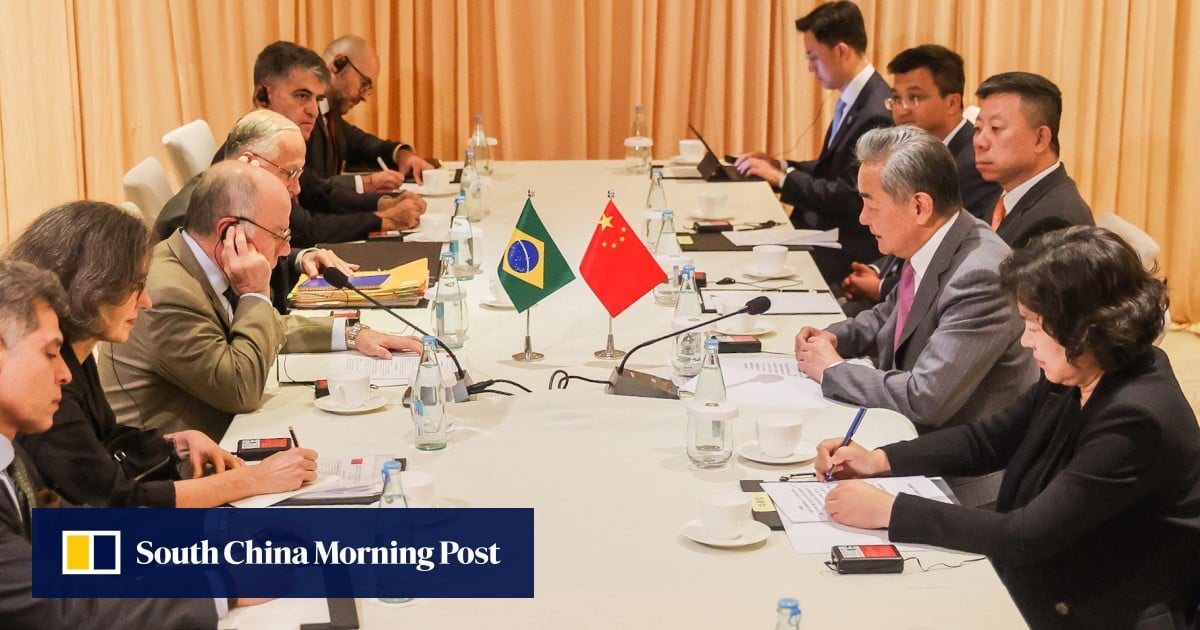
China has vowed to defend Brazil's sovereignty as the US imposes a 25% tariff on Brazilian goods. Chinese Foreign Minister Wang Yi made the statement during a meeting with Brazilian Foreign Minister Mauro Vieira in Manila.
China is promising to help Brazil keep its independence and make its own decisions. This is because the US has put a big tax on Brazilian goods, which is making it harder for Brazil to trade with other countries. China is trying to show that it supports Brazil's independence and will help it out in this tough time.
Analysis
China's Support for Brazil's Sovereignty
China has long been a key player in the global economy, and its relationship with Brazil is no exception. In a meeting with Brazilian Foreign Minister Mauro Vieira, Chinese Foreign Minister Wang Yi vowed to continue supporting Brazil's sovereignty, security, and development interests. This move comes as the US has imposed a 25% tariff on Brazilian goods, which has sparked a heated debate about sovereignty and trade.
The US Tariff on Brazilian Goods
The US tariff on Brazilian goods is a significant development in the ongoing trade tensions between the two countries. The tariff is tied to the prosecution of former President Jair Bolsonaro, who is facing charges related to his time in office. The US has also designated the First Capital Command and the Red Command as foreign terrorist organisations, which has further strained relations between the two countries.
China's Core Interests
China's support for Brazil's sovereignty is closely tied to its own core interests. Beijing has long been concerned about the status of Taiwan, Tibet, Xinjiang, and Hong Kong, and has taken steps to defend these regions. In this case, Wang's statement suggests that China is willing to support Brazil's sovereignty in exchange for Brazil's support on China's core interests. This move has significant implications for the global economy and the relationship between China and Brazil.
Key points
- China has vowed to defend Brazil's sovereignty as the US imposes a 25% tariff on Brazilian goods.
- Chinese Foreign Minister Wang Yi made the statement during a meeting with Brazilian Foreign Minister Mauro Vieira in Manila.
- The US tariff on Brazilian goods is tied to the prosecution of former President Jair Bolsonaro.
- China's support for Brazil's sovereignty is closely tied to its own core interests.
If China and Brazil can work together to defend their sovereignty, it could lead to a stronger and more stable relationship between the two countries. This could also have positive implications for the global economy, as it would show that China and Brazil are committed to working together to address common challenges.
However, if the US tariff on Brazilian goods continues to cause problems, it could lead to a decline in trade between the two countries. This could have negative implications for the global economy, as it would show that the US and Brazil are unable to work together to address common challenges.