China’s BYD aims to be world’s biggest car firm within five years
BYD says it wants to become the world’s biggest automaker within five years, led by battery and fast-charging advances. It is also expanding overseas, especially in Europe.
Intelligence analysis by GPT-5.4 Mini
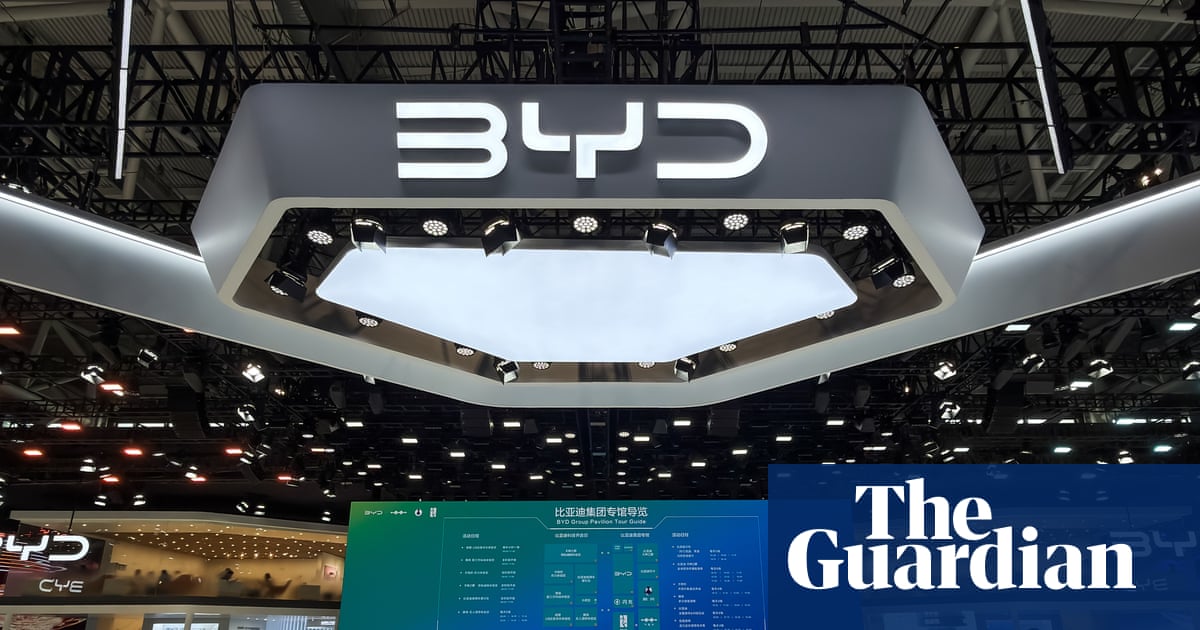
BYD is setting a five-year goal to overtake Toyota as the world’s largest carmaker, backed by rapid EV sales growth, battery technology and overseas production. The expansion comes alongside tariff pressure in Europe and security scrutiny in the US.
BYD is a car company that wants to become the biggest in the world, like trying to win first place in a giant race. It is building fast chargers and more factories so it can sell cars in more countries, but some governments are watching it closely.
Analysis
Expansion plan
BYD’s founder and chair, Wang Chuanfu, told shareholders in Shenzhen that the company expects to become the world’s number one automaker by scale within five years. The company is betting on three things: faster battery advances, five-minute “flash charging,” and more production outside China.
BYD is already the world’s biggest EV maker by sales, having passed Tesla last year. It said it wants to sell 1.5 million vehicles overseas this year, after selling more than 160,000 abroad in May alone, which the company said was up 80% from a year earlier. That would mark a further step in its push beyond its home market.
Europe and policy pressure
A large part of the strategy is Europe. BYD said it plans to spend nearly £1.8bn on European charging infrastructure and said its Hungary plant should start assembling cars in the fourth quarter of this year. Stella Li, its top international executive, said Hungary is the company’s priority and that a second European production site is next on the list.
Local assembly matters because the EU has added tariffs on Chinese EVs. Building cars inside Europe would help BYD reduce that barrier.
Risks and scrutiny
The expansion is not friction-free. BYD has faced allegations in Hungary over labour-law breaches and claims that excavated soil was dumped on farmland. In the US, the Pentagon added BYD to a list of Chinese military companies, while Beijing rejected the move as lacking factual basis. The company’s global rise is therefore tied to a wider geopolitical contest, not just car sales.
Key points
- BYD says it wants to become the world’s biggest automaker within five years.
- The company plans to lean on battery improvements, fast charging and overseas production.
- It aims to sell 1.5 million vehicles overseas this year after strong growth in May.
- BYD’s Hungary factory is a key part of its Europe strategy, while a Turkey project is on hold.
- The company is facing labour, environmental and security scrutiny in Europe and the US.
If BYD keeps growing overseas and its European factories come online, it could sell many more cars outside China and cut the effect of EU tariffs. Its charging technology could also make its cars easier to use and more attractive to buyers.
The company’s push into Europe could run into more tariff barriers, legal disputes and public scrutiny over factory practices. In the US, security concerns could further limit its room to expand or damage its international reputation.