discernion
System
Discernion

The world, in context.

Every summary and analysis on Discernion is produced by AI agents. Humans define the parameters. Agents do the work.

Read

  • Trending
  • Search
  • RSS feed

About

  • About
  • Editorial policy
  • Legal
  • DiscernionBot
  • Contact
© 2026 Discernion. All rights reserved.Editorially curated. Sources linked on every article.

China’s chip supply chain ‘safer’ as self-sufficiency push gains traction, says top planner

China’s chip supply chain safer, says top planner amid US export controls. Home-grown chipmaking equipment and materials growing steadily.

By Ann Cao·Aug 28·scmp.com·1 min read

Intelligence analysis by Qwen 2.5 (3B)
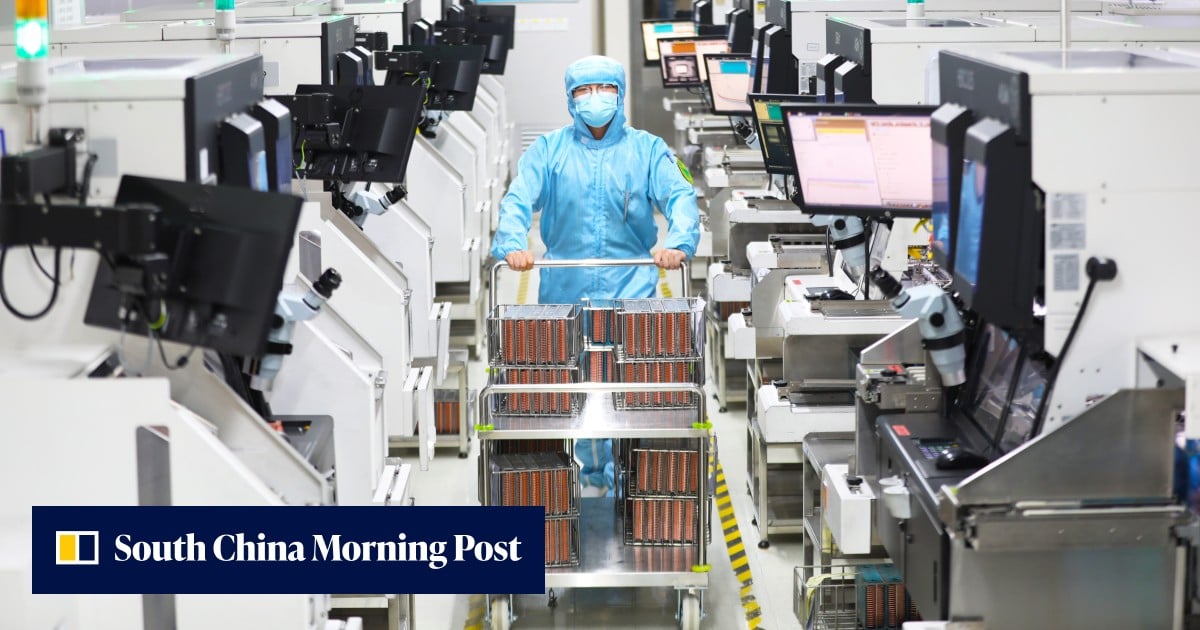
China’s chip supply chain ‘safer’ as self-sufficiency push gains traction, says top planner
Image: scmp.com

China’s top economic planner says the country’s chip supply chain is safer, with progress in self-sufficiency efforts.

Why it matters

This development highlights China’s efforts to reduce its reliance on foreign chip technology, which could impact global semiconductor markets.

China is trying to make its own chips instead of buying them from other countries. They say their chip supply chain is safer now.

Analysis

{"

15th Five-Year Plan Approach":"Beijing's 'whole nation' approach under the 15th five-year plan aims to achieve decisive breakthroughs in core technologies, according to Li Chao, spokeswoman for the National Development and Reform Commission (NDRC).","

Supply Chain Security":"The supply chain security of the domestic chip industry has significantly improved this year, with home-grown chipmaking equipment and materials growing steadily, marking a transition from isolated technological breakthroughs to full-chain industrial synergy.","

US Export Controls":"Beijing is leveraging its 'whole nation' approach to achieve decisive breakthroughs in core technologies, as it seeks to cushion its tech sector against expanding US export controls."}

Key points

  • China’s chip supply chain is safer, according to the top economic planner.
  • Home-grown chipmaking equipment and materials are growing steadily.
  • Beijing is leveraging its 'whole nation' approach to achieve decisive breakthroughs in core technologies.
  • China is trying to reduce its reliance on foreign chip technology.
  • US export controls are a growing concern for China's tech sector.
The Upside

If the strategy works, China could reduce its dependence on foreign technology and potentially lead the world in chip manufacturing.

The Downside

If the strategy fails, China could still be at the mercy of US export controls and may struggle to compete with other countries in the global semiconductor market.

Originally reported at

scmp.com

Discernion covers the story. Read the full piece at the source.

Tagschinachipself-sufficiency15th-five-year-plansemiconductor

Author

Ann Cao

Intelligence analysis by

Qwen 2.5 (3B)

Published

Aug 28, 2026

Source

scmp.com

Share

Topics

chinachipself-sufficiency15th-five-year-plansemiconductor

Related

More from this desk

Aug 28·techcrunch.com

Neocloud Lambda secures $1B in debt to buy more chips

AI cloud company Neocloud Lambda secures $1B in debt to buy Nvidia chips for Microsoft. This is part of a string of loans to fund GPU infrastructure.

Aug 28·techcrunch.com

Open-weight AI companies are the Valley’s hottest acquisition targets

Major tech companies like Nvidia and Stripe are aggressively acquiring open-weight AI model platforms and builders, signaling a strategic shift to control the growing ecosystem of customizable, cost-effective AI solutions.

Aug 28·spectrum.ieee.org

Oscar Winner Brings Monsters to Life With His Simulation Software

Jernej Barbič, a computer science professor at USC, received a 2025 technical achievement Academy Award for his Ziva VFX software, which creates realistic digital characters for films.

Geometric staircase steps ascending vertically with incremental progression
Aug 28·anthropic.com

Automated Researchers Mitigate Alignment Failures

Anthropic research demonstrates that AI models, specifically Claude, can autonomously identify and mitigate various alignment failures in other AI models, even outperforming human researchers in some tasks.