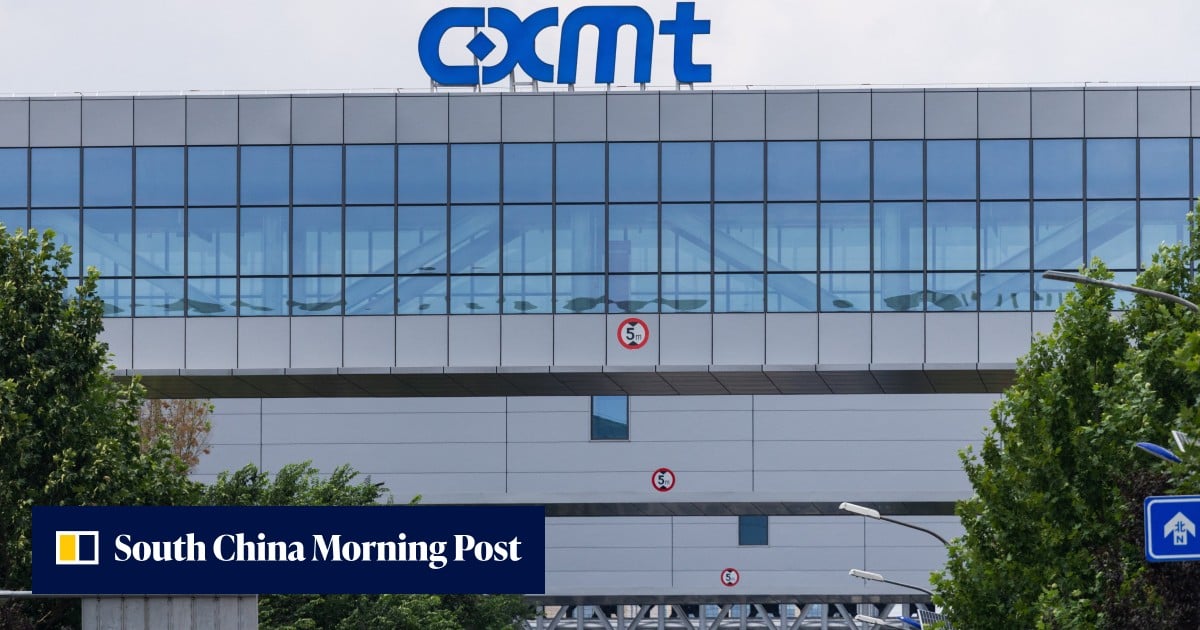
China’s CXMT posts massive 870% revenue surge as ‘aggressive expansion’ pays off
Chinese chipmaker ChangXin Memory Technologies (CXMT) reported an 873.64% surge in first-half revenue to 150.31 billion yuan, driven by soaring demand from the AI industry and aggressive expansion.
Intelligence analysis by Gemini 2.5 Flash
CXMT, China's leading DRAM chipmaker, significantly outperformed its own forecasts, reversing a previous loss with a net profit of 77.61 billion yuan. This boom is attributed to tight global DRAM supplies, rising prices, and the company's strategic expansion into newer products like DDR5 and the upcoming LPDDR6, positioning it competitively in the global memory market.
Imagine a factory that makes super-fast computer memory chips, like the brain cells for computers. This Chinese factory, CXMT, just sold way more chips than ever before, making a huge amount of money! This happened because lots of new smart computers, especially ones that help with AI, need these special chips, and CXMT is making more of the newest, fastest kinds, like DDR5 and a super-speedy new one called LPDDR6. It's like they're selling all the best toys when everyone wants them.
Analysis
150.31 billion yuan
ChangXin Memory Technologies (CXMT) has demonstrated an extraordinary financial performance, reporting a staggering 150.31 billion yuan (US$22.4 billion) in revenue for the first half of the year. This figure represents an 873.64 per cent year-on-year increase, a growth rate that far exceeded the company's own pre-initial public offering guidance. The revenue surge was accompanied by a significant turnaround in profitability, with net profit attributable to shareholders reaching 77.61 billion yuan, a stark reversal from a 2.33 billion yuan loss in the same period last year.
This financial boom underscores the effectiveness of CXMT's aggressive expansion strategies and its ability to capitalize on prevailing market conditions. The company's performance not only surpassed its revenue forecast by approximately 25 per cent but also exceeded its profit guidance by about 36 per cent, indicating robust operational efficiency and strong market demand for its products. This success positions CXMT as a formidable player in the global memory chip landscape, particularly as China seeks greater self-sufficiency in critical technologies.
DDR5
The company's impressive revenue growth has been significantly bolstered by its expanding production capabilities and an optimized product mix, with a particular emphasis on newer technologies like DDR5. This advanced dynamic random-access memory (DRAM) product is increasingly vital for high-performance computing applications, finding widespread use in personal computers, workstations, and servers. The article notes that DDR-series revenue alone accounted for 69.47 billion yuan in the first half, representing 46.3 per cent of CXMT’s main business revenue, a substantial increase from 31.9 per cent in the previous year.
The strategic shift towards higher-value and higher-demand products like DDR5 has allowed CXMT to capture a larger share of the market, especially as global demand for memory products from the artificial intelligence industry continues to skyrocket. The company's ability to ramp up output of these newer products has been a key driver of its financial success, enabling it to meet the tight global DRAM supplies and benefit from rising prices. This focus on advanced memory solutions is critical for maintaining competitiveness and relevance in a rapidly evolving technological landscape.
LPDDR6
Further solidifying its position in the advanced memory market, CXMT has made significant strides with its latest LPDDR6 chip. This cutting-edge low-power double data rate memory is capable of impressive speeds of up to 12,800Mbps, indicating a substantial leap in performance. The company has already dispatched these chips to key customers for validation, signaling its readiness to accelerate preparations for mass production.
This development is particularly noteworthy as it marks a pivotal moment for the Chinese semiconductor industry. It is the first instance where a Chinese DRAM maker has entered the commercialization race for a new LPDDR generation at roughly the same time as established global industry leaders. This achievement not only highlights CXMT's technological prowess and innovation capabilities but also signifies China's growing ability to compete at the forefront of memory chip development, challenging the long-standing dominance of international players.
Key points
- CXMT reported a first-half revenue of 150.31 billion yuan (US$22.4 billion), an 873.64% year-on-year increase.
- The company reversed a previous loss, achieving a net profit of 77.61 billion yuan, significantly exceeding its pre-IPO guidance.
- The revenue surge is primarily fueled by skyrocketing demand for memory products from the artificial intelligence industry and tight global DRAM supplies.
- CXMT benefited from expanding production and an improving product mix, with DDR-series revenue accounting for 46.3% of its main business.
- The company's latest LPDDR6 chip, capable of 12,800Mbps, has been sent to customers for validation, marking a significant step in competing with global leaders.
CXMT's aggressive expansion and successful entry into advanced memory production could significantly bolster China's domestic semiconductor industry, reducing its reliance on foreign suppliers. This success could also drive further innovation and investment within China's tech sector, fostering a more robust and self-sufficient ecosystem for AI development.