China’s demise was gleefully predicted by the west – meanwhile, it built an AI revolution | Larry Elliott
Despite Western predictions of its economic collapse, China has evolved from a low-cost manufacturer to a leader in high-end goods and is now challenging the US in artificial intelligence.
Intelligence analysis by Gemini 2.5 Flash
The article argues that Western observers consistently underestimated China's economic trajectory, focusing on its potential demise while China strategically advanced through manufacturing phases to become a global AI competitor, exemplified by its free, high-performing AI models.
Imagine China used to make simple toys for everyone because it was good at making things cheaply. Then, it learned to make really cool electric cars and solar panels, becoming super good at advanced stuff. Now, it's making super smart computer brains, called AI, that are as good as the best ones but cost nothing! This is making other big countries wonder if their own smart computer companies are worth as much money as people thought, because China is changing the game.
Analysis
For decades, Western analysts have anticipated the downfall of the Chinese economic model, citing issues such as overinvestment, debt, property market instability, and political repression. This perspective often confined China to the role of a low-cost manufacturing hub, underestimating its strategic ambitions. However, the article posits that China has systematically defied these predictions, evolving its economic structure and now posing a formidable challenge in the realm of artificial intelligence.
China 1.0
China's initial economic ascent, dubbed "China 1.0," was characterized by its focus on low-cost manufactured goods, leveraging cheap labor to gain a competitive advantage. This phase saw a significant exodus of manufacturing firms to East Asia, driven by the pursuit of higher profits. The article suggests that this period was so transformative that it indirectly influenced major political shifts in the West, such as the rise of figures like Donald Trump and the Brexit movement, by reshaping global supply chains and labor markets.
However, China was not content to remain solely a producer of basic consumer items. It embarked on a deliberate strategy to move up the value chain, investing heavily in higher-end manufacturing. This transition, referred to as "China 2.0," shattered the illusion that the country would forever be a developing economy limited to low-grade products. China successfully captured the market in solar panels, became a world leader in batteries and electric vehicles, and developed the capability to produce its own machine tools, reducing its reliance on imports from countries like Germany. This shift has had tangible impacts on Western economies, with the rise of political movements like the Alternative für Deutschland partly attributed to the threat posed by Chinese manufacturing to German jobs.
Moonshot
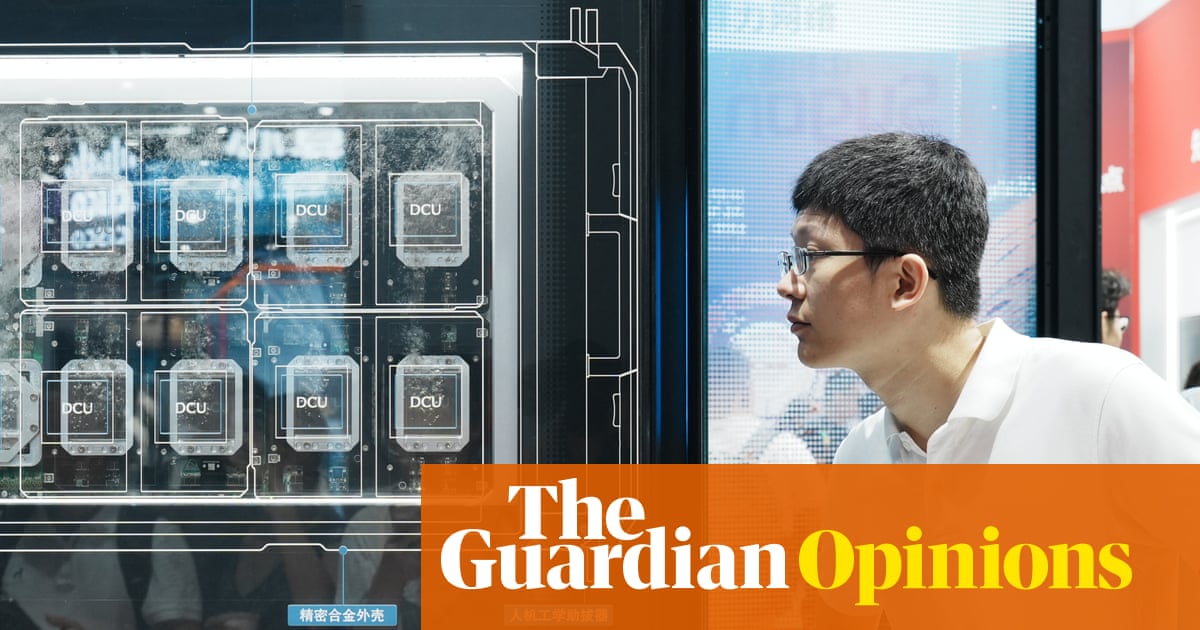
The latest phase, "China 3.0," marks China's aggressive push for dominance in artificial intelligence, directly competing with the United States. A notable example is the Chinese startup Moonshot, which in July unveiled its Kimi K3 model. This model quickly gained traction, reportedly matching the performance of advanced US rivals like OpenAI's ChatGPT, but crucially, offered at no cost. The overwhelming demand for Kimi K3 led to a temporary suspension of new subscriptions due to computing capacity limitations, underscoring the immediate impact and appeal of China's AI offerings.
This development is not an isolated incident but part of a broader, deliberate strategy by Beijing. As noted by Edoardo Campanella of UniCredit, China aims to stay at the technological frontier, widely diffuse its AI models across the global economy, and establish international standards. The success of this strategy could lead to a "third China shock," potentially disrupting not only the global economy but also the global balance of power. The availability of free, high-quality Chinese AI models could significantly challenge the business models of US tech giants, which have seen massive investments and sky-high valuations based on their perceived technological prowess.
G20
Despite its technological advancements, China faces ongoing criticism regarding its economic model, particularly its reliance on investment and exports. Critics point to significant excess capacity and a domestic consumption level that is insufficient to absorb its vast production, partly due to low wages and a less generous welfare system. Consequently, China's sustained growth, necessary to prevent social unrest from rising unemployment, depends heavily on exporting its surplus goods to the rest of the world.
This reliance on exports and perceived lack of domestic demand stimulus led to China's isolation at a recent G20 meeting of finance ministers. The country faced widespread criticism for not boosting internal demand for its products. This collective awakening among developed and developing nations to China's economic strategy comes at a critical juncture, as China simultaneously intensifies its competition with the US in AI. The article suggests that if China's low-cost, high-performance AI models gain global traction, it could deflate the perceived stock market bubble in US tech companies, forcing a re-evaluation of their massive valuations and the underlying investment rationale.
Key points
- Western predictions of China's economic demise have consistently been proven wrong as China evolved its manufacturing capabilities.
- China transitioned from low-cost manufacturing (China 1.0) to high-end goods like EVs and solar panels (China 2.0).
- China is now aggressively competing in artificial intelligence (China 3.0), with startups like Moonshot offering free, high-performing AI models.
- Beijing's AI strategy aims to stay at the technological frontier, diffuse models globally, and set international standards.
- The availability of free Chinese AI could challenge the valuations of US tech companies and disrupt global markets.
- China faces international criticism for its export-driven growth model and insufficient domestic demand.
If China's AI strategy succeeds, it could democratize access to advanced AI models globally, fostering innovation in developing economies and potentially driving down costs for businesses worldwide. This could lead to a more competitive and diverse global AI landscape, benefiting consumers and smaller enterprises.
The rise of free Chinese AI models could significantly destabilize global markets, particularly by pricking the perceived stock market bubble in US technology companies that have benefited from massive investments. This shift could also exacerbate geopolitical tensions as the global balance of power in technology and economics undergoes a profound transformation.
Market signals
- US Technology Stocks The article suggests that free Chinese AI models could lead investors to question the massive investments and sky-high share prices of US tech companies, potentially pricking a stock market bubble.
AI-generated analysis of potential market relevance. Not financial advice.