China’s policy playbook took its EV sector from zero to hero – can other countries follow?
China's electric vehicle industry has become a global leader, and its policy playbook is being studied by emerging economies as a way to catch up. The shift towards electric engines has lowered barriers to entry and made key components easier to source.
Intelligence analysis by Llama
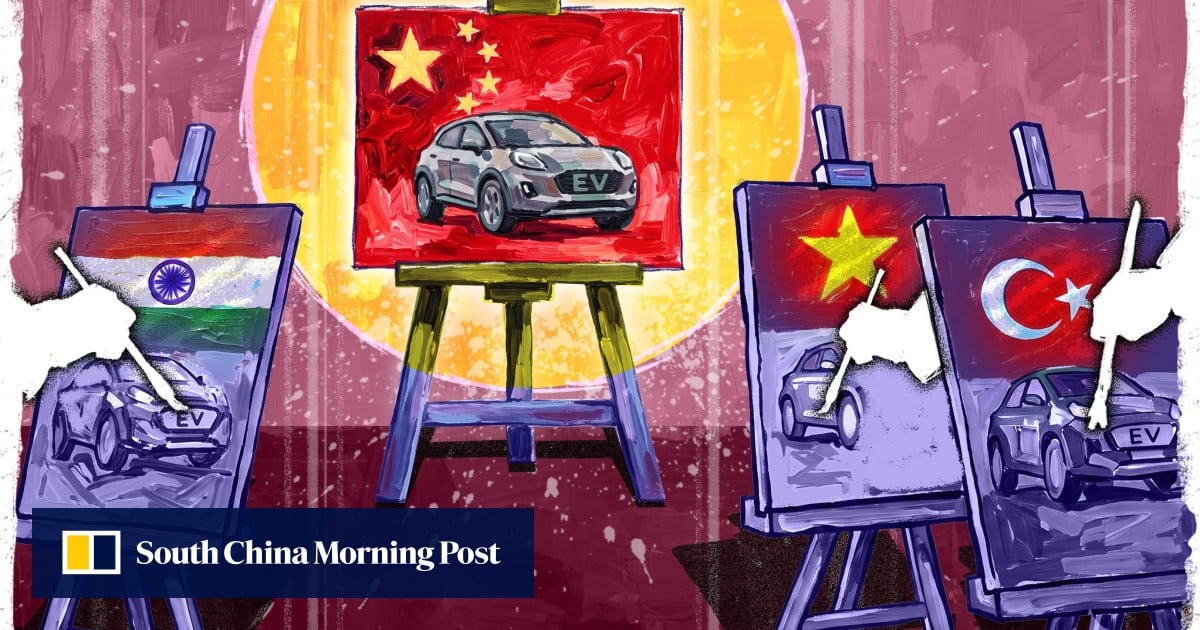
China's EV industry has become a global leader, and its policy playbook is being studied by emerging economies as a way to catch up. The shift towards electric engines has lowered barriers to entry and made key components easier to source.
Imagine you're trying to build a new car, but you need a lot of special parts. In the past, it was hard to get those parts because only a few big companies made them. But now, with electric cars, it's easier to get those parts because many companies make them. This is helping new carmakers catch up with the big companies.
Analysis
A $60B Vote of Confidence
China's electric vehicle industry has become a global leader, and its policy playbook is being studied by emerging economies as a way to catch up. The shift towards electric engines has lowered barriers to entry and made key components easier to source. This has given aspiring carmakers a faster foothold in the industry.
Why China’s EV Supply Chain Matters
China's vast EV supply chain has made key components easier to source, reducing the importance of engines and transmissions. This has lowered some traditional barriers to entry and made it easier for emerging-market governments to create demand while pushing companies to localise production and supply chains.
The Road Ahead
Established international players could risk losing their competitiveness as local, state-backed national champions expand. China's rapid rise in the EV sector demonstrates that disruptive innovation can dismantle entrenched technology barriers – such as internal combustion engine – and unlock viable pathways to industrial upgrading. Emerging markets can learn from China's playbook and accelerate their industrial catch-up by following a similar path.
Key points
- China's EV industry has become a global leader, and its policy playbook is being studied by emerging economies as a way to catch up.
- The shift towards electric engines has lowered barriers to entry and made key components easier to source.
- Emerging-market governments are using incentives to create demand while pushing companies to localise production and supply chains.
- China's rapid rise in the EV sector demonstrates that disruptive innovation can dismantle entrenched technology barriers – such as internal combustion engine – and unlock viable pathways to industrial upgrading.
If China's EV industry continues to grow, it could create new opportunities for emerging markets to catch up and become global leaders in the industry. This could lead to increased trade and investment between countries and help to reduce the global trade deficit.
However, if China's EV industry continues to dominate the global market, it could lead to a loss of competitiveness for established international players. This could also lead to a decrease in trade and investment between countries and a widening of the global trade deficit.
Market signals
- XAU Escalation drives safe-haven demand for gold, per the article's framing of investor reaction.
AI-generated analysis of potential market relevance. Not financial advice.
