China’s tech giants race to put AI on delivery riders’ heads
Chinese e-commerce giant JD.com has launched an AI-integrated smart helmet for food couriers, following similar initiatives by rivals Alibaba and Meituan, to enhance rider safety and delivery efficiency.
Intelligence analysis by Gemini 2.5 Flash
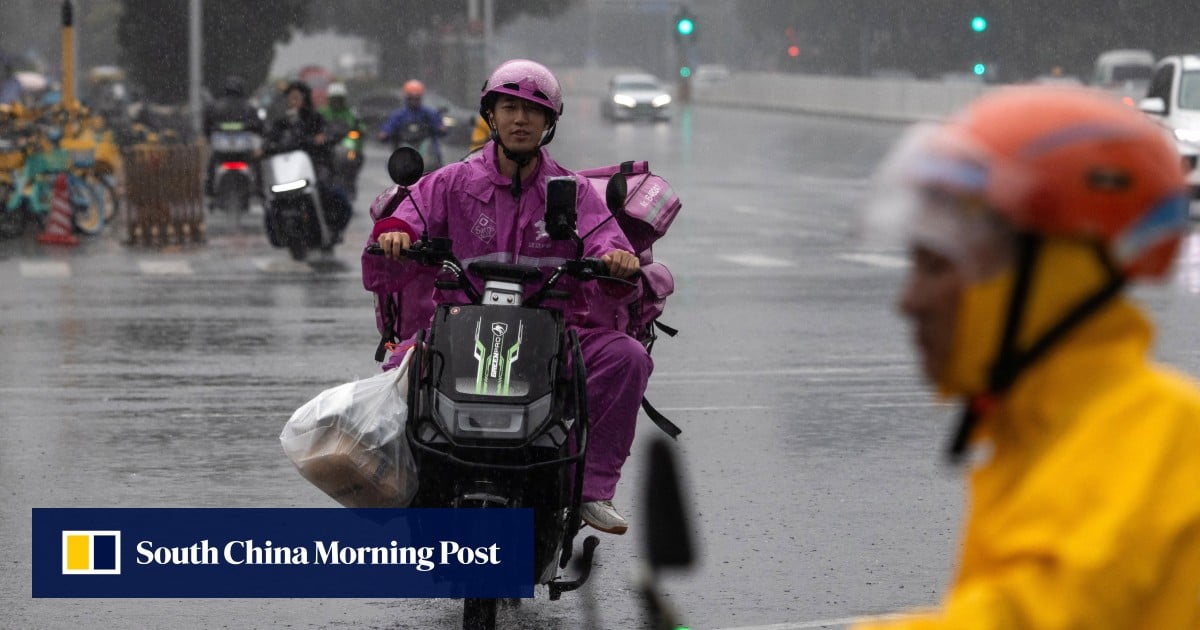
Major Chinese tech companies are equipping their delivery riders with AI-powered smart helmets designed to improve safety and operational efficiency. These helmets feature voice assistants, cameras, and navigation tools, allowing couriers to manage tasks hands-free, especially in challenging weather conditions.
Imagine delivery people wearing special helmets that talk to them like a helpful friend. It tells them where to go, reads messages from customers, and helps them stay safe without looking at their phone, especially when it's raining. This makes their job easier and quicker, like having a smart co-pilot on their head.
Analysis
The AI-Powered Helmet Initiative Takes Off
Chinese e-commerce behemoth JD.com has recently unveiled an AI-integrated smart helmet specifically designed for its food delivery couriers. This move positions JD.com alongside its major competitors, Alibaba Group Holding and Meituan, both of whom have already introduced similar AI-enabled headwear solutions. The primary motivation behind these innovations is a dual focus on significantly enhancing rider safety and boosting the overall efficiency of their extensive delivery networks. The introduction of such advanced technology underscores a broader trend among China's tech giants to leverage artificial intelligence for operational improvements in labor-intensive sectors.
JD.com's new helmet is equipped with an AI-driven voice assistant and an integrated camera capable of perceiving the surrounding environment. According to the company's food delivery unit, this device is engineered to minimize distractions, particularly during adverse weather conditions. Delivery riders, who frequently use electric bikes, often struggle with operating smartphones when their hands are wet or visibility is poor. The helmet aims to circumvent these issues by allowing couriers to manage new orders, communicate with customers, and complete other essential tasks through simple voice commands, eliminating the need to physically interact with a screen while on the move.
Enhancing Rider Safety and Operational Efficiency
Beyond merely providing hands-free operation, the smart helmet incorporates several AI-assisted features designed to streamline the delivery process and improve safety. The system offers turn-by-turn voice prompts that are not just based on standard online maps but are informed by established routes used by experienced riders. This feature is particularly beneficial for newer couriers, helping them navigate unfamiliar areas more effectively and avoid potential delays. Such guidance can significantly reduce stress and the likelihood of errors, contributing to a smoother delivery experience.
Furthermore, the AI capabilities extend to automatically reading customer delivery instructions, such as requests for contactless drop-offs, ensuring that specific preferences are met without manual intervention. The helmet can also assist with quality assurance checks during order collection. For instance, JD.com states that the device could automatically flag potential hygiene issues at a restaurant, adding an extra layer of scrutiny to the food delivery process. These features collectively aim to create a safer, more efficient, and more reliable delivery ecosystem for both riders and customers.
Broader Implications for the Gig Economy
The deployment of AI-powered helmets by China's leading tech companies signals a significant shift in how technology is being integrated into the gig economy. While the immediate benefits of improved safety and efficiency are clear, these innovations also raise important questions about the future of work for delivery riders. The data collected by these devices, from navigation patterns to potential hygiene flags, could provide companies with unprecedented insights into rider performance and operational bottlenecks. This could lead to more optimized routes and service standards, but also potentially to increased surveillance and performance pressure on individual couriers.
As these technologies mature, their adoption could spread beyond China, influencing how delivery services are managed globally. The balance between leveraging AI for worker assistance and ensuring worker privacy and autonomy will be a critical consideration. Ultimately, these smart helmets represent a tangible step towards a more automated and data-driven logistics industry, with profound implications for the millions of individuals who form the backbone of the modern delivery economy.
Key points
- JD.com has launched an AI-integrated smart helmet for food couriers.
- Rivals Alibaba and Meituan have also rolled out similar AI-enabled headwear.
- The helmets feature an AI-driven voice assistant and a camera to minimize distractions and aid navigation.
- Key functions include hands-free order management, customer communication, and turn-by-turn voice prompts.
- The technology aims to improve rider safety, navigation, and overall delivery efficiency, especially in poor weather.
These AI helmets could significantly reduce accidents for delivery riders by minimizing distractions and providing hands-free assistance, thereby improving their working conditions and overall safety. The enhanced efficiency and navigation could also lead to faster, more reliable deliveries for customers.
While aiming for safety and efficiency, these devices could also increase surveillance on riders, potentially leading to more stringent performance monitoring and pressure. There are also implicit privacy concerns regarding the data collected by the cameras and voice assistants integrated into the helmets.


