China’s Xiaomi unveils folding phone with home-grown chip as it takes on Apple, Huawei
Xiaomi has launched its new flagship foldable phone, the 18 Fold, featuring a proprietary Xring O3 system-on-chip, intensifying its competition with Apple and Huawei in the premium smartphone market.
Intelligence analysis by Gemini 2.5 Flash
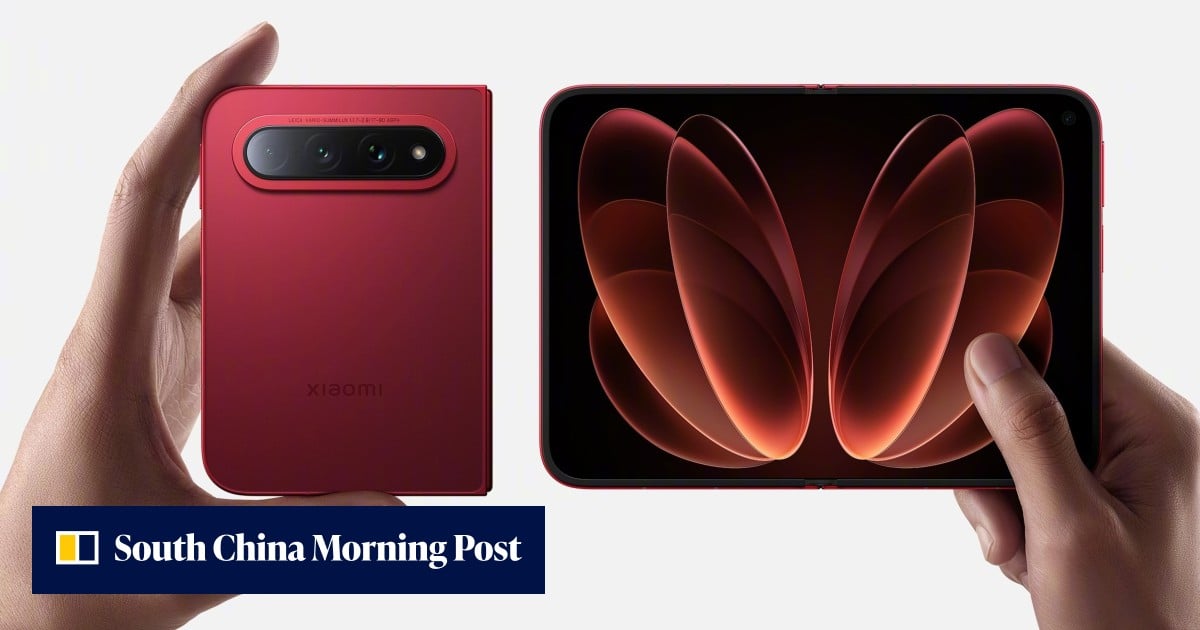
Xiaomi has introduced its latest flagship foldable smartphone, the 18 Fold, equipped with an advanced in-house developed Xring O3 system-on-chip. This launch positions Xiaomi to directly challenge established players like Apple and Huawei, particularly in the high-end and foldable phone segments, showcasing its commitment to proprietary technology and market expansion.
Imagine a super cool new phone that folds like a book, made by a company called Xiaomi. It has a special brain, like a super-smart mini-computer, that Xiaomi built itself to make the phone really fast and good at thinking. This helps Xiaomi compete with other big phone makers like Apple and Huawei, showing off its own clever inventions.
Analysis
Xiaomi's latest product unveiling marks a significant strategic move in the fiercely competitive global technology landscape. The introduction of the 18 Fold, a premium foldable smartphone, alongside new models of its Skynomad SUV, underscores the Chinese giant's ambition to diversify its portfolio and directly challenge established market leaders across multiple high-value segments.
Xiaomi 18 Fold
The Xiaomi 18 Fold is positioned as a flagship device, boasting a 7.58-inch inner display and a design focused on durability. Its construction includes a new hinge structure, a high-strength aluminium frame, and strengthened cover glass, all aimed at enhancing the longevity and user experience of the foldable form factor. This emphasis on robust design is crucial for consumer confidence in a product category that has historically faced scrutiny over durability concerns.
With a starting price of 10,999 yuan (US$1,639), the 18 Fold is clearly targeting the premium segment, directly competing with high-end offerings from Apple and Huawei. This pricing strategy reflects Xiaomi's growing confidence in its brand and technological capabilities, moving beyond its traditional image as a value-for-money smartphone maker. The simultaneous launch with Huawei's latest foldable and Apple's anticipated entry into the fray highlights the intensifying battle for market share in this innovative, yet nascent, category.
Xring O3
Central to the 18 Fold's appeal is its proprietary Xring O3 system-on-chip (SoC), which represents a substantial leap in Xiaomi's in-house silicon development. This AI processor is packed with 24 billion transistors, marking a 26 per cent increase from its predecessor, the Xring O1. Such a significant increase in transistor count typically translates to enhanced processing power and efficiency, particularly for AI-driven tasks.
Lei Jun, Xiaomi's founder and CEO, highlighted the Xring O3's impressive performance gains, noting a 60 per cent higher CPU performance compared to the O1, alongside a 25 per cent reduction in power consumption for certain tasks. These improvements are critical for delivering a smooth, responsive user experience and extending battery life, which are key differentiators in the premium smartphone market. The development of such advanced proprietary chips allows Xiaomi greater control over its product's performance, features, and supply chain, reducing reliance on third-party chipmakers and fostering unique hardware-software integration.
ChangXin Memory Technologies
The integration of LPDDR6 memory chips from ChangXin Memory Technologies (CXMT) into the Xiaomi 18 Fold is a notable aspect of its component sourcing strategy. CXMT is a prominent Chinese memory chip manufacturer, and its inclusion signifies Xiaomi's commitment to leveraging domestic suppliers for critical components. This move aligns with broader national efforts in China to achieve greater self-sufficiency in key technology sectors, particularly semiconductors.
Utilizing home-grown memory chips not only supports the domestic industry but also potentially enhances supply chain resilience for Xiaomi, mitigating risks associated with geopolitical tensions or disruptions in international supply chains. This strategic partnership with CXMT underscores a trend among Chinese tech giants to build a more robust and localized technology ecosystem, reducing dependence on foreign technology and fostering indigenous innovation in the semiconductor space.
Key points
- Xiaomi unveiled the 18 Fold, a new flagship foldable phone, alongside new Skynomad SUV models.
- The 18 Fold features a proprietary Xring O3 system-on-chip with an AI processor containing 24 billion transistors.
- The Xring O3 boasts a 26% increase in transistors and 60% higher CPU performance than its predecessor, the Xring O1.
- The phone is built for durability with a new hinge structure, high-strength aluminium frame, and strengthened cover glass.
- Priced from 10,999 yuan (US$1,639), the 18 Fold uses LPDDR6 memory chips from ChangXin Memory Technologies (CXMT).
- This launch intensifies Xiaomi's competition with Apple and Huawei in the premium smartphone market.
Xiaomi's investment in proprietary chips and foldable technology could significantly enhance its market share in the premium smartphone segment, fostering greater innovation and competition in the global tech industry. This strategic move could also strengthen China's domestic semiconductor capabilities, reducing reliance on foreign suppliers for critical components and boosting national technological self-reliance.
Despite the advancements, Xiaomi faces intense competition from established giants like Apple and Huawei, making it challenging to capture significant market share in the high-end foldable segment. The high price point of the 18 Fold might also limit its appeal to a broader consumer base, potentially hindering sales volume and profitability in a crowded market.


