Chinese doctors get double-thigh amputee to walk again in world first
Chinese surgeons have enabled a man to walk again after an accident severed both his legs at the thigh, marking a rare success for advanced reconstructive procedures.
Intelligence analysis by Llama
Chinese doctors have successfully enabled a double-thigh amputee to walk again after 20 months of recovery, marking a global first in reconstructive procedures.
Imagine someone's legs were cut off just above the knee. Doctors in China were able to reattach the legs and help the person walk again. This is a big deal because it's the first time this has been done, and it shows how good the doctors in China are at fixing broken bodies.
Analysis
Jiangsu Trauma and Treatment Association's Achievement
Chinese surgeons have made a groundbreaking achievement in reconstructive surgery by enabling a man to walk again after an accident severed both his legs at the thigh. This success marks a global first, according to the Jiangsu Trauma and Treatment Association, a local hospital network. The double-thigh replantation, performed at an orthopaedic hospital in eastern China, is a testament to China's microsurgical trauma expertise reaching a world-leading level.
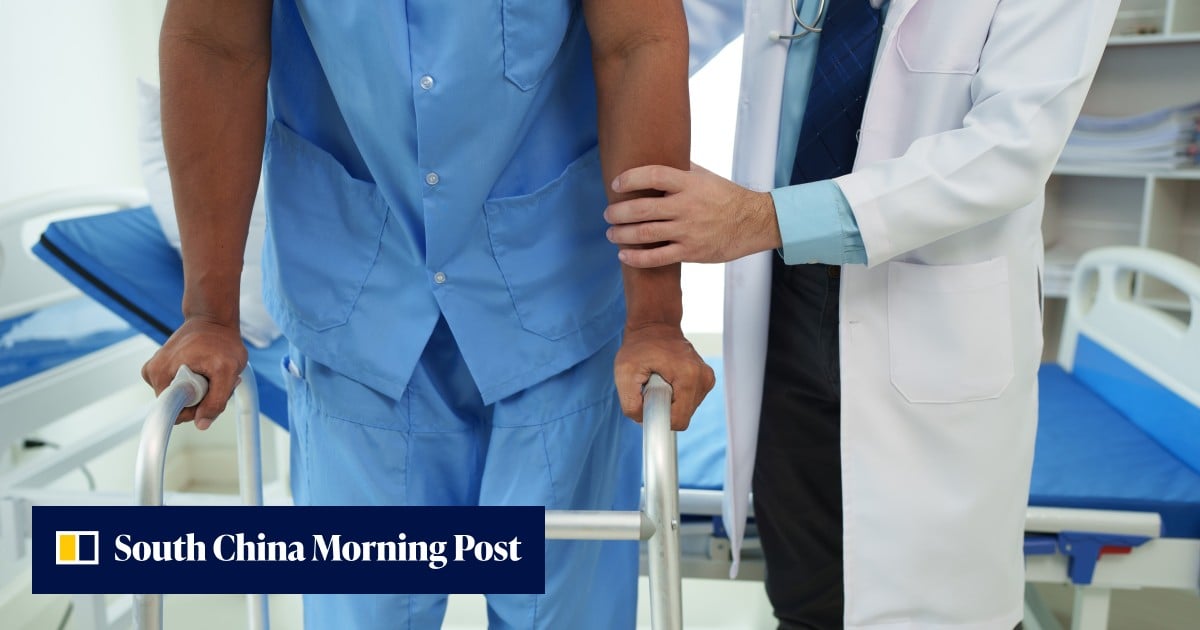
The patient, a 51-year-old man, underwent nearly 20 months of intensive post-operative recovery. He is now able to walk indoors with a frame and manage most daily tasks unassisted. Crucially, sensation has returned to his lower legs down to his ankles. This remarkable recovery is a result of the advanced reconstructive procedures performed by the Chinese surgeons.
The success of this case has been documented in an academic paper published in the peer-reviewed China Journal of Trauma in July. The paper highlights the details of the case and the expertise of the Chinese surgeons involved. This breakthrough in reconstructive surgery has the potential to improve the lives of amputees worldwide and demonstrates China's expertise in microsurgical trauma.
Implications of this Breakthrough
The implications of this breakthrough are significant. It demonstrates that China's microsurgical trauma expertise has reached a world-leading level. This achievement has the potential to improve the lives of amputees worldwide and sets a new standard for reconstructive surgery. The success of this case also highlights the importance of advanced medical research and development in improving patient outcomes.
Future Directions
The future directions for this breakthrough are exciting. With the success of this case, Chinese surgeons can continue to push the boundaries of reconstructive surgery. They can explore new techniques and procedures to improve patient outcomes and expand their expertise in microsurgical trauma. This breakthrough also has the potential to inspire other medical professionals to pursue careers in reconstructive surgery and microsurgical trauma.
Key points
- Chinese surgeons have enabled a man to walk again after an accident severed both his legs at the thigh.
- The double-thigh replantation is a global first, according to the Jiangsu Trauma and Treatment Association.
- The patient underwent nearly 20 months of intensive post-operative recovery.
- Sensation has returned to the patient's lower legs down to his ankles.
- The success of this case demonstrates China's microsurgical trauma expertise has reached a world-leading level.
This breakthrough in reconstructive surgery has the potential to improve the lives of amputees worldwide. It demonstrates China's expertise in microsurgical trauma and sets a new standard for reconstructive surgery. With continued advancements in medical research and development, we can expect to see even more impressive achievements in the field of reconstructive surgery.
However, there are also potential risks associated with this breakthrough. For example, the patient may experience long-term complications or require ongoing medical care. Additionally, the high cost of the procedure may make it inaccessible to many people. These risks highlight the need for further research and development to ensure that this breakthrough is accessible and safe for all patients.