Chinese robotaxi firms see eased regulatory bottleneck in Europe as deployment picks up
Chinese robotaxi operators in Europe have seen a more open business environment over the past year, facilitating the commercialization of self-driving technology worldwide. Pony AI's CEO, James Peng, expects to deploy several hundred vehicles outside mainland China by the…
Intelligence analysis by Llama
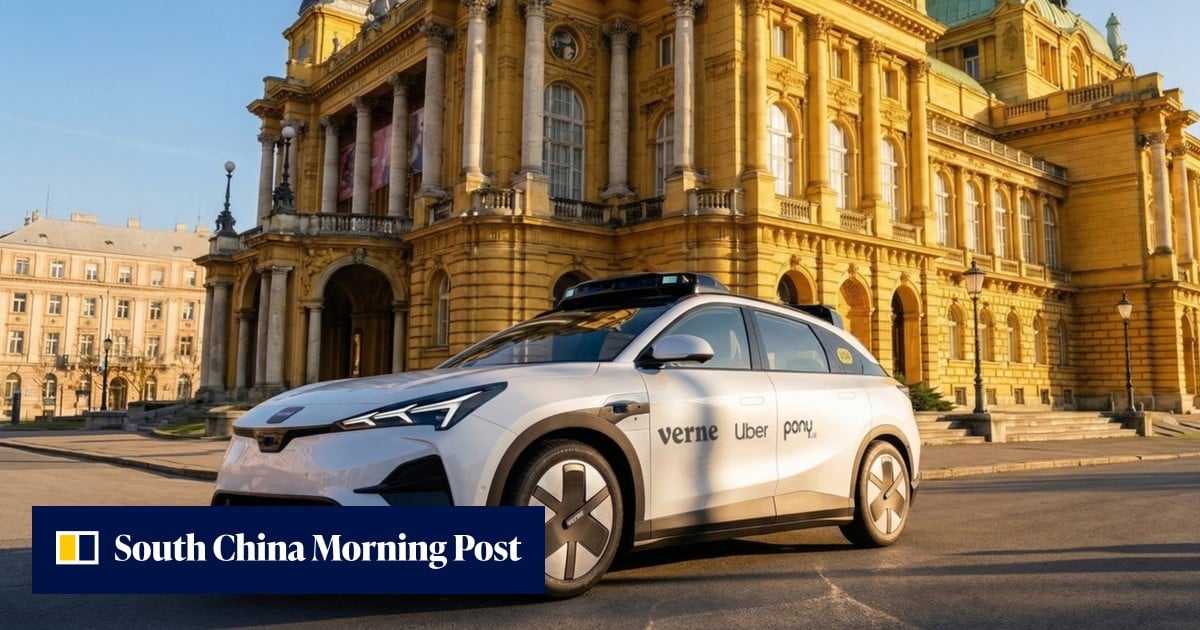
Pony AI's CEO, James Peng, believes the regulatory environment in Europe has become more open to autonomous driving, allowing Chinese firms to expand their self-driving technology globally. The company aims to deploy several hundred vehicles outside mainland China by the end of 2026.
Imagine you're in a self-driving car in a city in Europe. The car is driving itself, and you're just a passenger. This is what's happening with Chinese companies like Pony AI, which are testing self-driving cars in Europe. They're making progress and getting closer to making it a reality for everyone.
Analysis
Regulatory Environment in Europe Improves for Chinese Robotaxi Firms
The business environment for Chinese robotaxi operators in Europe has become more open and friendly over the past year, according to Pony AI's founder and CEO, James Peng. This improvement in the regulatory environment is expected to facilitate Chinese firms in commercializing their self-driving technology worldwide. Peng believes that the openness towards autonomous driving and the willingness to gradually open up some areas for pilot projects in Europe will bolster commercial application.
Pony AI's Expansion Plans
Peng's remarks came after Pony reported its total robotaxi fleet reached 1,975 vehicles on June 30. The company aims to expand the global fleet to 3,500 cars at the end of 2026. Pony, along with Baidu subsidiary Apollo, WeRide, and Momenta, are viewed as China's top self-driving tech firms. They have been operating driverless cabs on designated roads in cities across the globe and are seen as China's answer to US-based Waymo, the global leader in self-driving taxi services.
Financial Performance
In the three months ending in June, Pony posted a net loss of US$45.4 million, narrowing 14.9 per cent from a year ago. Total revenue jumped 69 per cent to US$36.2 million while its robotaxi fleet generated sales of US$12.1 million in the same period, a year-on-year surge of 691 per cent.
Key points
- Pony AI's CEO, James Peng, believes the regulatory environment in Europe has become more open to autonomous driving.
- The company aims to deploy several hundred vehicles outside mainland China by the end of 2026.
- Pony's total robotaxi fleet reached 1,975 vehicles on June 30, with a goal of expanding to 3,500 cars by the end of 2026.
If the regulatory environment in Europe continues to improve, Chinese robotaxi firms like Pony AI may be able to expand their operations more quickly, leading to the widespread adoption of self-driving technology.
However, there are still challenges to overcome, such as ensuring the safety and security of self-driving cars, as well as addressing concerns about job displacement and liability.